Buying an Older Home in Apache Junction? Check the Pipes First
A standard home inspection runs the faucets and looks under the sinks. It does not camera the sewer, test pressure properly, or identify what your supply pipe is made of. Those three things are where the money is.
The short answer
Before closing on a pre-2000 Apache Junction home, do four things a standard inspection skips: camera the sewer lateral, identify the supply pipe material in more than one location, measure static and dynamic water pressure, and read the water heater's date code. Those four find the five-figure surprises.
A standard home inspection in Arizona is a generalist exercise. The inspector runs the faucets, flushes the toilets, looks under the sinks, and notes anything obviously wrong. That is genuinely useful, and it is nowhere near sufficient on a house built before 2000.
What a standard inspection does not do: put a camera down the sewer lateral, identify the supply pipe material in more than one location, measure static and dynamic water pressure, or assess the age and condition of the water heater beyond noting that it exists.
Those four things are where the expensive surprises live. Here is what to check and what it costs you to skip it.
1. Get the sewer lateral on camera
This is the single highest-value thing you can do before closing on an older Apache Junction home, and it is the thing most buyers skip because nobody told them it was optional in the first place.
Homes built before roughly 1980 commonly have vitrified clay or cast iron sewer laterals. Clay joints shift in our caliche and expansive soil, opening gaps that admit roots. Cast iron corrodes from the invert up, and a camera frequently reveals a pipe that looks fine on top and has no floor along the bottom.
Repairs in this category range from a modest jetting to a five-figure replacement, and no one — including the seller — can tell you which one you are buying without looking. A camera inspection costs a small fraction of the smallest possible repair.
It also gives you a negotiating position with real evidence attached rather than a hunch.

2. Identify the supply pipe material
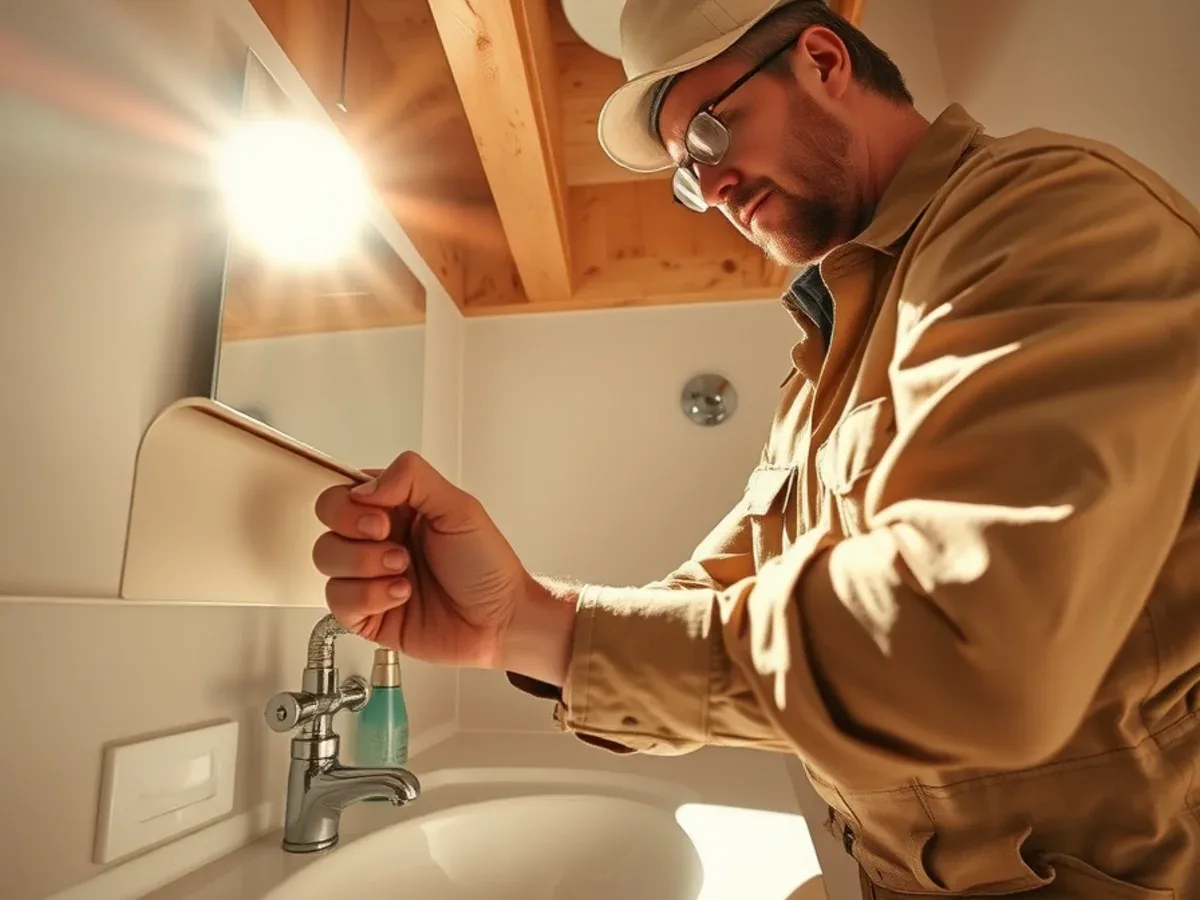
Look under at least two sinks and at the water heater, because partial repipes are common and what is in the kitchen frequently is not what is in the bathroom wall.
Dull gray flexible pipe stamped PB2110 is polybutylene, which means the house is from roughly 1978 to 1995 and a repipe should be in your budget whether or not it has leaked. Threaded steel with rust at the fittings is galvanized, which means pressure will keep declining and a repipe is the only fix. Rigid copper is generally fine, though in a house of significant age it is worth knowing whether it runs through the slab. Flexible red, blue or white pipe stamped PEX means someone has already repiped, which is a genuine plus.
This is a thirty-second check per location and it changes the number you should be willing to pay.
Polybutylene (PB2110)
Gray flexible. Plan on a repipe. Also check what your insurer says about it.
Galvanized steel
Rusts closed from the inside. Declining pressure is permanent without a repipe.
Copper
Generally good. Ask whether it runs in the slab and whether there has been a leak history.
PEX
Modern and appropriate for this water. Ask for documentation of when it was done.
3. Measure the water pressure
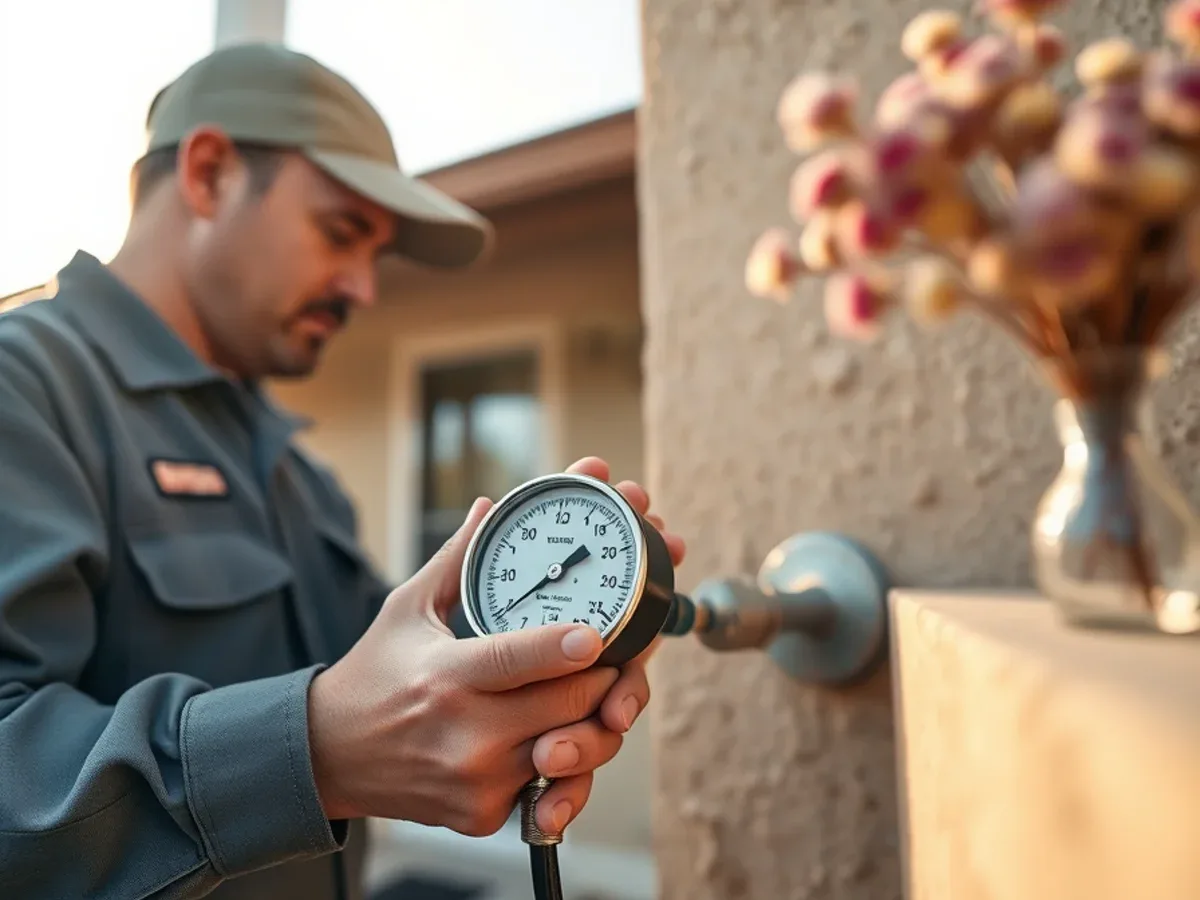
A gauge on a hose bib gives you static pressure in two minutes. Normal is roughly 50 to 70 psi. Below 40 and fixtures underperform; above 80 and the pressure itself is damaging the plumbing.
Then check dynamic pressure — run two or three fixtures at once and see what happens. A big drop points to restricted supply piping, which on an older house usually means galvanized.
High pressure with no pressure reducing valve, or with a failed one, is worth flagging. It is a modest repair and it prevents a long list of expensive downstream failures.
4. Read the water heater serial number
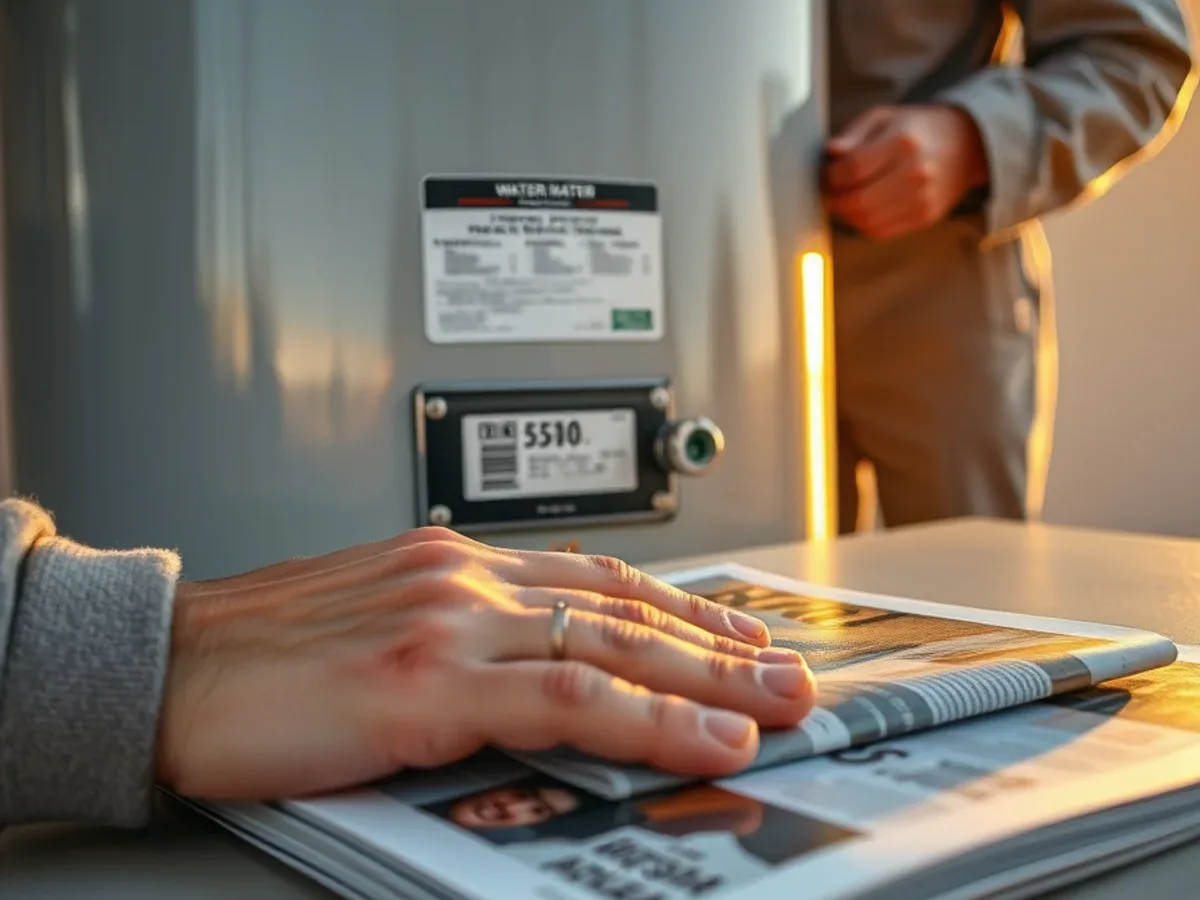
Every water heater has a date encoded in its serial number, and the manufacturer publishes the format. A heater that is nine years old on unsoftened Apache Junction water is not a maintenance item — it is a replacement you should be budgeting for.
While you are there: is there a drip pan with an actual drain, or does it just sit on the garage floor? Is there a thermal expansion tank? Is the T&P discharge line piped correctly? Is it strapped? Missing any of those suggests either an unpermitted installation or one done a long time ago to older standards.
Also drain a cup from the valve. If it comes out full of sediment, nobody has flushed it, which tells you how the house has been maintained generally.
5. Ask the questions the disclosure will not answer
Has there ever been a slab leak? If yes, was it spot-repaired or rerouted, and is there documentation? A house with one repaired slab leak in aging copper often has more coming.
Has the sewer ever backed up, and how often? "Occasionally" is a red flag that deserves a camera.
Is there a softener, and if so how old is the resin? Is the loop even plumbed correctly?
Have there been permitted plumbing repairs? Permit history is public record in Apache Junction and Pinal County, and it tells you a lot about whether work was done properly or by whoever was cheapest.
What this costs versus what it saves
A pre-purchase plumbing assessment — camera the sewer, identify pipe material, measure pressure, assess the water heater — is a few hundred dollars.
What it can find: a collapsed sewer lateral, a polybutylene system that needs a full repipe, galvanized pipe that will never deliver decent pressure, an unpermitted water heater install, or a slab leak that is already running.
Even one of those changes your negotiating position by more than the inspection costs, several times over. And if everything comes back clean, you have bought certainty on the largest purchase of your life for a very small amount of money.
Frequently asked questions
Spend a little before you close
The plumbing in an older Apache Junction home is the part of the house you cannot see and the part most likely to produce a five-figure surprise. A few hundred dollars during your inspection period buys you either a negotiating lever or peace of mind.
We do pre-purchase plumbing assessments across Apache Junction, Gold Canyon and the East Valley — sewer camera with recorded footage, pipe material identification, pressure testing and water heater assessment, with a written report you can hand your agent.
Services mentioned in this article
- Sewer Linesin Apache Junction, AZ
- Repipingin Apache Junction, AZ
- Water Heater Repairin Apache Junction, AZ