
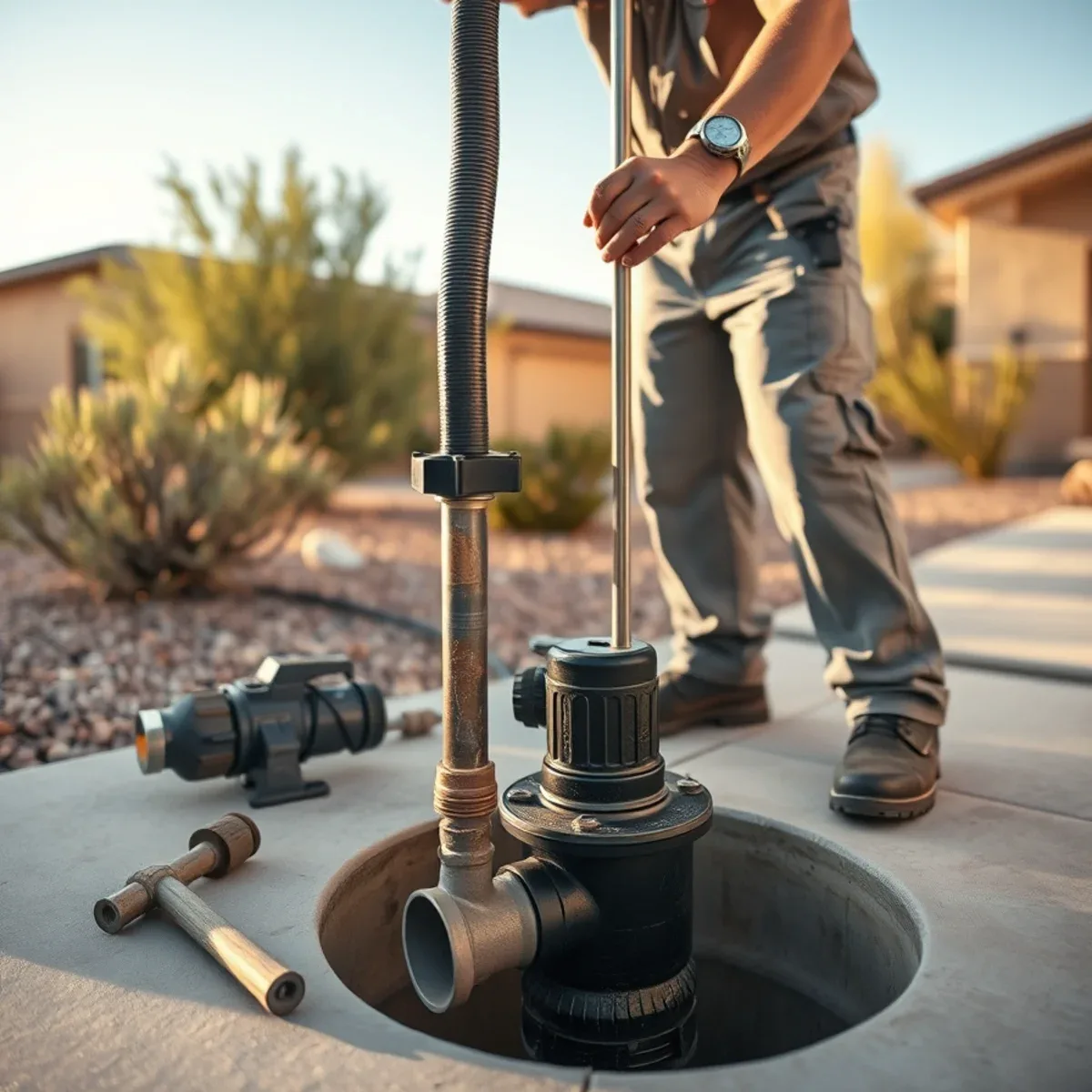
Short answer
Sump pumps are rare in Arizona, which is exactly why they get installed badly here. The two things that matter most are sizing the basin so the pump is not short-cycling itself to death, and fitting a battery backup — because the monsoon storms that produce the water are frequently the same storms that take the power out.
Sump pumps are a rarity in Arizona, and that is precisely why they cause trouble here. Most homes have no basement and no need for one. But the properties that do need a pump genuinely need it, and because it is unfamiliar territory for a lot of local contractors, we see a fair amount of work that was done wrong.
The three situations we handle most in Apache Junction: below-grade spaces that take on water during monsoon storms, sewage ejector pumps serving a fixture below the main sewer line, and crawlspace or equipment-pit drainage where water has nowhere to go by gravity.
Monsoon season is what makes this urgent. A storm can put a large volume of water into a low point very quickly, and desert soil with a caliche layer does not absorb it the way people expect — it sheets across the surface and finds the lowest opening.
Water where it should not be after a storm?
We size the pump, plan the discharge properly, and add the backup that makes it work on the day it matters.
When a pump is the answer
Standing water after a monsoon storm
A basement, cellar, sunken garage or equipment pit that takes on water and has no gravity drain out.
A pump that runs constantly
Short-cycling wears a motor out fast. Usually a float problem, an undersized basin, or a check valve that is not holding.
A pump that hums but does not move water
Jammed impeller, seized motor or a discharge line blocked with debris or mineral scale.
A basement bathroom or laundry below the sewer line
That needs a sewage ejector pump, not a sump pump. They are different machines and they are not interchangeable.
Sewage smell near a pump basin
An ejector basin that is not properly sealed or vented. This is a health issue, not a nuisance.
A pump with no backup and no alarm
Monsoon storms bring power outages. A pump that cannot run during the storm it exists for is not protection.
What a sump pumps job includes
Every quote covers the items below. If something is not on this list, it is not in the price — and we will say so before we start.
The water source understood first
Storm intrusion, groundwater and wastewater need genuinely different designs. We establish which you have before quoting equipment.
Pump sized on flow and total head
Not just horsepower. An oversized pump short-cycling is as damaging as an undersized one.
Correct basin for the application
Open basin for clear water; a sealed and vented basin with a solids-rated pump where a sewage ejector is what you actually need.
Check valve and service union
Without a check valve the discharge line drains straight back into the basin and the pump immediately restarts on the same water.
Discharge planned properly
Correct diameter, correct grade, and terminating far enough away that the water does not simply return to the same low point.
Battery backup and high-water alarm
On anything monsoon-driven we treat both as essential, not optional. A pump that switches off during the storm is not protection.
Sump pump versus sewage ejector — not the same machine
People use the terms interchangeably and they are genuinely different pieces of equipment doing different jobs, with different code requirements.
A sump pump moves clear groundwater or storm water out of a basin to a discharge point outside. It handles water with light silt, and its discharge can go to grade, a dry well or a storm drain depending on local rules.
A sewage ejector pump moves wastewater and solids from fixtures below the main sewer line up to it. It requires a sealed, vented basin, a pump rated to pass solids, a check valve on the discharge, and connection into the sanitary sewer — never to grade. Putting a standard sump pump on a sewage application will fail quickly and unpleasantly, and it is a code violation.
If you are adding a bathroom, laundry or wet bar to a below-grade space, this distinction determines the whole design. It is worth getting right before anything is roughed in rather than after.
Sump pump
Clear water and storm intrusion. Open or lightly covered basin, discharges outside.
Sewage ejector
Wastewater and solids. Sealed and vented basin, solids-rated pump, discharges to sanitary sewer.
Effluent pump
Greywater with fine solids. Sits between the two in capability.
Condensate pump
HVAC condensate only, where gravity drainage is not available. Small, and a different install entirely.
Monsoon reality, and why backup matters here
The whole reason a storm-water pump exists is the storm. And in Apache Junction, the storms that produce enough water to matter are frequently the same storms that knock the power out.
A pump with no battery backup is protection that switches itself off at the exact moment it is needed. A backup system — a secondary DC pump on a deep-cycle battery, or a battery-backed inverter on the primary pump — is not an upsell on a monsoon-driven installation, it is the point.
A high-water alarm is the other item worth having. Pumps fail quietly, and in a space nobody visits daily the first sign is usually damage. An alarm that sounds, or a smart sensor that texts you, converts a flooded space into a phone call.
We also look hard at the discharge. A discharge line that dumps right beside the foundation returns the same water to the same low point in a loop. It needs to reach far enough away, at proper grade, terminating somewhere the water will actually leave.
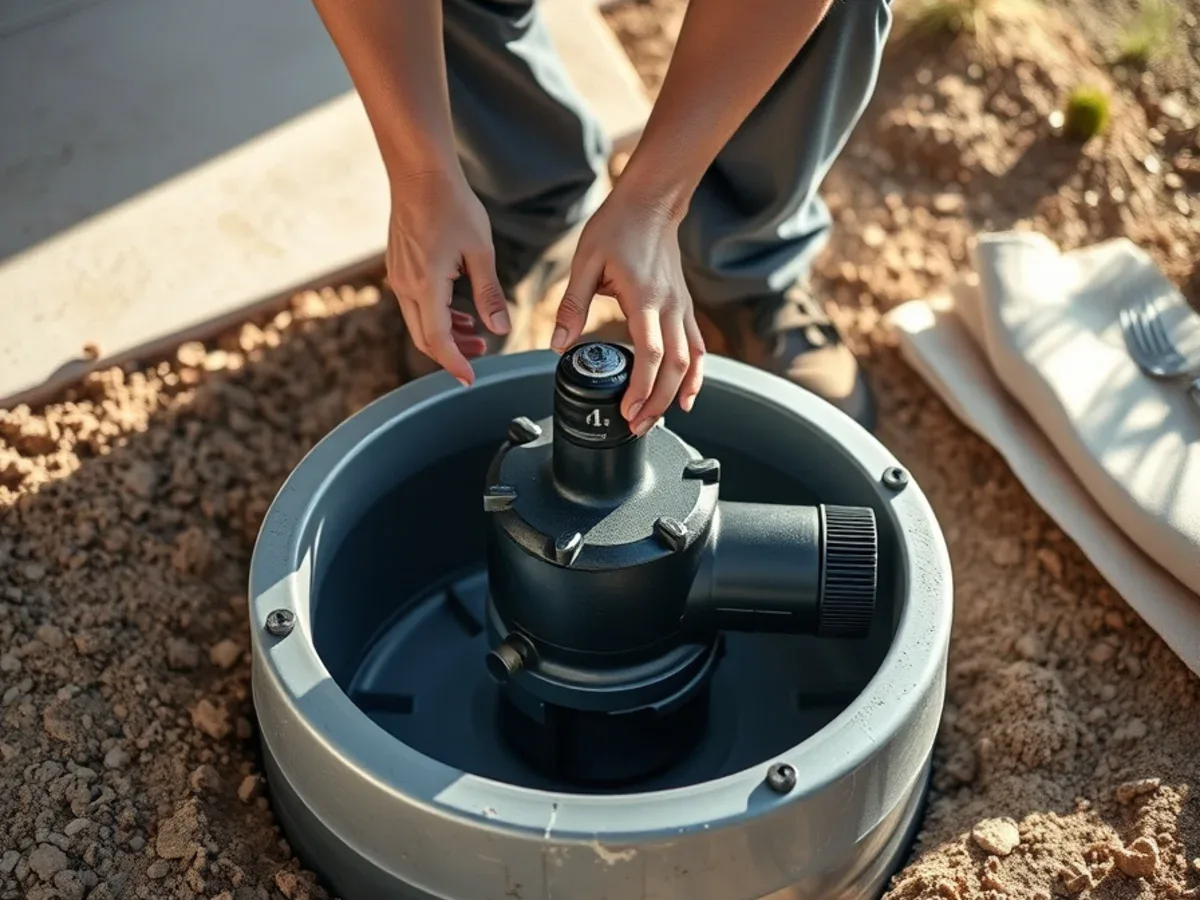
The things that go wrong on other people's installs
An undersized basin is the most common. A small basin means the pump cycles constantly during a storm, and short-cycling is what kills pump motors.
A missing or failed check valve is next. Without one, the water in the discharge line runs straight back into the basin every time the pump stops, so the pump immediately restarts to move the same water again.
Discharge lines that are too small, run uphill further than the pump's head rating allows, or terminate somewhere that freezes or clogs — all of these look fine on a dry day and fail on the day it matters.
And on ejector installations, a basin that is not properly sealed and vented. That is where the sewer smell comes from, and it is also a code issue and a genuine health concern.
How a sump pump job runs
- 1
Understand the water
Where it comes from, how fast, and how often. Storm intrusion, groundwater and wastewater need different designs.
- 2
Size the pump and basin
Flow rate and total head, not just horsepower. An oversized pump short-cycling is as bad as an undersized one.
- 3
Plan the discharge
Where the water actually goes, at what grade, terminating far enough away that it does not come straight back.
- 4
Install properly
Correct basin, check valve, union for future service, sealed and vented basin on ejector applications, permit where required.
- 5
Backup and alarm
Battery backup on anything monsoon-driven, plus a high-water alarm so a failure is a notification instead of damage.
- 6
Test under load
We fill the basin and run it through several full cycles, confirming the check valve holds and the float switches cleanly.
What drives the price
Quoted in writing before anything starts. This is a job where the cheap version genuinely fails, so we price it to work.
- Sump or sewage ejector
- Ejector installations need a sealed vented basin, a solids-rated pump and a sanitary connection. Meaningfully more involved.
- Whether a basin already exists
- Replacing a pump in an existing basin is straightforward. Cutting in a new basin, especially through a slab, is a project.
- Discharge routing
- A short run to grade is simple. A long run, an uphill run, or one that has to pass under hardscape is not.
- Backup system
- Battery backup pump or inverter, plus the battery. On monsoon-driven installs we consider this essential, not optional.
- Electrical
- A dedicated GFCI-protected circuit is required. If one does not exist at the basin, that has to be added.
Every quote is written, and the number does not change afterward. AZ ROC CR-37 Plumbing · BBB A+ accredited.
Why AllStar Home Services for sump pumps
We tested it under load before leaving
We fill the basin and run several full cycles, confirming the check valve holds and the float switches cleanly — rather than plugging it in and hoping.
The quote is the price
You hear the number before we start and it does not move afterward. It is the single thing customers mention most in our reviews.
Licensed, insured and permitted
Arizona ROC classification CR-37, issued November 2024, BBB accredited A+. We pull permits and pass the fee through at cost.
16+ years in the trade, 60+ across the team
Shane is a master plumber who still writes the estimates and runs calls — which means more repairs and fewer replacements.
Where we provide sump pumps
This is a niche service in the desert and we get called for it across the whole area. We deliver this from our 15th Ave shop across Apache Junction and Gold Canyon, then out through Queen Creek, San Tan Valley, Mesa, Gilbert, Chandler, Tempe and Fountain Hills.
Further out we cover Florence, Coolidge, Casa Grande, Maricopa, Eloy, Superior and Mammoth, and we are honest about when a small job does not justify the drive. Demand concentrates on properties with any below-grade space: equipment pits, sunken patios and garages cut into a slope, which is most common in the foothill terrain around Superstition Mountain, Gold Canyon and Fountain Hills. Any fixture installed below the main sewer line needs a sewage ejector regardless of climate.
- Sump Pumps in Apache Junction
- Sump Pumps in Gold Canyon
- Sump Pumps in Queen Creek
- Sump Pumps in Mesa
- Sump Pumps in Superstition Mountain
- Sump Pumps in Ironwood Estates
Sump Pumps questions, answered
Related reading
 Seasonal
Pre-Monsoon Plumbing Checklist for Arizona Homeowners
Monsoon season finds every marginal drain, every partially blocked sewer line and every AC condensate line that should have been cleared in May. Here is the list, in priority order.
6 min read Emergencies
Sewer Backup in Your Home: Immediate Steps
The first instinct is to keep flushing and hope. That is the one thing guaranteed to make it worse. Here is the right sequence.
7 min read