
Short answer
Reverse osmosis is the fix for how Apache Junction water tastes. Softening protects your plumbing but does not change taste and adds a small amount of sodium; an under-sink RO system removes the large majority of dissolved solids at the tap, which is what produces drinkable water and clear ice.
Apache Junction water is not just hard — it carries a high total dissolved solids load, which is the technical way of saying it tastes like the ground it came out of. Softening does not change that. Carbon filtration improves it. Reverse osmosis genuinely solves it.
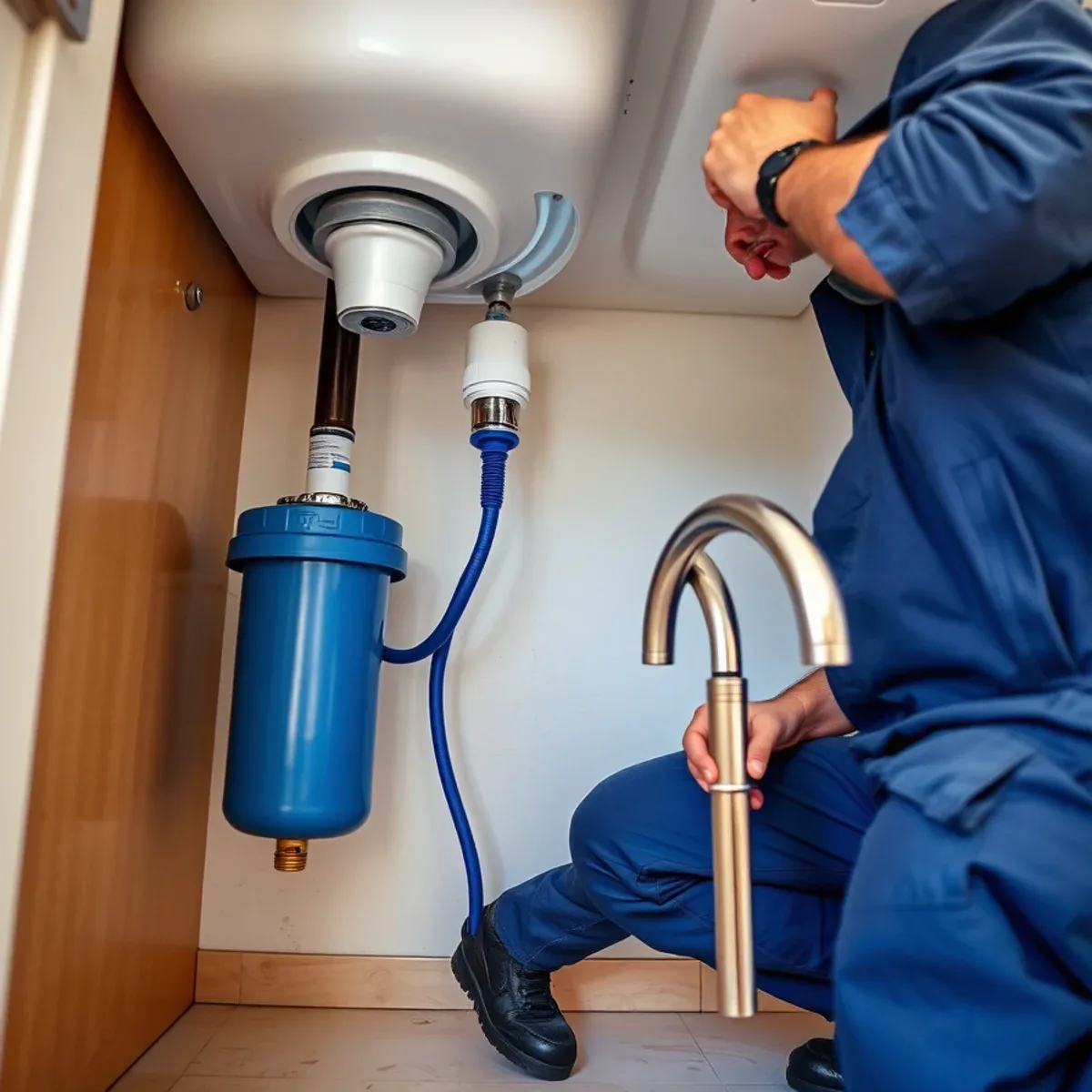
An RO system forces water through a semi-permeable membrane that rejects the overwhelming majority of dissolved solids, along with a series of pre- and post-filters. What comes out of the dedicated faucet is water that people actually want to drink, and ice that is clear instead of cloudy.
It is a small, contained installation — an under-sink unit, a dedicated faucet, and optionally a line run to the refrigerator. And it is one of the few plumbing purchases where the difference is obvious the same day.
Tired of buying bottled water?
We will test what is actually in your water and show you the before-and-after number after installation.
Reasons people put one in
You are buying bottled water
The most common reason, and the easiest to justify. An RO system pays for itself against a bottled water habit surprisingly fast.
Coffee and tea taste wrong
High dissolved solids change extraction. Anyone serious about coffee notices the difference immediately.
Cloudy ice cubes
Dissolved minerals coming out of solution as water freezes. RO-fed ice makers produce clear ice.
A softener made the water feel better but taste worse
Softening exchanges hardness for a small amount of sodium. Some people notice it. RO removes it at the tap.
You are on a well
RO handles dissolved solids that upstream treatment does not, and it is the right final polish on a well system.
An existing RO unit has stopped producing
Usually a spent membrane, a clogged prefilter or a failed tank bladder. All repairable, and much cheaper than replacing the system.
What a reverse osmosis job includes
Every quote covers the items below. If something is not on this list, it is not in the price — and we will say so before we start.
Feed water tested before and after
Hardness and dissolved solids measured on both sides, so you can see exactly what the system is doing rather than taking it on faith.
Line pressure and cabinet space checked
RO needs adequate pressure, and the tank plus housings need real room under the sink. Both confirmed before anything is ordered.
Dedicated faucet fitted
Finish-matched where you want it, or an air-gap faucet where local code requires one.
Fridge and ice maker line where wanted
Far cheaper planned at installation than retrofitted later, and it needs the system sized to keep up with an ice maker as well as the tap.
Membrane flushed and commissioned
Per manufacturer instructions, with tank pressure verified before we hand it over.
Filter schedule set with a reminder
Prefilters every six to twelve months, membrane every two to five years. A neglected RO produces worse water than the tap.
How the system is actually built
A residential RO unit is a series of stages rather than a single filter, and understanding them makes maintenance obvious.
Sediment prefilter first, catching particulate that would otherwise foul the membrane. Then carbon prefilters, which are critical: chlorine destroys the RO membrane, so removing it upstream is what determines whether the membrane lasts two years or five.
The membrane itself does the work, rejecting dissolved solids and sending them to drain while the treated water goes to a small pressurised storage tank. Then a post-carbon polishing filter on the way to the faucet, cleaning up any storage taste.
Some systems add a remineralisation stage, putting back a small amount of calcium and magnesium for taste and for people who prefer not to drink fully demineralised water. Whether you want that is genuinely a matter of preference and we will not push it either way.
Sediment prefilter
Protects the membrane from particulate. Changed every 6–12 months.
Carbon prefilters
Remove chlorine, which destroys membranes. The stage that most determines membrane life.
RO membrane
The working element. Typically 2–5 years depending on feed water and prefilter discipline.
Post-carbon polish
Final taste stage between the storage tank and the faucet.
What to expect day to day
Flow from an RO faucet is slower than a normal tap and that is normal — you are drawing from a small pressurised tank rather than the main. Filling a large pot takes a minute rather than seconds. For drinking, cooking and coffee it is a non-issue.
RO systems send some water to drain as part of the process. Modern units are far more efficient than older ones, and pairing RO with a softener improves the ratio meaningfully because the membrane is working against softened feed water. On very hard, high-TDS feed water an unsoftened RO unit works harder and the membrane does not last as long.
The storage tank sits under the sink and takes up real cabinet space alongside the filter housings. In a crowded sink base with a disposal, that is worth planning for before installation rather than discovering during it.
And the maintenance is genuinely simple: prefilters on a schedule, membrane every few years. We put customers on a reminder because the most common RO problem we see is a system nobody has touched in four years, running on a fouled membrane and producing worse water than the tap.

Fridge lines, ice makers and second taps
Running RO water to the refrigerator is the upgrade people appreciate most after the fact — clear ice and filtered water at the door, without a separate cartridge to buy for the fridge.
It needs a little planning. The line has to reach the fridge, which means routing through cabinetry or under the floor, and the system needs enough production and tank capacity to keep up with an ice maker as well as the kitchen faucet. Undersizing here is why some fridge-connected systems run out of water at inconvenient moments.
We also install a permeate pump on installations where line pressure is marginal. It improves production rate and reduces water sent to drain, and on a system feeding both a faucet and an ice maker it is usually worth having.
Second faucets — a prep sink, a wet bar, a pot filler — are straightforward to add at installation time and considerably more work to retrofit later. Worth mentioning at the estimate if it is on your list.
How an RO install runs
- 1
Test the feed water
Hardness and dissolved solids measured before and after, so you can see exactly what the system is doing.
- 2
Check pressure and space
RO needs adequate line pressure, and the tank plus housings need real cabinet room. Both confirmed before ordering.
- 3
Plan the faucet and any extra lines
Dedicated faucet placement, plus fridge, ice maker or second-tap runs decided now rather than retrofitted later.
- 4
Install
Feed connection, drain saddle or air-gap faucet to code, tank set, all connections leak-checked under pressure.
- 5
Flush and commission
Membrane flushed per manufacturer instructions, tank pressure verified, and output tested against the feed reading.
- 6
Maintenance schedule set
Filter change intervals written down and a reminder set, because a neglected RO produces worse water than no RO.
What drives the price
One of the more predictable installs we quote. Priced in writing before we order anything.
- Number of stages
- A standard four or five stage unit versus one with remineralisation or additional polishing.
- Faucet choice
- A basic dedicated faucet versus a finish-matched one, or an air-gap faucet where local code requires it.
- Fridge or ice maker line
- Routing a line to the refrigerator adds material and labour, and may push you to a higher-production unit.
- Permeate pump
- Worth adding where line pressure is marginal or the system feeds an ice maker as well as a faucet.
- Cabinet and drain work
- A clear sink base is quick. A crowded base with a disposal and a filter housing already fitted takes longer.
Every quote is written, and the number does not change afterward. AZ ROC CR-37 Plumbing · BBB A+ accredited.
Why AllStar Home Services for reverse osmosis
Carbon prefilters are what protect the membrane
Chlorine destroys RO membranes. Prefilter discipline is the single thing that decides whether yours lasts two years or five, and we set the reminder rather than leaving it to memory.
Free on-site water hardness test
We size treatment to your measured number rather than a citywide average, because undersizing is why people conclude treatment does not work.
The quote is the price
You hear the number before we start and it does not move afterward. It is the single thing customers mention most in our reviews.
Based at 870 W 15th Ave, not a call centre
Shane, Leo and Justin live in Apache Junction. Most of the city is a ten to fifteen minute drive rather than a cross-valley dispatch.
Where we provide reverse osmosis
Dissolved solids are high across the whole region, so this is a small, high-satisfaction install everywhere we work. We deliver this from our 15th Ave shop across Apache Junction and Gold Canyon, then out through Queen Creek, San Tan Valley, Mesa, Gilbert, Chandler, Tempe and Fountain Hills.
Further out we cover Florence, Coolidge, Casa Grande, Maricopa, Eloy, Superior and Mammoth, and we are honest about when a small job does not justify the drive. On well properties RO is the correct final polish at the end of a treatment train rather than a substitute for one — sediment, iron and sulfur still have to be handled upstream.
- Reverse Osmosis in Apache Junction
- Reverse Osmosis in Gold Canyon
- Reverse Osmosis in Queen Creek
- Reverse Osmosis in Mesa
- Reverse Osmosis in Superstition Mountain
- Reverse Osmosis in Ironwood Estates
Reverse Osmosis questions, answered
Related reading
 Hard Water
Do You Need a Water Softener in Apache Junction?
Salt-based or salt-free? What size? Will it taste salty? A straight answer to every water softener question we get asked in Apache Junction, including when the honest answer is that you do not need one.
8 min read Well Water
Well Water vs. City Water in Pinal County
On city water somebody else is the utility. On a well, you are. Here is everything that changes — testing, treatment, equipment life and what to check before you buy.
8 min read