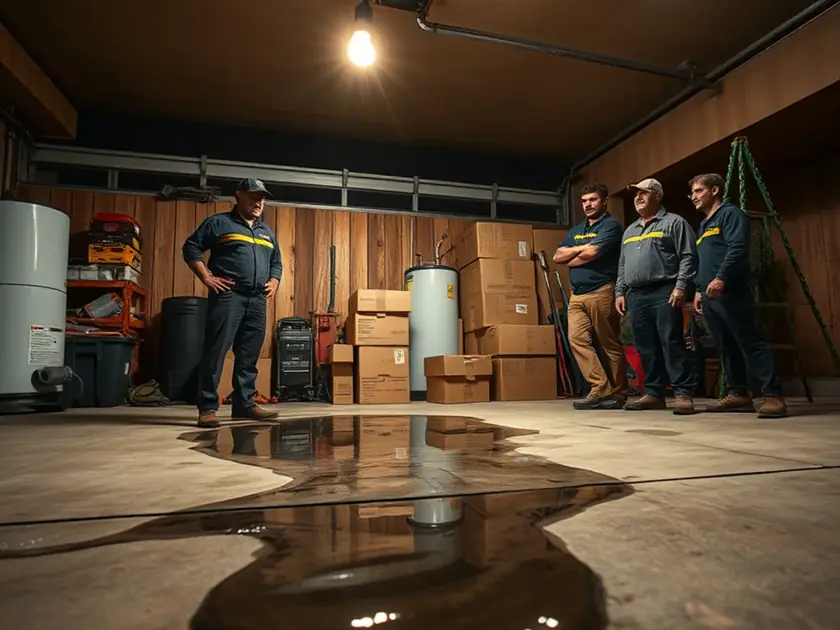
Well Water vs. City Water in Pinal County: Plumbing Considerations
On city water somebody else is the utility. On a well, you are. Here is everything that changes — testing, treatment, equipment life and what to check before you buy.
The short answer
On city water someone else is the utility; on a well, you are. That means you own a pump, a pressure tank and a wellhead, you are responsible for annual testing, and your treatment has to be designed around iron and sulfur rather than the chlorine a municipal supply carries.
Cross an invisible line in Pinal County and the entire plumbing conversation changes. Inside a municipal service area you get treated water, published quality reports and somebody else's responsibility for everything up to your meter. Outside it, on a private well, you are the utility.
Both are common around here. Apache Junction and the incorporated towns are largely on municipal supply. Gold Canyon has a mix. Out toward Goldfield, through the rural stretches toward Florence and Coolidge, and across unincorporated county land, private wells are the norm.
The differences matter for what breaks, what treatment you need, what you should test and what you should check before buying a property. Here is the whole picture.
What is actually different about the water
Municipal water in this region is hard — typically 15 to 25 grains per gallon — and it is treated. Treatment means chlorine or chloramine for disinfection, which is why city water tastes the way it does and why carbon filtration is worth having. It also means the supply is tested continuously and the results are published.
Well water in the same geology is also hard, often harder, and it is untreated. What it contains instead is whatever the aquifer holds: dissolved iron very commonly, sometimes manganese, frequently hydrogen sulfide producing that rotten-egg smell, sediment that swings seasonally, and in some areas naturally occurring arsenic. There is no chlorine, so chlorine-focused filtration is solving a problem you do not have.
The practical consequence is that the two need different treatment trains. A softener alone is a reasonable municipal answer. On a well it is frequently the wrong first step — iron fouls softener resin permanently, and we have replaced resin beds destroyed inside two years by exactly that mistake.
City water here
Hard, chlorinated, continuously tested, published reports. Softener plus carbon is the usual answer.
Well water here
Hard, untreated, variable. Iron, manganese, sulfide and sediment are the common constituents.
Testing responsibility
City: the utility. Well: entirely you, annually at minimum.
Treatment order
City: carbon then softener. Well: sediment, then iron and sulfur, then softener.
Equipment you have that city customers do not
A well property has a whole category of equipment that simply does not exist on municipal supply, and it is the source of most well-specific service calls.
The submersible pump sits down the well and does the work. It typically lasts eight to fifteen years, and the single biggest factor in where you land in that range is how many times a day it starts.
The pressure tank is what controls that. It holds a cushion of compressed air behind a bladder so you can draw water without the pump starting every time. When the bladder fails or the air charge bleeds off, the pump kicks on and off every few seconds whenever water runs — and that short-cycling is the fastest way to destroy a pump motor.
This is why we check the pressure tank first on every well call. A waterlogged tank is a far more common cause of "my pump is failing" than an actual failing pump, and it is dramatically cheaper to fix. Check it yourself: with the pump powered off and the system drained, the air valve on top should read about 2 psi below the pump cut-in pressure and should release air, not water.
There is also the pressure switch, the control box on some systems, and the wellhead seal itself — which is what keeps surface water and contamination out of your aquifer.
Testing — the part that is entirely on you
Nobody samples your well but you. Municipal systems are tested continuously and reported publicly; a private well has no oversight at all.
Arizona guidance for private wells is testing annually at minimum for total coliform bacteria and nitrate. Both are genuine health concerns rather than aesthetic ones — nitrate particularly matters in agricultural areas, which describes a lot of Pinal County.
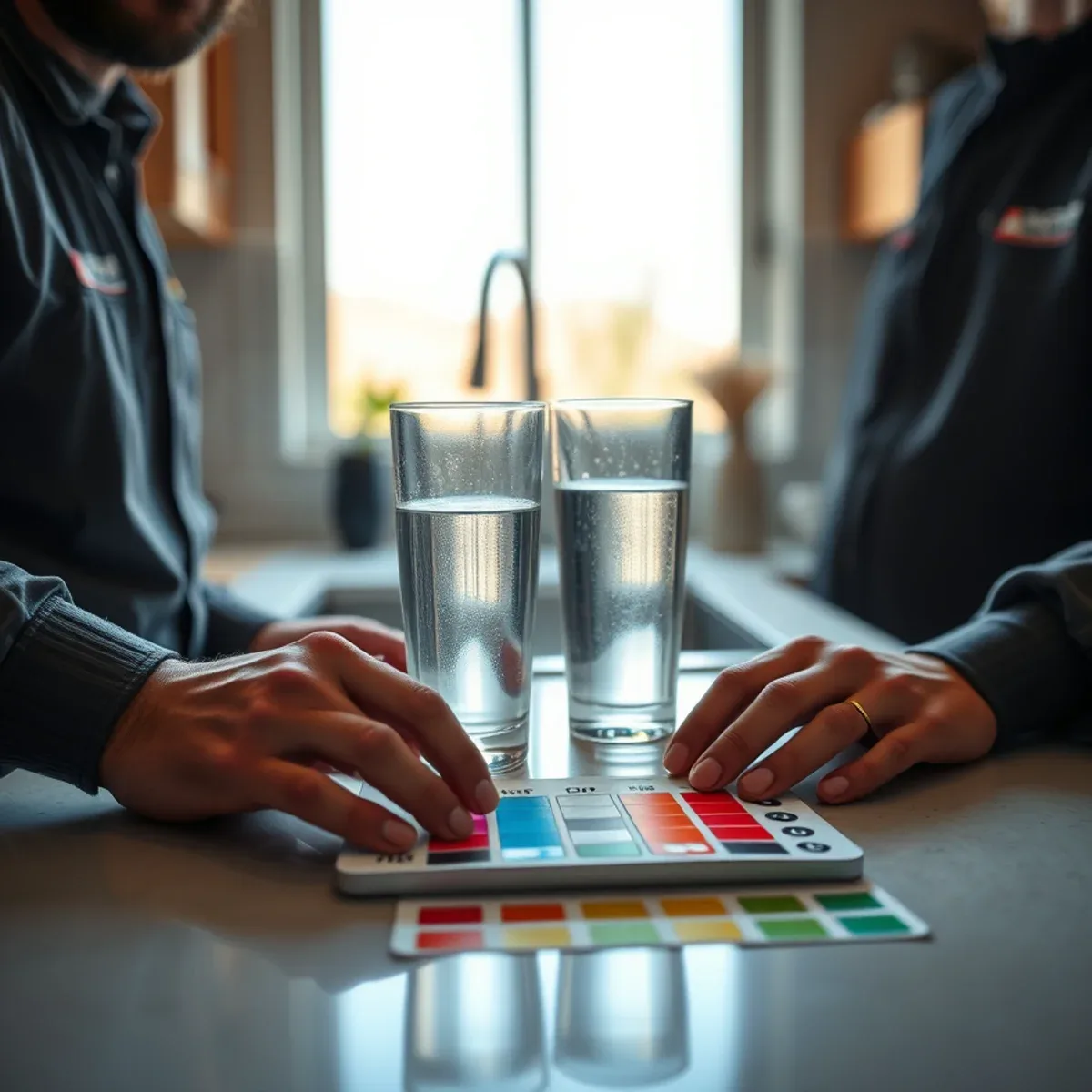
Add a full panel when you are designing treatment, when the water changes in taste, colour or smell, after any work on the well or casing, and after a heavy monsoon season. That panel should cover hardness, iron, manganese, sulfate or hydrogen sulfide, pH, total dissolved solids and arsenic.
The monsoon point deserves emphasis. Aquifer recharge in this region genuinely shifts water chemistry, and a compromised wellhead seal or casing can admit surface influence after heavy rain. If your water noticeably changes after a big storm season, that is a reason to test rather than to wait.
Treatment sequence, and why order beats brand
This is the single most valuable thing in this article for a well owner. Each stage protects the ones behind it, and building out of order means paying to replace equipment that an earlier stage should have shielded.
Sediment filtration first. A spin-down separator or cartridge sized to your actual sediment load removes abrasive particles that wear pump components, clog valves and blind the media downstream.
Iron and sulfur removal second, via an oxidising filter or, at higher concentrations, a chemical feed system. Which one is right depends on pH, which is exactly why the lab panel matters.
Softening third, on water from which the iron has already been removed. This is the ordering mistake that costs people money — a softener installed ahead of iron removal fouls its resin and loses capacity permanently.
Polishing last: carbon if wanted, UV disinfection where bacteria are present, and under-sink reverse osmosis for drinking and cooking water.
On municipal supply the equivalent sequence is much simpler: sediment if needed, carbon for chlorine, then softening, then optional point-of-use RO.
Buying a property on a well
If you are purchasing rural property around Gold Canyon, Florence, Coolidge or anywhere in unincorporated Pinal County, the well is a major inspection item in its own right and a standard home inspection does not evaluate it.
What to establish before you close: a full water quality panel including bacteria, nitrate and arsenic; the well's depth, age and static water level; the age and condition of the pump and pressure tank; whether the wellhead seal and casing are intact; and the well's registration and any available drilling log.
Also worth understanding: water rights and whether the well is shared. Shared wells are common in this region and they come with an agreement — or, worryingly often, without a written one. That is a legal question as much as a plumbing one and it should be resolved before closing.
And check for septic at the same time, because rural properties on wells are almost always on septic too. The two systems have to coexist at proper separation distances, and a failing leach field near a wellhead is a serious problem rather than an inconvenience.
Which is better?
Neither, honestly — they are different trade-offs and the right answer depends on the property.
City water gives you treated, monitored supply, no equipment of your own to maintain, and somebody else responsible up to the meter. You pay a monthly bill, you get chlorinated water, and you have no control over what happens upstream.
A well gives you no water bill, independence from a utility, and complete control over your own treatment. In exchange you own a pump, a pressure tank, a wellhead and all the testing responsibility — and when something fails at 6pm on a Sunday, there is nobody to call but a plumber.
What we would say is this: a well is entirely manageable if you treat it as a system you maintain rather than a tap you use. Test annually. Check the pressure tank charge. Know your pump's age. Design treatment off real numbers. Do those four things and a well is genuinely no more trouble than municipal supply.
Frequently asked questions
A well is a system, not a tap
Test annually, know your pump's age, check the pressure tank charge, and design treatment from real lab numbers rather than a product catalogue. Do those four things and a private well is genuinely no more trouble than city water.
We service wells, pressure tanks and treatment across Gold Canyon, Florence, Coolidge and rural Pinal County — and we start with the pressure tank and a water panel, not a sales pitch.
Services mentioned in this article
- Well Pumps & Well Waterin Apache Junction, AZ
- Whole-Home Filtrationin Apache Junction, AZ
- Septic Servicesin Apache Junction, AZ