What to Do When Your Water Heater Bursts at 2 AM
A tank does not fail politely. Here are the five things to do in the first ten minutes, in the right order, and what to expect afterward.
The short answer
Do five things in order: close the cold inlet valve on top of the tank or the main house shutoff; turn off the gas control valve or the breaker; open the tank drain valve and run a hose somewhere safe; photograph everything before cleaning up; then call. A burst tank cannot be repaired.
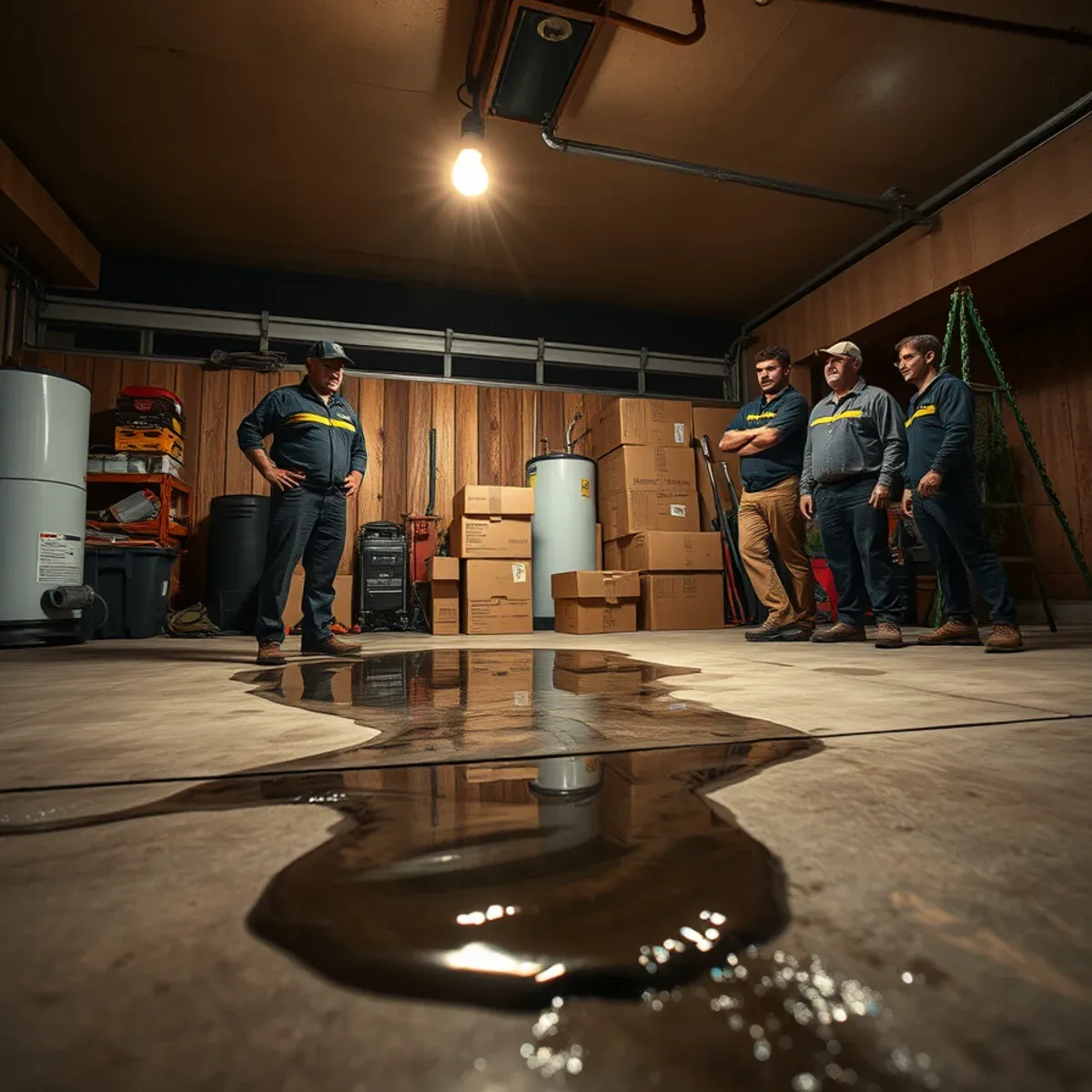
A water heater tank does not fail gradually. The steel corrodes from the inside for years, and then one night the vessel gives up and forty or fifty gallons goes onto the floor — followed by however much more the supply line keeps feeding it.
It almost always happens at night or while nobody is home, because that is when the tank sits full and hot and nobody is around to notice the first seep. If you are reading this standing in water right now, skip to the list.
Here is exactly what to do, in order, and what to expect from the rest of the night.
1. Shut off the water to the heater
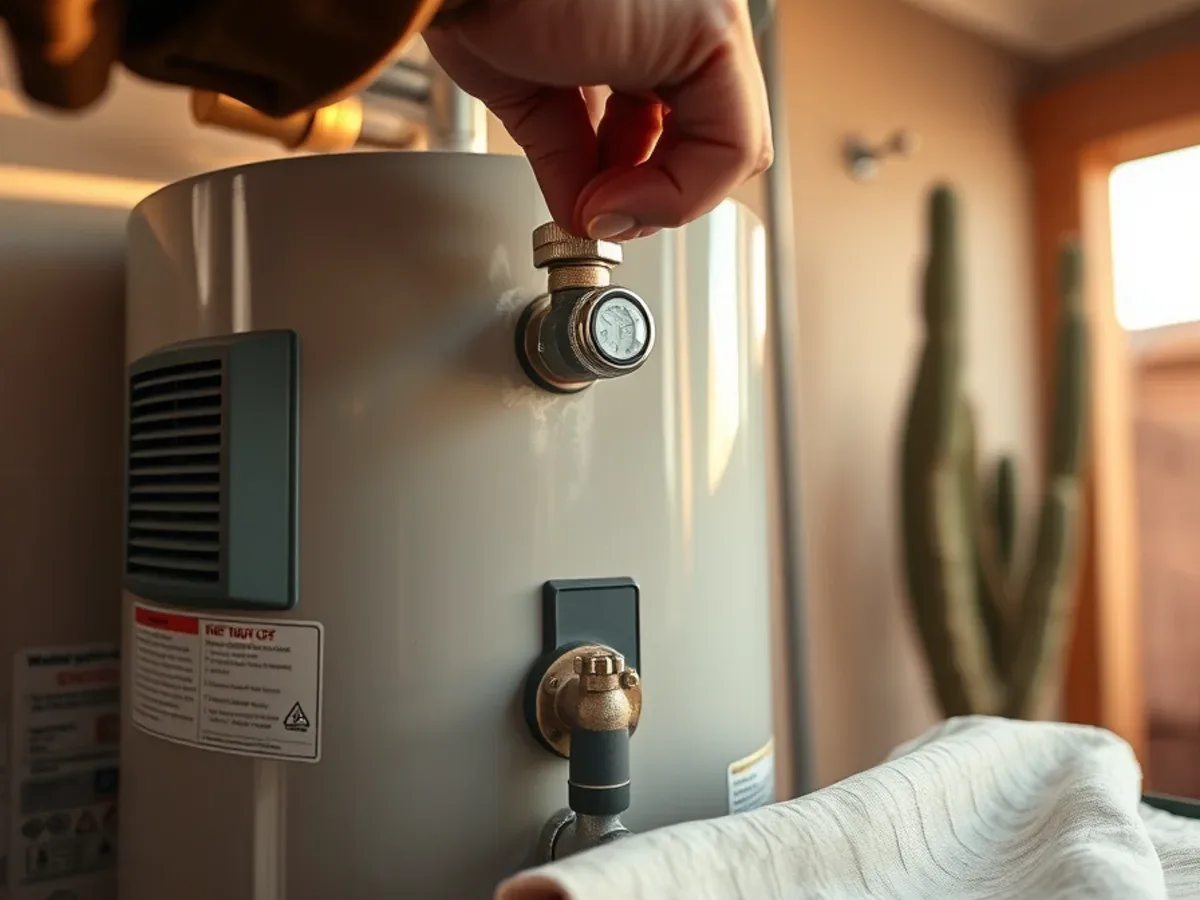
There is a valve on the cold water line entering the top of the tank — usually a lever or a round handle within arm's reach. Close it. A lever takes a quarter turn; a round handle turns clockwise until it stops.
If that valve will not move, is seized, or does not exist, go straight to the main shutoff for the house. On most Apache Junction homes that is on the exterior wall on the street side, generally within a few feet of the front hose bib, or in a valve box near the meter at the property line. Manufactured and mobile homes usually have it at the water riser under the skirting.
This is the single most important step. Until the supply is off, the tank is not just leaking what it held — it is passing everything the main can deliver.
2. Kill the energy source
On a gas heater, turn the gas control valve on the front of the unit to OFF. There is also usually a shutoff valve on the gas line near the heater — close that too if you can reach it safely.
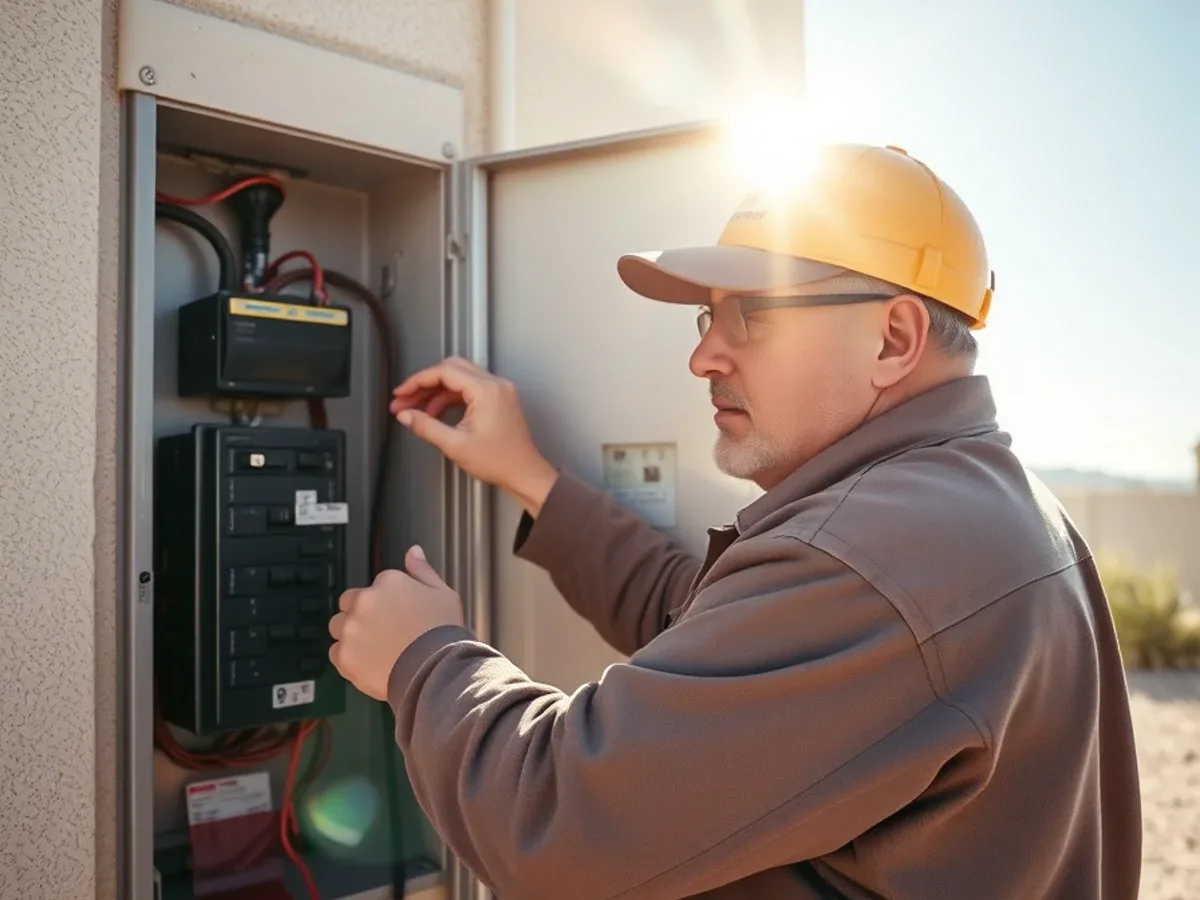
On an electric heater, switch off the breaker at the panel. Do not touch the unit itself until the breaker is off, and do not stand in water while working at an electrical panel.
This matters for a reason that is not obvious: a heater that has lost its water but still has power or gas will fire on an empty or partially empty tank. That destroys the elements on an electric unit and creates a genuine hazard on a gas one.
3. Get the water moving away from things
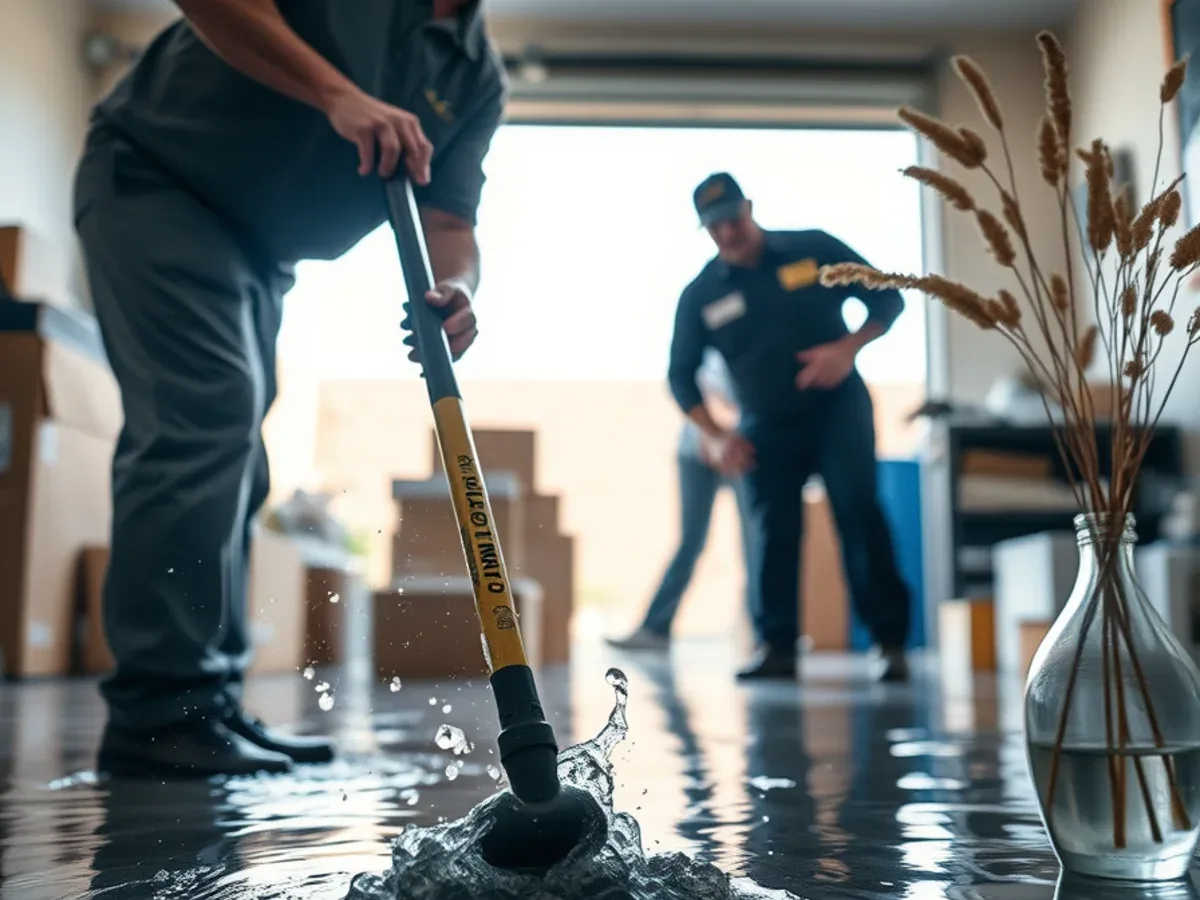
Open the drain valve at the bottom of the tank and put a hose on it if you have one, running it out of the garage or to a floor drain. Counterintuitive as it feels, draining the tank deliberately is better than letting it empty across your floor.
Then deal with what is already down. Get boxes, stored belongings and anything cardboard up off the floor immediately — cardboard wicks water astonishingly fast and a box that is dry on top is often already ruined at the base.
If water is heading toward a door into the house, a rolled towel or a squeegee buys you time. Garage floors usually slope toward the door for exactly this reason, which is helpful for drainage and unhelpful if the low point is your interior threshold.
Cold inlet valve
On top of the tank. Close this first — it stops the supply feeding the leak.
Main house shutoff
Exterior wall street side, or a box near the meter. Your fallback if the tank valve will not move.
Gas control or breaker
Off. A heater firing on an empty tank is a hazard and destroys elements.
Drain valve plus hose
Deliberately drain it somewhere sensible rather than letting it find your floor.
4. Photograph everything before you clean up
This takes ninety seconds and it is frequently what determines whether an insurance claim succeeds.
Photograph the heater from several angles including the data plate with the serial number, the water on the floor at its full extent, anything damaged, and the surrounding area. Take a short video walking through it if you can.
Then start moving and drying things. Insurers generally expect you to mitigate further damage — leaving water sitting to "preserve evidence" works against you, not for you. Document first, then act.
Note the time, and note when you shut the water off. Sudden accidental discharge is treated very differently from long-term seepage by most policies, and a clear timeline supports the former.

5. Call — and know what you are calling about
Now call a plumber. When you do, having a few details ready makes the conversation far more useful: gas or electric, the capacity if you know it, the age from the serial number if you can read it, where the heater is located, and whether the water is contained or has reached living space.
The honest answer about timing: if the water is off and contained, a middle-of-the-night replacement is usually not necessary, and you will pay a meaningful after-hours premium for one. Most households are better served by shutting everything down at 2am and having the replacement done first thing.
What genuinely does justify an immediate call-out is water reaching living space, an attic-mounted heater putting water through a ceiling, a gas smell, or a shutoff you could not close. We will tell you honestly which situation you are in rather than dispatching a truck at premium rates for something that can safely wait six hours.
Can the tank be repaired? No.
This is the question everybody asks, and the answer is genuinely no. A tank water heater is a sealed, glass-lined steel vessel. When the steel corrodes through, there is no patch, weld or sealant that restores it — the lining is what protected it and that lining is gone.
What is repairable is everything bolted to the tank: the T&P valve, the drain valve, the gas control, the elements and thermostats, the inlet and outlet fittings, the expansion tank. If your leak is coming from any of those, you have a repair rather than a replacement, and that is genuinely good news.
The test is where the water originates. Water at the base of the jacket, or seeping from a seam, is the tank. Water at a fitting, valve or connection is a part.
Why it happened, and how to not repeat it
In Apache Junction, tank failure is almost always the same story. Water at 15 to 25 grains per gallon deposits sediment on the tank floor, which insulates the burner from the water and creates hot spots that stress the glass lining until it cracks. Meanwhile the anode rod — the sacrificial component whose entire job is to corrode instead of your tank — gets consumed faster than it would on soft water, and once it is gone the tank itself becomes the sacrificial metal.
That is why a heater rated for twelve years routinely gives up at seven here, and why the households that reach fourteen or fifteen are almost always the ones that flushed annually and changed the anode every two to three years.
On the replacement, three things are worth doing. Put in a drip pan plumbed to an actual drain if there is not one — this failure would have been a puddle instead of a flood. Add a leak sensor with automatic shutoff, especially if you are away part of the year. And treat the water, because softening is the single decision most likely to get the new tank to fifteen years instead of seven.
Frequently asked questions
Water off, power off, photos, then call
That order matters. Everything else — the cleanup, the insurance call, the replacement — is easier once the supply is stopped and the energy source is isolated.
We replace water heaters across Apache Junction and the East Valley, and we will tell you honestly on the phone whether your situation genuinely needs someone tonight or is better handled at 8am without the after-hours rate.
Services mentioned in this article
- Water Heater Repairin Apache Junction, AZ
- Emergency Plumbingin Apache Junction, AZ
- Water Heater Flushin Apache Junction, AZ