
Short answer
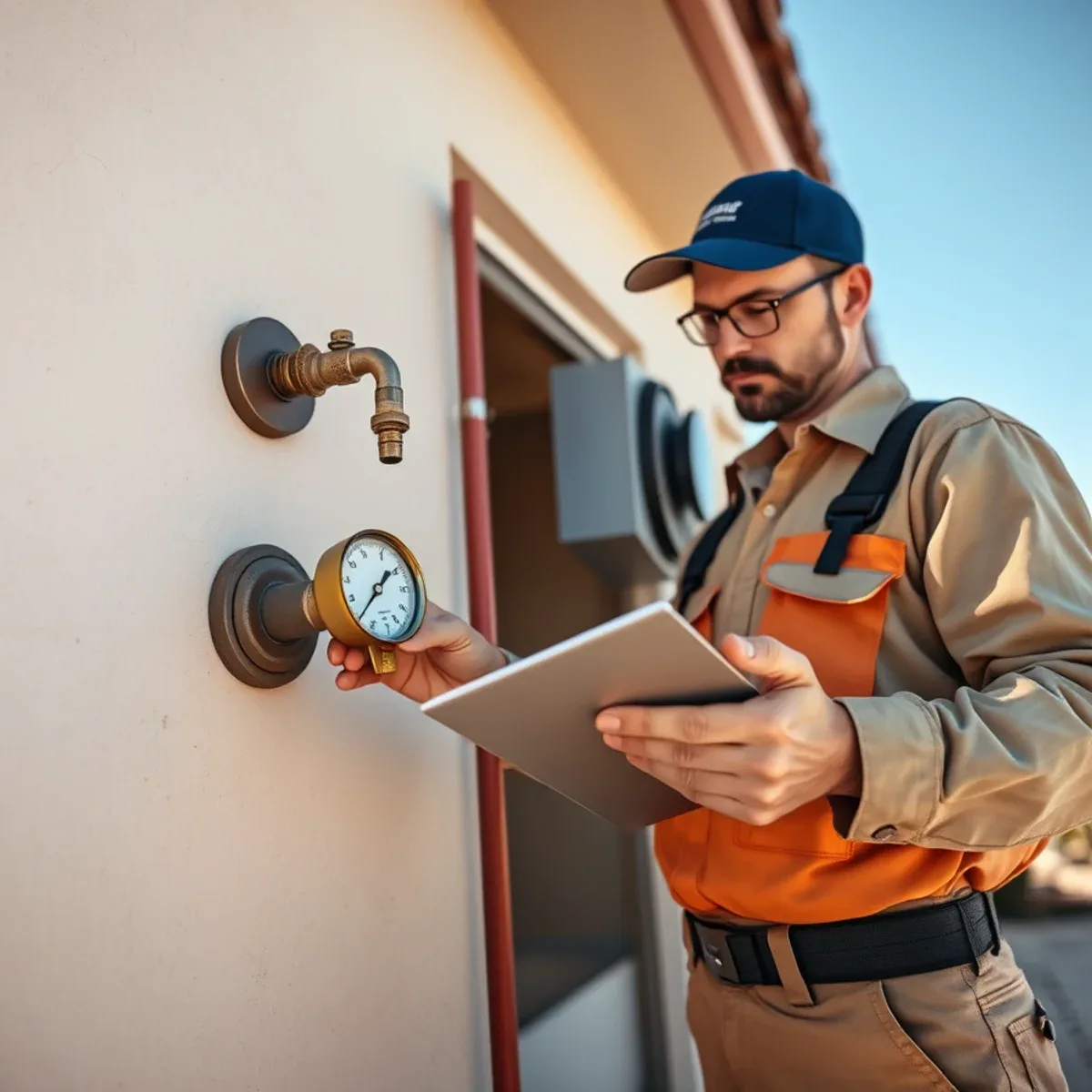
Water pressure problems in Apache Junction are the most commonly misdiagnosed plumbing complaint, and the fix depends entirely on whether it is one fixture or the whole house. A gauge on a hose bib takes two minutes and usually saves people from paying for the wrong repair — a booster pump on a house with a failed pressure regulator solves nothing.
Water pressure is the plumbing complaint where homeowners most often spend money on the wrong fix. Somebody installs a booster pump on a house whose actual problem is a failed pressure reducing valve, or repipes a house when a mineral-packed aerator was restricting one faucet.
The diagnosis is not complicated and it does not take long. A gauge on a hose bib gives static pressure in two minutes. Running two or three fixtures at once gives dynamic pressure. Between those two numbers and a look at the pipe material, the cause is usually obvious.
And pressure problems run both directions. Low pressure is annoying; high pressure is expensive, because it quietly destroys valves, appliances and water heaters while feeling like a benefit in the shower.
Pressure too low — or too high?
We measure before we recommend. A two-minute gauge reading usually saves people from paying for the wrong fix.
What you are experiencing
Weak flow everywhere in the house
Upstream problem — regulator, main valve, whole-house filter, corroded supply piping, or the utility.
Weak flow at one fixture only
Almost always a mineral-packed aerator or a scaled cartridge. Cheap and fast to fix.
Pressure drops when a second fixture opens
Restricted supply piping. On older Apache Junction homes that usually means galvanized closing in from the inside.
Banging pipes when a tap shuts
Water hammer, and it points to pressure that is too high, missing arrestors, or a failed expansion tank.
Fixtures and appliances failing early
A classic high-pressure signature. Above 80 psi you are stressing every joint and valve in the house continuously.
The T&P valve on the heater weeps
Usually thermal expansion with no functioning expansion tank — a pressure problem wearing a water heater costume.
What a water pressure job includes
Every quote covers the items below. If something is not on this list, it is not in the price — and we will say so before we start.
Static pressure measured
Gauge on a hose bib with the house at rest. Normal is roughly 50–70 psi; below 40 fixtures underperform and above 80 the pressure itself is damaging your plumbing.
Dynamic pressure measured
Two or three fixtures running at once. A large drop between the two readings points at restriction rather than supply.
Cheap causes ruled out first
Main and meter valves confirmed fully open, whole-house filter cartridge checked, aerators inspected — before anything expensive is discussed.
Pressure reducing valve tested
PRVs wear out and fail in both directions. Stuck open they let damaging main pressure through; drifting closed they starve the house.
Thermal expansion tank checked
Required on any closed system. A failed bladder means every water heater cycle spikes pressure system-wide.
Pipe material verified in more than one place
Partial repipes are common here, and the diagnosis genuinely differs from room to room in older houses.
What the numbers should be
Normal residential static pressure is roughly 50 to 70 psi. Below about 40 psi, fixtures and appliances underperform noticeably. Above about 80 psi you are in territory that damages plumbing — most fixture manufacturers set 80 psi as their maximum, and many warranties are void above it.
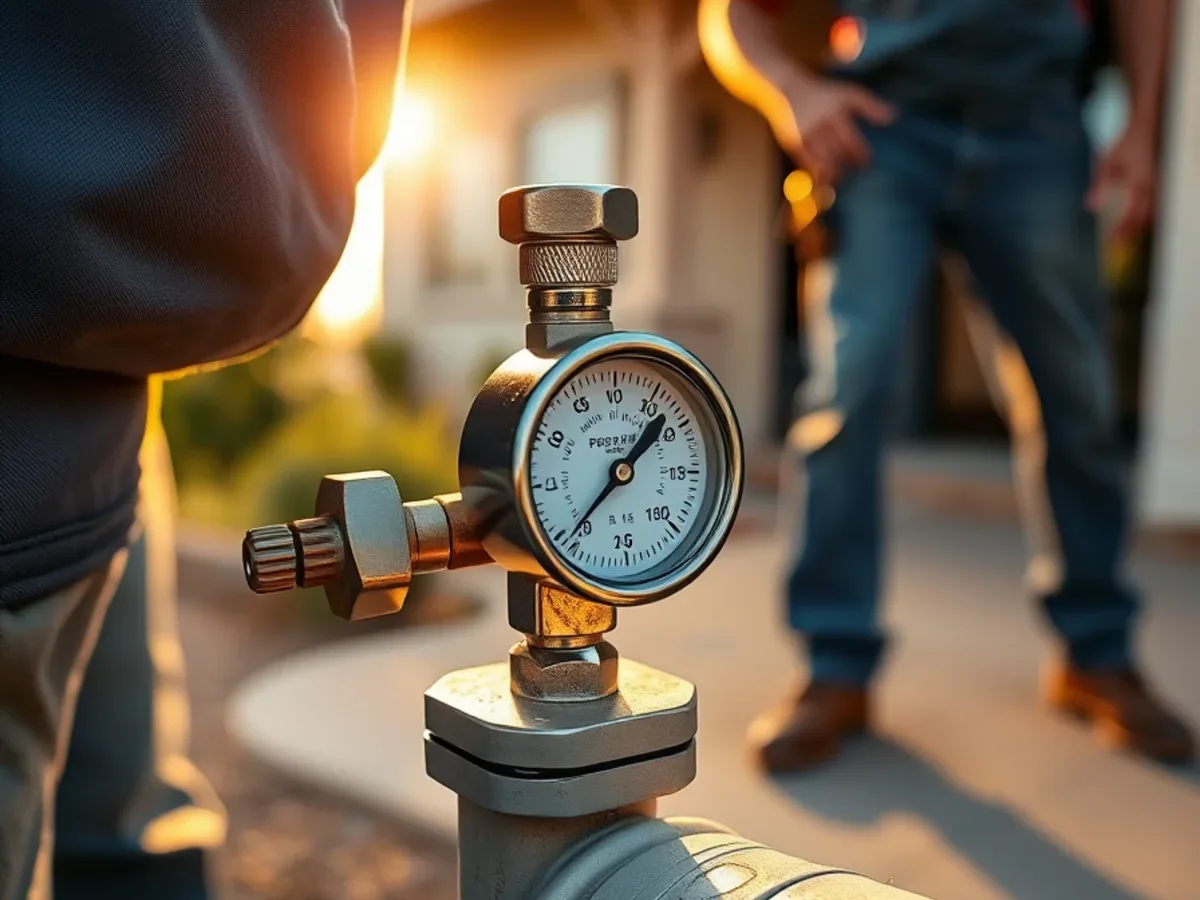
A gauge that threads onto a hose bib costs very little and answers the question immediately. Test with everything in the house off for static pressure, then run two or three fixtures and watch it again for dynamic pressure. A large drop between the two means restriction somewhere in the supply piping.
One thing worth knowing about Apache Junction and the surrounding Pinal County networks: some areas genuinely see supply pressure that varies through the day. If yours is fine at 10pm and poor at 7am, that pattern points upstream and no work at your house will change it — which is exactly the situation where a booster is the right answer rather than the wrong one.
The pressure reducing valve
A PRV sits near where the main line enters the house and reduces incoming municipal pressure to something residential fixtures can handle. It is a wearing part with a service life, and it fails in both directions.
Failed closed, or drifting down, it starves the house — and this is the most commonly missed cause of whole-house low pressure we find. Failed open, it lets full main pressure through, which is the opposite complaint and considerably more damaging, because nothing about it feels like a problem until things start breaking.
Replacing one is a contained job at a fixed price, and on a house that has never had it done it is frequently the single highest-value plumbing repair available. Where a PRV is fitted, a thermal expansion tank is also required — the system becomes closed, so heated water has nowhere to expand into, and every heating cycle spikes pressure against the tank and every fixture.
PRV stuck open
Full main pressure reaching the house. Damaging, and it does not feel like a fault.
PRV drifting closed
Whole-house pressure decline with no other explanation. Commonly misdiagnosed as pipe corrosion.
Missing expansion tank
Required on any closed system. Without it, every heating cycle spikes pressure system-wide.
Failed expansion tank bladder
Tap it — hollow top, solid bottom is correct. Solid throughout means it is absorbing nothing.
When it really is the pipe
In older Apache Junction, Mesa, Tempe and Superior housing, whole-house pressure that has declined gradually over years is usually galvanized steel supply pipe rusting closed from the inside. The interior diameter narrows until a three-quarter-inch line moves the volume of a straw.
The signature is consistent and easy to recognise: pressure that got worse slowly rather than suddenly, noticeably weaker hot than cold, a large drop whenever a second fixture opens, and brown or rusty water on the first draw of the morning that clears after a minute.
There is no repair for that. Replacing a section just relocates the restriction. A repipe in PEX is the honest answer, and the improvement afterward is immediate and dramatic — customers routinely describe it as a different house.
What we will not do is quote a repipe without measuring first. If the cause is a failed PRV, a partly closed main valve or a neglected whole-house filter cartridge, you should spend a fraction of that and get the same result.
How a pressure call runs
- 1
Measure static pressure
Gauge on a hose bib with the house at rest. Two minutes, and it frames everything that follows.
- 2
Measure dynamic pressure
Two or three fixtures running. A large drop points to restriction rather than supply.
- 3
Check the obvious first
Main and meter valves fully open, whole-house filter cartridge, aerators. Cheap causes ruled out before expensive ones.
- 4
Test the regulator and expansion tank
PRV operation and adjustment range, expansion tank charge, and whether the system is closed at all.
- 5
Verify pipe material
Checked in more than one location, because partial repipes are common and the kitchen often differs from the bathroom.
- 6
Recommend the cheapest fix that works
You get the diagnosis and the options in writing, smallest intervention first.
What drives the price
A pressure diagnostic is a modest flat fee that applies toward whatever repair you approve. Beyond that:
- What is actually wrong
- An aerator is minutes. A PRV is a contained fixed-price job. A repipe is a different category entirely.
- Where the regulator sits
- An accessible above-ground PRV near the meter is straightforward. One buried in a box or behind landscaping is not.
- Whether an expansion tank is needed
- Required on closed systems. If yours is missing or its bladder has failed, it should be corrected at the same time.
- Whether a booster is genuinely justified
- Only where supply pressure is truly low. We will tell you when it is not, because a booster on a restricted system solves nothing.
- Pipe material
- If corroded galvanized is the cause, the honest quote is a repipe — and we will show you the evidence rather than assert it.
Every quote is written, and the number does not change afterward. AZ ROC CR-37 Plumbing · BBB A+ accredited.
Why AllStar Home Services for water pressure
We measure before we recommend
The cheapest fix that actually works is the one we quote. If a two-minute gauge reading means you need a PRV rather than a repipe, that is what you will hear.
The quote is the price
You hear the number before we start and it does not move afterward. It is the single thing customers mention most in our reviews.
16+ years in the trade, 60+ across the team
Shane is a master plumber who still writes the estimates and runs calls — which means more repairs and fewer replacements.
4.7★ from 20 verified Google reviews
We publish every review including the two critical ones. A page of nothing but five stars tells you less than an honest one.
Where we provide water pressure
Pressure complaints cluster in two very different places. We deliver this from our 15th Ave shop across Apache Junction and Gold Canyon, then out through Queen Creek, San Tan Valley, Mesa, Gilbert, Chandler, Tempe and Fountain Hills. In older Apache Junction, central Mesa, Tempe and Superior it is corroded galvanized closing from the inside; in San Tan Valley and parts of outlying Pinal County it is genuine supply-side variation across the distribution network.
Further out we cover Florence, Coolidge, Casa Grande, Maricopa, Eloy, Superior and Mammoth, and we are honest about when a small job does not justify the drive. Foothill areas — Superstition Mountain, Gold Canyon, Fountain Hills — have the opposite problem, where elevation puts homes at the low end of a pressure zone well above the 80 psi most fixtures are rated for.
- Water Pressure in Apache Junction
- Water Pressure in Gold Canyon
- Water Pressure in Queen Creek
- Water Pressure in Mesa
- Water Pressure in Superstition Mountain
- Water Pressure in Ironwood Estates
Water Pressure questions, answered
Related reading
 Troubleshooting
Low Water Pressure in an Arizona Home: 7 Causes
The first question is whether it is one fixture or the whole house — because those are completely different problems with completely different price tags. Here is how to work it out.
7 min read Hard Water
How Hard Water in Apache Junction Destroys Your Plumbing
At 15 to 25 grains per gallon, Apache Junction has some of the hardest water in the country. Here is what that mineral is actually doing inside your pipes, your water heater and your fixtures — and the maintenance that changes the outcome.
7 min read