
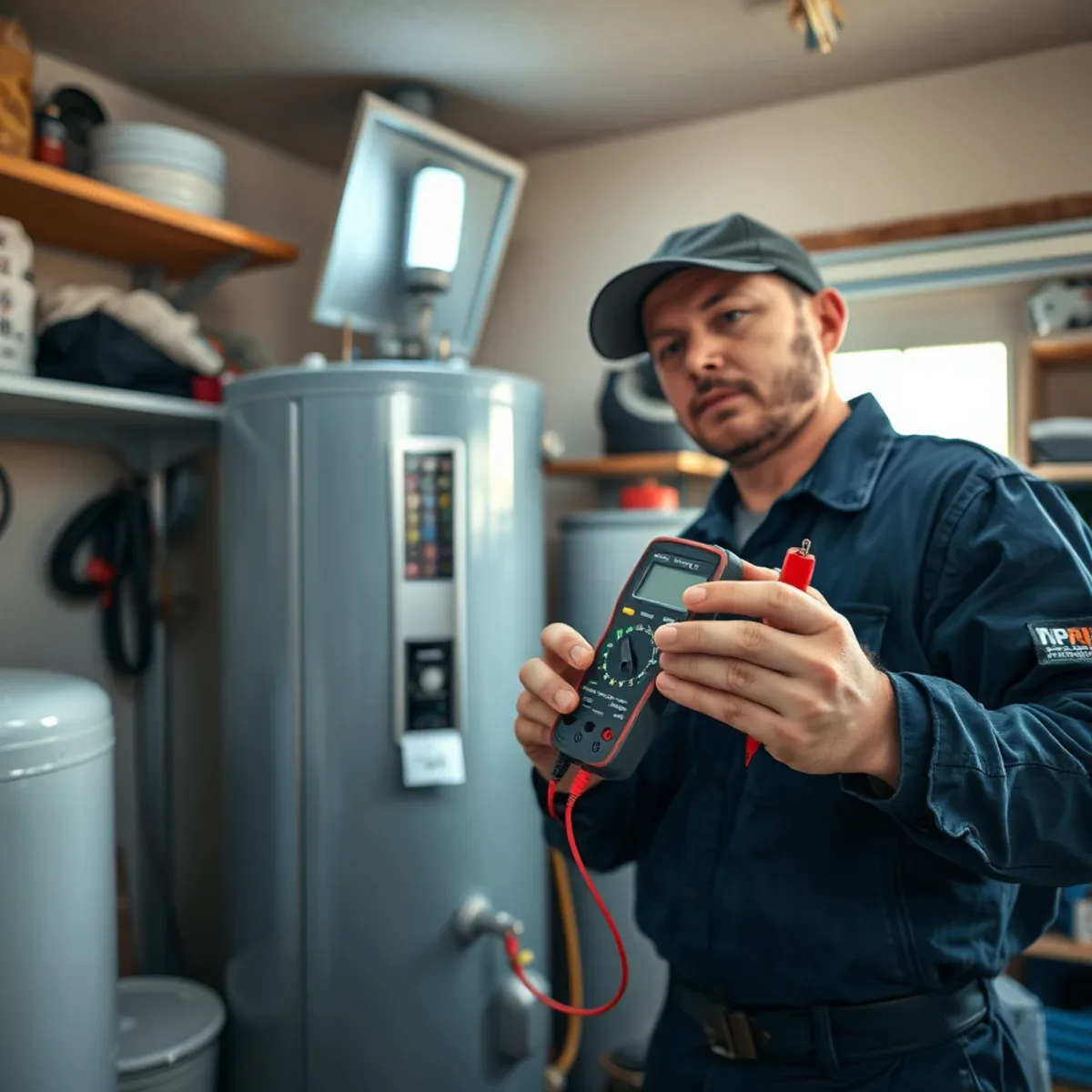
Short answer
Water heater repair in Apache Junction comes down to one question: is the fault in the tank or in a component bolted to it. Thermocouples, gas control valves, elements, thermostats and T&P valves are repairs. A tank weeping at the seam is not repairable at any price, and anyone telling you otherwise is selling you a delay.
A water heater in Apache Junction does not get to age gracefully. It sits in a garage that hits 120 degrees in July, and it is fed water carrying 15 to 25 grains of dissolved mineral per gallon. Both of those shorten its life. A tank that a manufacturer rates for a twelve-year run in a mild climate on soft water routinely gives up here at seven or eight — and the ones that make it past that almost always belong to someone who flushed it.
We repair and replace tank and tankless units, and we do the unglamorous maintenance work that actually extends their life: annual flushes, anode rod replacement, thermal expansion tanks, and sizing a replacement to what your household really uses instead of whatever happened to be in the closet before.
Shane installs water heaters constantly, and the review that customers leave most often about it is the same one: he explained what was happening, the quote he gave was the price they paid, and nothing got added mid-job.
No hot water? We can usually be there today.
Free written quotes on replacements. Repair pricing before we start. Nothing added afterward.
What your water heater is trying to tell you
Rumbling, popping or crackling
That is water flashing to steam underneath a sediment layer on the tank bottom. It is the sound of scale, and it means the burner is heating rock before it heats water.
Hot water runs out faster than it used to
Sediment takes up volume. A 50-gallon tank with four inches of scale is functionally a 38-gallon tank, and it recovers slower too.
Rusty or metallic-tasting hot water
Cold water runs clear but hot runs orange? The anode rod is gone and the tank lining is now the sacrificial metal. This is a countdown, not a maintenance item.
Water at the base of the tank
Check the T&P valve and the fittings first — those are repairable. If it is seeping from the tank seam itself, the tank is finished and no repair will save it.
Pilot will not stay lit
Usually a thermocouple or a dirty pilot assembly on an older unit, sometimes a failed gas control valve. All three are repairs, not replacements.
The unit is over ten years old
Check the serial number sticker. On a heater that age in Apache Junction water, putting a few hundred dollars into a repair is often money you will lose within two years.
What a water heater repair job includes
Every quote covers the items below. If something is not on this list, it is not in the price — and we will say so before we start.
Full diagnosis before pricing
Gas control or elements tested, anode inspected, T&P and expansion tank checked, and a sample drained so you can see what is actually in your tank.
Repair and replacement quoted side by side
Where a repair is viable you get both numbers, plus our honest read on which one we would choose in your house.
Right-sized selection
Sized on peak demand and recovery rate rather than simply matching whatever was there before.
Permit pulled and code brought current
Seismic strapping, drip pan and drain, correct venting, thermal expansion tank and proper T&P discharge — all inspected.
Old unit hauled away
It leaves with us. It does not sit on your driveway for a week.
Setup and handover
Temperature set to 120°F, air purged, shutoffs and drain valve shown to you, and a date for the next flush.
Repair or replace: how we actually decide
Nobody should replace a working water heater, and nobody should sink repair money into a tank that is about to open up. The honest dividing line comes down to three things: the age of the unit, whether the failure is in the tank or in a component bolted to it, and whether it has ever been flushed.
Component failures — thermocouples, gas control valves, heating elements, thermostats, T&P valves, dip tubes — are repairs, and on a heater under eight years old they are usually worth doing. Tank failures are not repairable at any price. If the steel is weeping, the job is a replacement and anyone telling you otherwise is selling you a delay.
The gray zone is a nine- or ten-year-old unit with a repairable fault and a decade of un-flushed scale in the bottom. We will show you what came out of the drain valve and give you a straight read on what we would do in your house. Sometimes that answer is "fix it, get another two years, and plan for the replacement." We would rather tell you that than sell you a heater today.
Why hard water is the whole story here
At Apache Junction hardness levels, a water heater accumulates sediment several times faster than the same unit would in a soft-water region. That layer does three destructive things at once. It insulates the burner from the water, so the unit burns more gas to reach the same temperature and your utility bill quietly climbs. It creates hot spots on the tank floor that stress the glass lining until it cracks. And it buries the drain valve, which is exactly why a heater nobody has touched in eight years often will not drain when you finally try.
The anode rod is the other half of it. That rod is a length of magnesium or aluminum whose entire job is to corrode instead of your tank. Hard water eats it faster. The standard advice to check it at five years is written for average water — in this town, two to three years is the realistic interval, and a spent rod means the tank itself has started serving as the sacrificial metal.
This is why we pair almost every water heater conversation with a water treatment conversation. Softening the water going into a new heater is not an upsell; it is the difference between the unit you install now being your last one for fifteen years or your last one for seven.
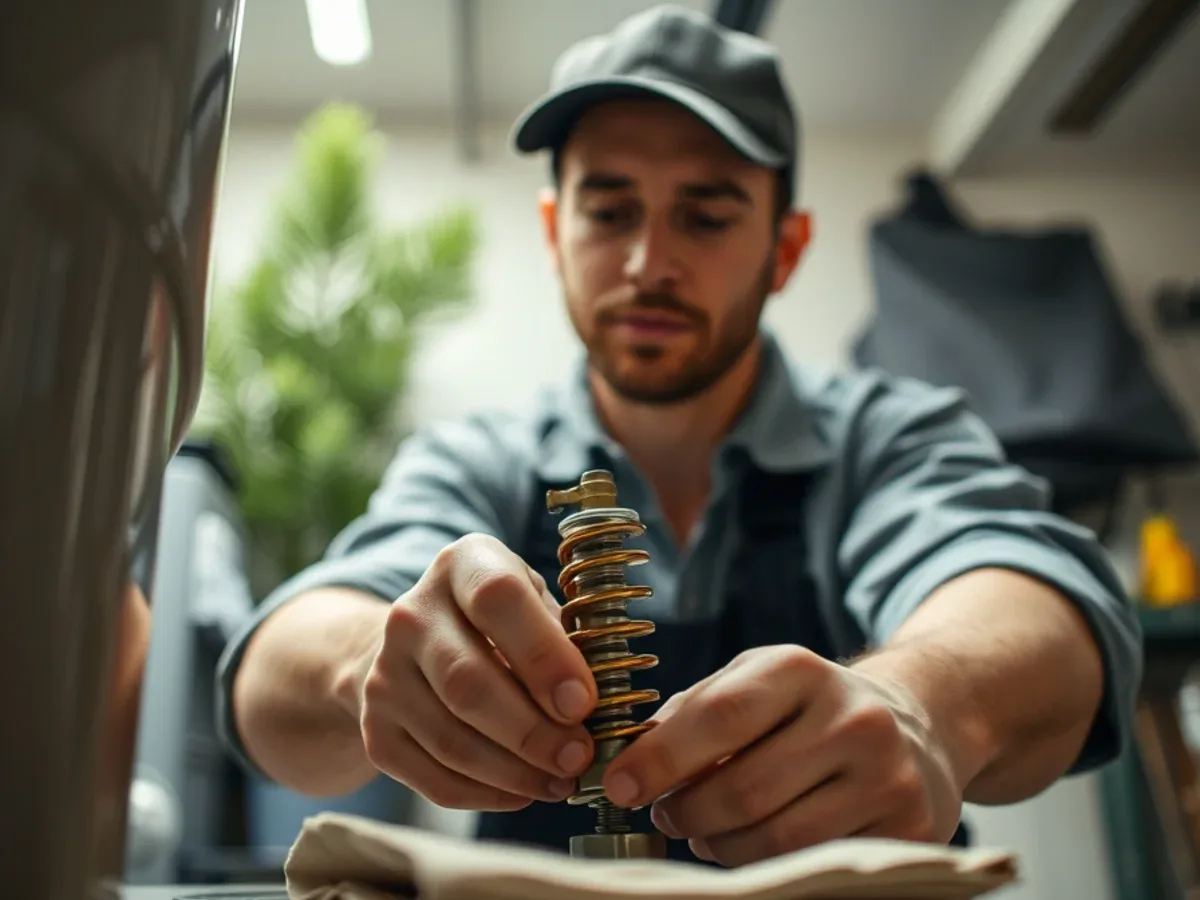
Annual flush
Pull the sediment before it bakes into a crust. Once it hardens, a flush no longer removes it.
Anode rod at 2–3 years
A twenty-minute job that routinely adds years to a tank. Almost nobody does it, which is why almost nobody gets full life out of a heater here.
Thermal expansion tank
Required on closed systems with a check valve or pressure regulator. Without one, every heating cycle spikes pressure against the tank and your fixtures.
Set it to 120°F
Hotter water precipitates minerals faster and scalds faster. 120 is the sweet spot for scale, safety and gas use.
Sizing a replacement for how your household actually lives
The most common mistake in a water heater replacement is installing whatever size was there before without asking whether it was right. A retired couple in Golden Vista does not need the same first-hour rating as a family of five with two teenagers and a soaking tub, and both of them are paying to keep that tank hot around the clock.
We size on peak demand — the worst 60 minutes of your day, usually a weekday morning — and on recovery rate, not just gallons. Gas recovers roughly twice as fast as electric, so a 40-gallon gas unit can outperform a 50-gallon electric for a busy household. On the flip side, if your garage has no gas line and no vent, a heat pump water heater can be a genuinely good fit in an Arizona garage, because the ambient heat it pulls from is the one thing this climate has in surplus.
How a water heater job runs
- 1
Diagnosis first
We test the gas control or elements, check the anode, inspect the T&P and expansion tank, and drain a sample so you can see what is actually in your tank.
- 2
Two honest options
Where a repair is viable, you get repair pricing and replacement pricing side by side, with our read on which one we would choose in your house.
- 3
Right-sized selection
We size on peak demand and fuel type, and we walk you through tank versus tankless versus heat pump if the situation makes any of them a real contender.
- 4
Permit and code
Replacements are permitted work. We pull it, and we bring the install up to current code — seismic strapping, drip pan and drain, proper venting, expansion tank, correct T&P discharge.
- 5
Install and haul-away
Old unit out, new unit in, connections pressure-tested, and the old heater goes with us. Most straightforward replacements are a same-day job.
- 6
Setup and handoff
We set the temperature, purge the air, show you the shutoffs and the drain valve, and tell you exactly when to flush it next.
What drives the price
Replacement quotes are free and given in writing before anything is ordered. Diagnostic visits carry a service call fee that applies to the repair. What moves the number:
- Tank, tankless or heat pump
- A like-for-like tank swap is the least expensive path. Tankless and heat pump conversions cost more up front because they need gas, venting or electrical changes, and both pay it back over a longer service life.
- Capacity and recovery rate
- A 40-gallon unit and a 75-gallon high-recovery unit are not close in price. Sizing correctly is where you save money, not by buying small.
- Bringing the install up to code
- Older installs are often missing an expansion tank, a proper drip pan and drain, or correct venting. Those are not optional on a permitted replacement.
- Where the heater lives
- A garage install is straightforward. An interior closet, an attic platform, or a tight manufactured-home alcove adds labor and sometimes requires a different unit entirely.
- Whether you treat the water
- Adding softening or a scale-prevention filter costs money now and is the single highest-return decision you can make about the heater you are installing today.
Every quote is written, and the number does not change afterward. AZ ROC CR-37 Plumbing · BBB A+ accredited.
Why AllStar Home Services for water heater repair
We know what this water does to a tank
At 15–25 grains per gallon, sediment and a spent anode rod are behind most early failures here. We fix the heater and tell you what killed it.
16+ years in this trade, 60+ across the team
Shane is a master plumber who still writes the estimates and runs calls. Experience here means more repairs and fewer replacements.
The quote is the price
You hear the number before we start and it does not move afterward. It is the single thing customers mention most in our reviews, and it is a deliberate policy.
4.7★ from 20 verified Google reviews
We publish every review we have — including the two critical ones. A page of nothing but five stars tells you less than an honest one.
Where we provide water heater repair
Water heaters are our highest-volume replacement job, and we carry common sizes so most straightforward swaps finish the same day. We deliver this service from our shop on 15th Ave across Apache Junction and Gold Canyon — usually within ten to fifteen minutes — and out through Queen Creek, San Tan Valley, Mesa, Gilbert, Chandler, Tempe and Fountain Hills.
Further out we cover Florence, Coolidge, Casa Grande, Maricopa, Eloy, Superior and Mammoth. For the outer edges of Pinal County we are honest about when a small repair does not justify the drive, and when a larger job absolutely does. Manufactured and park-model homes in the Apache Junction resort communities need alcove-specific units that a standard residential heater will not physically fit — we size to the space rather than to what is cheapest on a shelf.
- Water Heater Repair in Apache Junction
- Water Heater Repair in Gold Canyon
- Water Heater Repair in Queen Creek
- Water Heater Repair in Mesa
- Water Heater Repair in Superstition Mountain
- Water Heater Repair in Ironwood Estates
Water Heater Repair questions, answered
Related reading
 Water Heaters
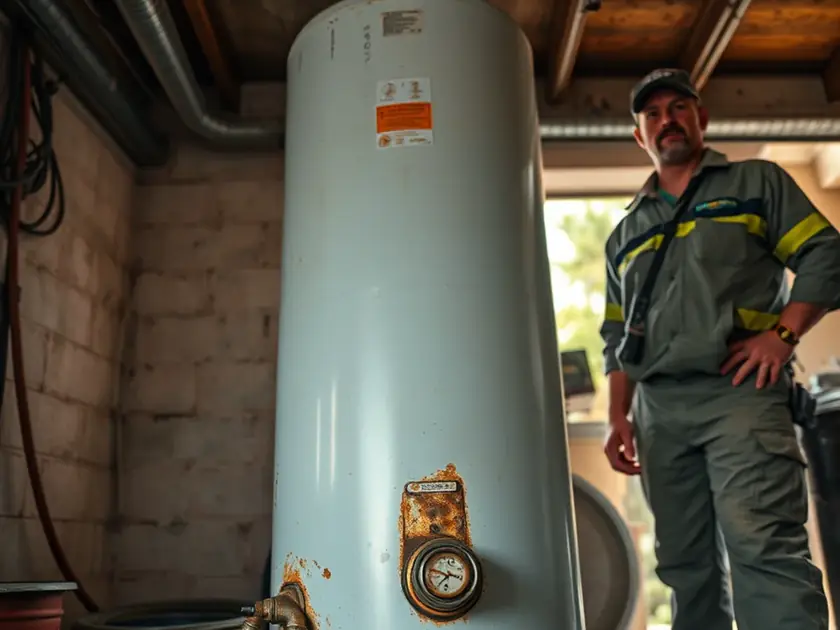
Why Arizona Heat Is Destroying Your Water Heater
A water heater in a 120-degree Arizona garage, fed by 20-grain water, is fighting a battle it was not designed for. Two maintenance items decide whether you get seven years or fifteen.
7 min read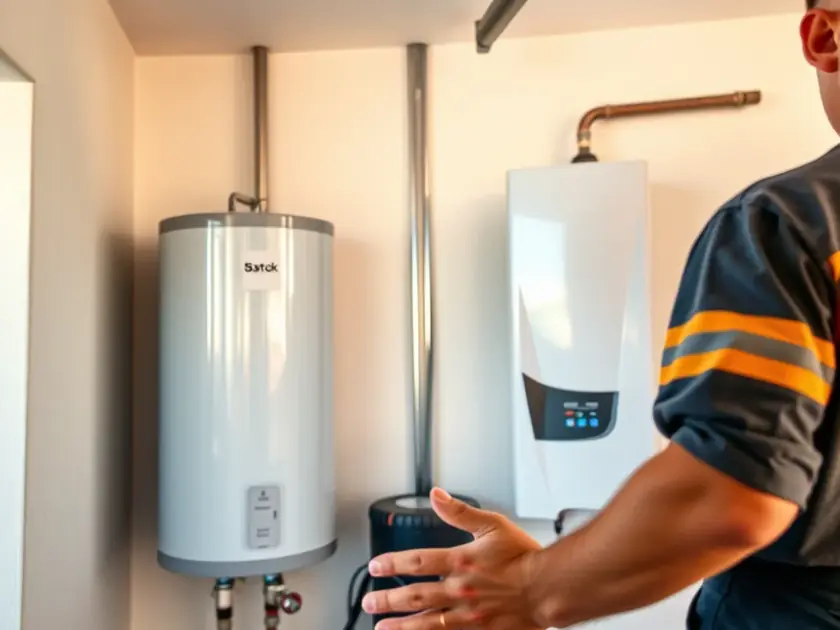 Water Heaters
Tankless vs Tank Water Heaters in Arizona
Tankless is genuinely better in several ways and a worse decision in a few specific situations. Here is the honest comparison, including the gas line question that catches most people out.
8 min read