Why Arizona Heat Is Destroying Your Water Heater (And How to Prevent It)
A water heater in a 120-degree Arizona garage, fed by 20-grain water, is fighting a battle it was not designed for. Two maintenance items decide whether you get seven years or fifteen.
The short answer
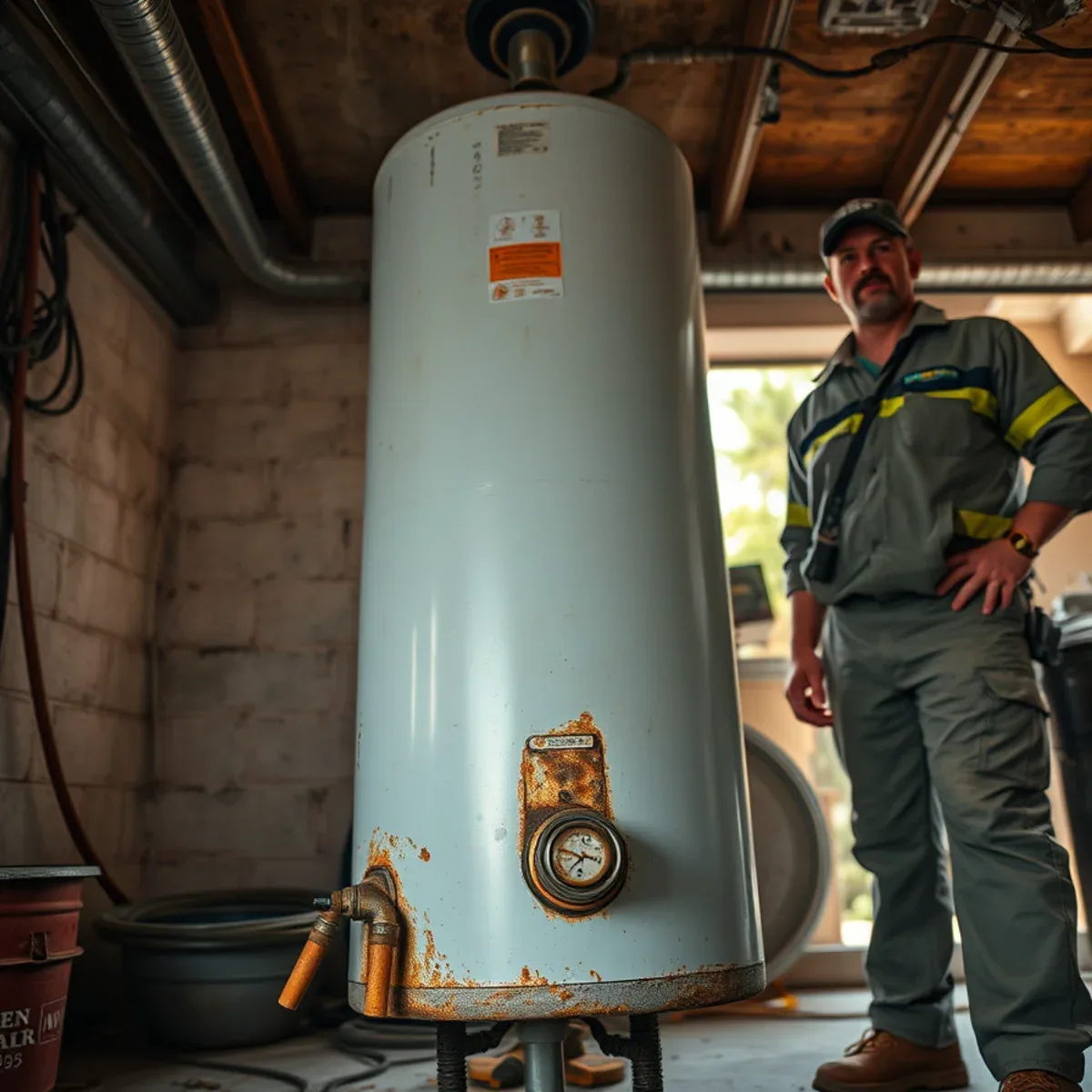
Manufacturers rate tanks at eight to twelve years; on unsoftened Apache Junction water in a hot garage we routinely replace them at six to nine. Two maintenance items decide which you get: an annual flush, and an anode rod check every two to three years rather than the standard five.
Manufacturers rate most residential water heaters at eight to twelve years. In Apache Junction we routinely replace tanks at six to nine, and we also service tanks that are fourteen years old and still going.
The difference between those two outcomes has very little to do with brand and almost everything to do with two maintenance items that nearly nobody performs.
Here is what the Arizona environment does to a water heater and exactly what changes the outcome.
Problem one: hard water and sediment
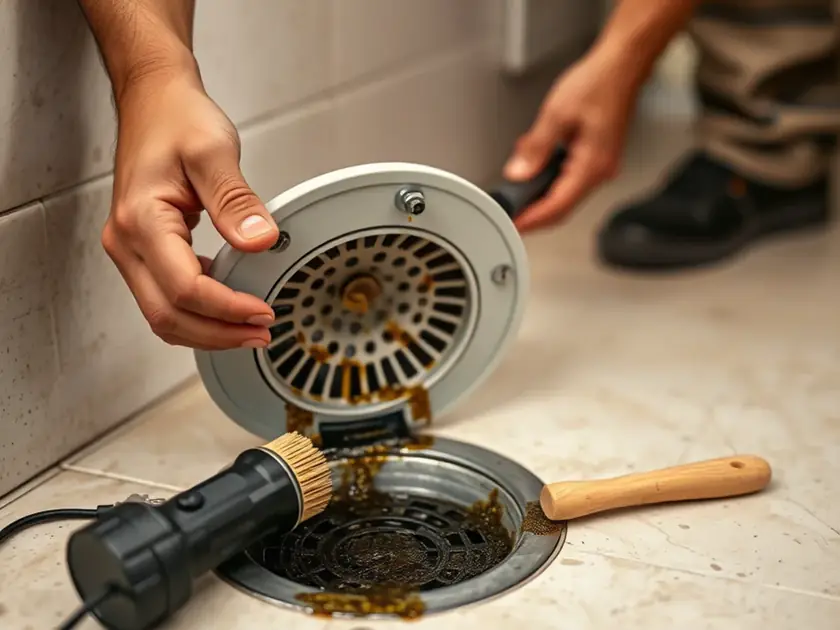
Apache Junction water carries 15 to 25 grains of dissolved calcium and magnesium per gallon. When that water is heated, those minerals precipitate out and settle on the bottom of the tank.
That sediment layer does three destructive things simultaneously. It insulates the burner from the water, so the heater burns more gas to reach the same temperature — a cost that climbs quietly every year. It creates hot spots on the tank floor that stress the glass lining until it cracks and the steel underneath starts corroding. And it buries the drain valve, which is exactly why a heater nobody has touched in eight years will often not drain when someone finally tries.
The rumbling and popping people describe is water flashing to steam underneath that crust. It is the audible signature of a problem that has already progressed.
Problem two: the anode rod nobody knows about
Inside every tank water heater is a rod of magnesium or aluminum threaded into the top. Its entire purpose is to corrode instead of your tank — galvanic action attacks the more reactive metal, so as long as the rod is there, the steel tank is protected.
When the rod is consumed, the tank becomes the sacrificial metal. From that point on it is corroding, and there is no way to reverse it.
Standard advice is to inspect the anode at five years. That advice is written for average water. On Apache Junction hardness, two to three years is the realistic interval. It is a short job — drain a few gallons, unthread the old rod, install a new one — and it routinely adds years to a tank. Almost nobody does it, which is the single biggest reason so few water heaters here reach their rated life.
Magnesium rod
Most protective, consumed fastest. The default in most tanks from the factory.
Aluminum-zinc rod
Lasts longer and helps with sulfur smell. A good swap on wells producing hydrogen sulfide.
Powered anode
Uses a small current instead of a sacrificial metal. More expensive, essentially permanent.
Check at 2–3 years here
Not five. Local hardness consumes rods considerably faster than average water.
Problem three: the garage itself
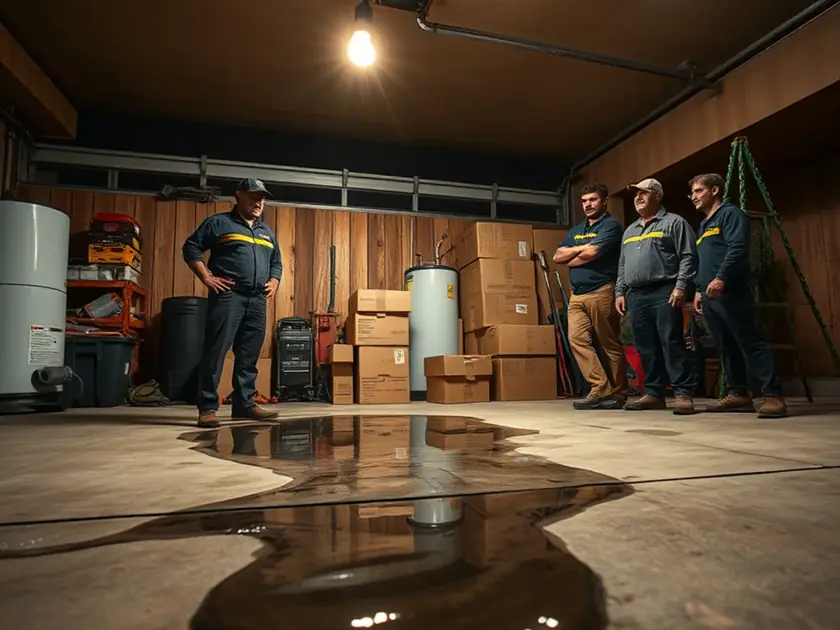
Water heaters in Arizona garages live in ambient temperatures that regularly exceed 120 degrees through the summer. That is not a failure mode by itself — a hot garage arguably reduces standby losses — but it accelerates the aging of every non-metallic component: the T&P valve, the gas control valve diaphragm, the drain valve, the flexible connectors and the expansion tank bladder.
Attic-mounted heaters, common in some East Valley construction, are worse. Ambient temperatures up there can hit 150 degrees, and a failure in an attic puts water through your ceiling rather than onto a garage floor with a drain.
If your heater is in an attic, verify that there is a drip pan plumbed to an actual drain and consider a leak sensor with automatic shutoff. That is cheap insurance against a very expensive event.
Problem four: pressure
This one is invisible and it kills tanks quietly. Water expands when heated. In a closed system — one with a pressure reducing valve or a check valve at the meter, which is most modern homes — that expanded volume has nowhere to go, so pressure spikes on every heating cycle.
A thermal expansion tank absorbs that. Without one, or with one whose bladder has failed, every cycle stresses the tank, the T&P valve and every fixture in the house. It is a common cause of a T&P valve that weeps, which people often mistake for a failing valve.
High incoming static pressure compounds it. Anything above about 80 psi is damaging, and a pressure gauge on a hose bib answers the question in two minutes.
The maintenance that actually changes the outcome
Flush the tank annually. This is the highest-value item on the list. Drain several gallons from the bottom until it runs clear, ideally with the tank cold enough to be safe and the cold inlet cycled to stir sediment. The flush only works while sediment is still loose — once it hardens into a crust, draining no longer removes it.
One warning: if your heater is over five years old and has never been flushed, tell a plumber before opening the drain valve. On a badly scaled tank, an old plastic drain valve sometimes will not reseal, and you can turn a maintenance visit into an emergency replacement.
Check the anode every two to three years. Replace it when it is significantly consumed.
Set the thermostat to 120°F. Hotter water precipitates minerals faster, scalds faster and costs more gas.
Verify the expansion tank and the pressure regulator. Both have finite lives and both protect everything downstream.
And treat the water. A softener does not eliminate this maintenance, but it changes the interval on every item dramatically and is the single decision most likely to get you to fifteen years.
Frequently asked questions
Two jobs, several years
Flush the tank once a year and check the anode rod every two to three. Those two items, plus treating the water, are the difference between replacing a water heater at year seven and replacing it at year fifteen.
We do water heater maintenance across Apache Junction and the East Valley, and if we find that the tank is past saving we will tell you that straight rather than charging you for maintenance on something that is finished.
Services mentioned in this article
- Water Heater Repairin Apache Junction, AZ
- Water Softenersin Apache Junction, AZ
- Tankless Water Heatersin Apache Junction, AZ