
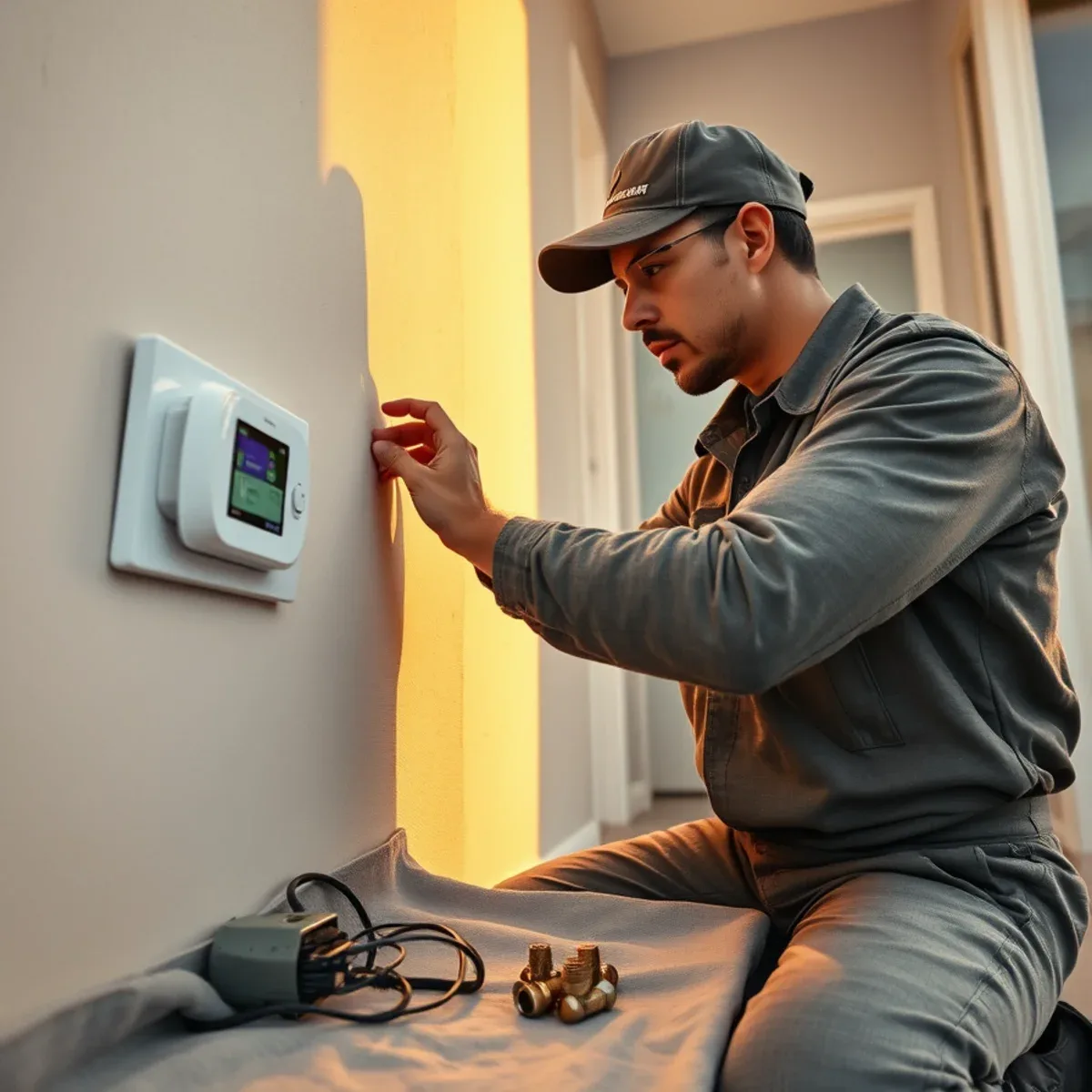
Short answer
The thing that decides whether a smart thermostat works in an Apache Junction home is the C-wire. Homes built before roughly the mid-2000s often have only four conductors at the thermostat and no common wire, and without it the unit power-steals, browns out and reboots — which looks like a Wi-Fi fault and is not.
A thermostat swap looks like a fifteen-minute job and frequently is not, for one specific reason: the C-wire.
Smart thermostats need continuous low-voltage power to run their display, Wi-Fi and processor. That power comes from a common wire — the C-wire — running back to the air handler. Homes built before roughly the mid-2000s very often have four conductors at the thermostat and no C among them, because the old mercury and simple digital thermostats never needed one.
The workarounds people try — power stealing, or a jumper at the board — produce the intermittent faults that get blamed on the thermostat: dropping off Wi-Fi, rebooting, or short-cycling the system. Running a proper C-wire, or fitting a correct add-a-wire adapter, is what makes a smart thermostat actually work.
Upgrading your thermostat?
Send us a photo of your existing wiring before you buy. Knowing whether you have a C-wire changes which unit is worth getting.
Reasons people replace a thermostat
It is an old mercury or dial unit
Poor temperature accuracy and no scheduling. Replacing one is among the cheapest comfort upgrades available.
The house is never the temperature it says
Failing sensor, or a thermostat located somewhere unrepresentative — over a return, in direct sun, on an exterior wall.
You want scheduling and remote control
Genuinely useful in a climate where pre-cooling before peak-rate hours makes a measurable difference.
The system short-cycles
Sometimes a thermostat problem, sometimes a power-stealing thermostat with no C-wire, sometimes something else entirely.
A smart thermostat keeps dropping offline
Classic no-C-wire symptom. The unit is starving for power and rebooting.
You are away for part of the year
Remote monitoring means you find out about a failure while the house is empty rather than in October.
What a thermostats job includes
Every quote covers the items below. If something is not on this list, it is not in the price — and we will say so before we start.
Existing wiring identified and photographed
Every conductor labelled before anything is disconnected, and the equipment type confirmed.
Compatibility confirmed before you buy
Heat pump versus furnace, staging, auxiliary heat strips and any zoning — checked against the unit you are considering.
The power question solved properly
A new cable run where the wall cavity allows it, or an add-a-wire adapter installed at the air handler board. Never left to power stealing.
Location assessed honestly
If it sits in direct sun, above a register or on an exterior wall it will always misread the house. We will say so and price relocating it.
Configured for your actual equipment
Configuring a heat pump as a furnace is a common and expensive mistake — it runs the backup resistance heat far more than it should.
Every mode cycled and verified
Cooling, heating, auxiliary and fan all tested before we leave, plus the schedule set up with you.
The C-wire problem, and the three ways to solve it
If your existing thermostat has four wires — typically red, white, yellow and green — you have no common wire, and that is the single most important thing to establish before buying a smart thermostat.
The best solution is running a new thermostat cable from the air handler with enough conductors. Where the wall cavity allows it, this is a clean permanent fix with no compromises, and it is what we do wherever it is practical.
Where the run is not accessible, an add-a-wire adapter installed at the air handler multiplexes signals over the existing conductors to free one up as a common. Done properly at the board this is reliable and it is a legitimate solution rather than a bodge.
The third option, power stealing, is what a lot of thermostats attempt on their own — drawing small amounts of current through the heating or cooling circuit without triggering it. It works inconsistently, and it is the source of most "my smart thermostat is unreliable" complaints. Some equipment tolerates it; a lot does not.
We establish which situation you are in before anything is ordered, because the answer sometimes changes which thermostat is worth buying.
Run a new cable
The clean permanent fix. Our first choice wherever the wall cavity allows it.
Add-a-wire adapter
Installed at the air handler board. Reliable, and the right answer where a new run is impractical.
Power stealing
What thermostats attempt unaided. Inconsistent, and the cause of most reliability complaints.
Battery only
Fine for a simple programmable unit. Not adequate for a smart thermostat with a display and Wi-Fi.
Location matters as much as the device
A thermostat measures the temperature where it is, and a surprising number are in places that misrepresent the house.
Bad locations: in direct sunlight through a window at any point in the day, on an exterior wall, immediately above or beside a supply register, near a kitchen, in a hallway that gets no airflow, or right beside an exterior door.
A thermostat in the sun reads warm and runs your air conditioning long after the house is comfortable. One above a return reads whatever the house average is rather than the living space. One on an exterior wall in an Arizona summer is reading conduction through the wall.
When we replace a thermostat we look at where it is, and if it is somewhere that will always misread, we will tell you — and relocating it is often a modest job that improves comfort more than the new device does. Some smart thermostats also support remote sensors in other rooms, which is a genuinely good answer for a house where the thermostat is stuck in a bad spot.
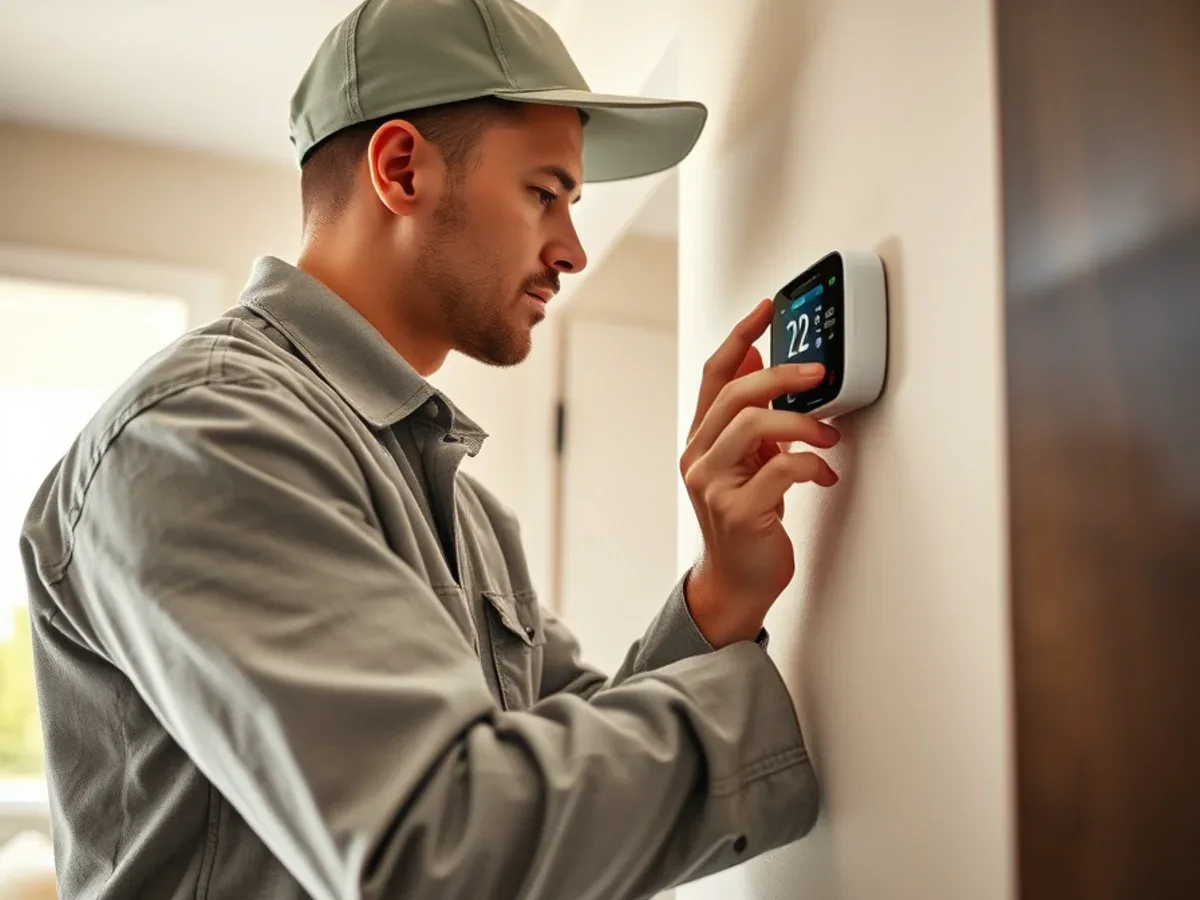
Getting real value out of it here
A smart thermostat in Arizona earns its keep differently than in a mild climate, and the settings that matter are specific.
Pre-cooling ahead of peak-rate hours is the big one. Many Arizona utility plans have time-of-use pricing with expensive afternoon peaks, and cooling the house down before the peak window then coasting through it can make a real difference to a summer bill. A scheduled thermostat does this automatically; a manual one relies on you remembering every day.
Setback discipline matters too, with a caveat. Setting the temperature far back while you are out and then asking the system to recover 15 degrees at 5pm on a 112-degree day can mean the equipment simply cannot catch up. Moderate setbacks with a scheduled recovery that starts early work far better here than aggressive ones.
And for part-year residents, remote monitoring with high-temperature alerts is the feature that matters most. A failed air conditioner in an empty house in July is a problem you want to know about the same day, not in October.
How a thermostat install runs
- 1
Check what you actually have
Existing wiring identified and photographed, equipment type confirmed, and whether a C-wire is present.
- 2
Confirm compatibility
Heat pump versus furnace, staging, auxiliary heat and any zoning — before a thermostat is bought.
- 3
Solve the power question
New cable run where practical, or an add-a-wire adapter at the board. Never left to power stealing.
- 4
Assess location
If it sits in the sun, over a register or on an exterior wall, we will say so and price relocating it.
- 5
Install and configure
Mounted level, wired correctly, equipment type configured, Wi-Fi connected and schedule set up with you.
- 6
Test every mode
Cooling, heating, auxiliary and fan all cycled and verified before we leave — not just "it powered on".
What drives the price
Installation is quoted separately from the thermostat, so you can buy whichever unit you want without the labour price changing.
- Whether a C-wire exists
- The main variable. An existing common wire makes this a short job; running a new cable does not.
- New cable or adapter
- An accessible wall cavity allows a clean new run. Where it does not, an add-a-wire adapter at the board is the answer.
- System complexity
- Single-stage cooling is simple. Multi-stage, heat pump with auxiliary heat, or a zoned system takes longer to configure correctly.
- Relocation
- Moving a thermostat out of direct sun or off an exterior wall means patching, painting and a new cable run.
- Multiple thermostats
- Homes with two or three systems are priced per unit at a reduced rate when done in one visit.
Every quote is written, and the number does not change afterward. AZ ROC CR-37 Plumbing · BBB A+ accredited.
Why AllStar Home Services for thermostats
Send us a photo before you buy
Knowing whether you have a C-wire changes which thermostat is worth getting. That check costs nothing and prevents the most common smart-thermostat complaint there is.
Plumbing, HVAC and remodeling in one company
BBB accredits us under Plumber, Bathroom Remodel, Remodel Contractors and Drywall Repair. One contract, one crew, nobody pointing at somebody else.
The quote is the price
You hear the number before we start and it does not move afterward. It is the single thing customers mention most in our reviews.
Based at 870 W 15th Ave, not a call centre
Shane, Leo and Justin live in Apache Junction. Most of the city is a ten to fifteen minute drive rather than a cross-valley dispatch.
Where we provide thermostats
Thermostat work runs across the whole service area and is often bundled with a tune-up. We deliver this from our 15th Ave shop across Apache Junction and Gold Canyon, then out through Queen Creek, San Tan Valley, Mesa, Gilbert, Chandler, Tempe and Fountain Hills.
Further out we cover Florence, Coolidge, Casa Grande, Maricopa, Eloy, Superior and Mammoth, and we are honest about when a small job does not justify the drive. The C-wire problem concentrates in the pre-2005 housing across Apache Junction, Mesa, Tempe and Superior. In newer construction through Queen Creek, San Tan Valley, Maricopa and the recent Apache Junction subdivisions, the common wire is usually already there and the swap is straightforward.
- Thermostats in Apache Junction
- Thermostats in Gold Canyon
- Thermostats in Queen Creek
- Thermostats in Mesa
- Thermostats in Superstition Mountain
- Thermostats in Ironwood Estates
Thermostats questions, answered
Related reading
 Seasonal
How to Prepare Your Plumbing for Arizona Summer Heat
Cold water that runs hot, hose bibs that split, attic lines at 150 degrees and a water heater in a 120-degree garage. Summer here is genuinely hard on plumbing.
6 min read Seasonal
Winter Plumbing Tips for Desert Homes
Everyone assumes freezing is not an Arizona problem. Then a cold snap arrives, and the hose bibs and exposed lines that nobody protected split.
6 min read