
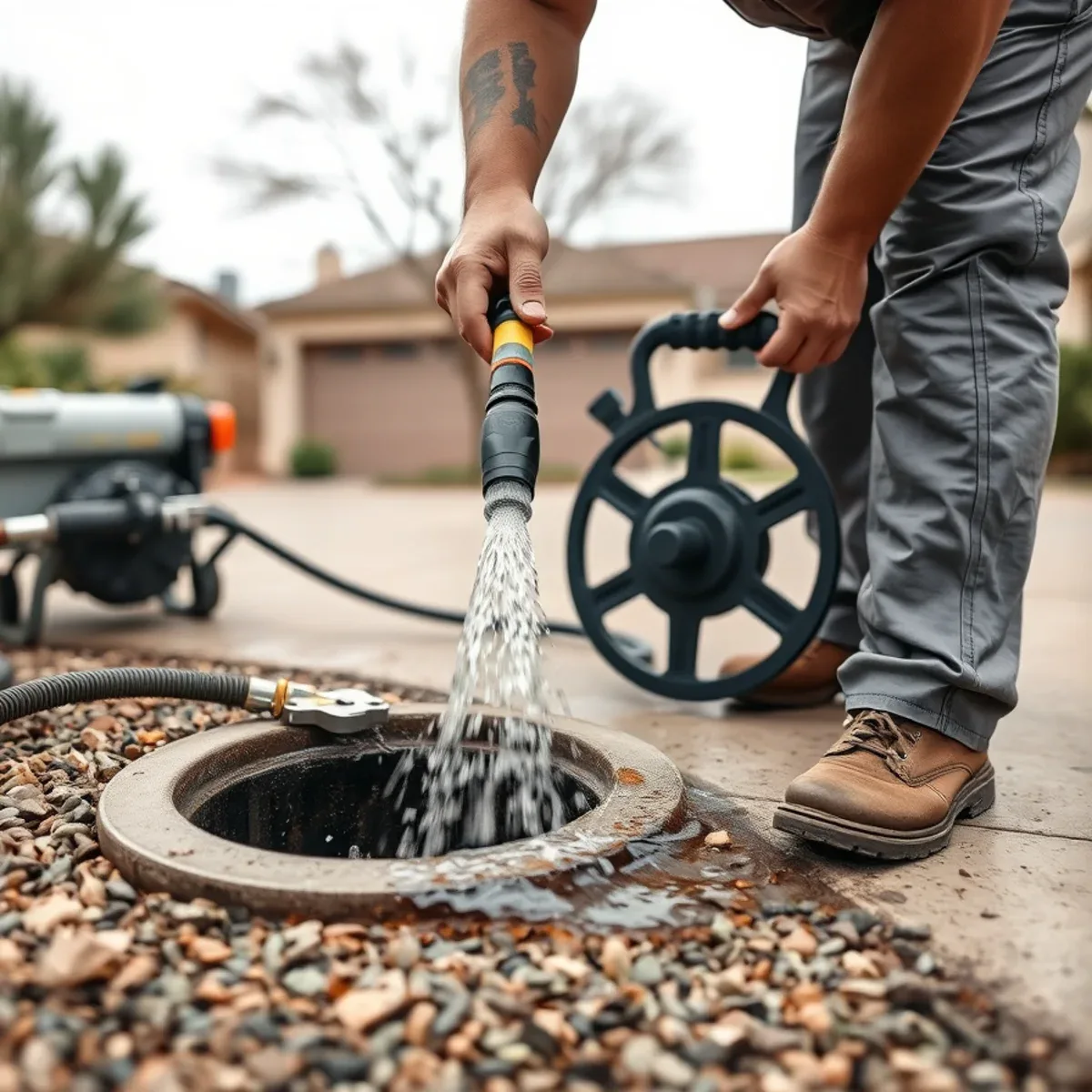
Short answer
Hydro jetting in Apache Junction is what you book when cabling has stopped working. A cable bores a channel through a blockage; a jetter scours the pipe wall back to its real diameter, removing the grease, mineral scale and root hair that make a line clog again on a schedule.
Cabling a drain opens a channel through a blockage. Hydro jetting cleans the pipe. That distinction is the entire reason this service exists, and it is why a line we jet tends to stay clear for years while the same line cabled every eight months never actually gets better.
A jetter pushes water through a specialized nozzle at very high pressure. Rear-facing jets propel the hose up the line and simultaneously blast the pipe wall behind it, stripping off grease, mineral scale, soap film, sludge and root hair, then flushing the debris back toward the cleanout. When it is done, the inside of the pipe looks like pipe again.
In Apache Junction, three problems make jetting particularly worth the money: hard-water scale coating the inside of older cast iron, cooking grease that solidifies in kitchen lines, and desert tree roots hunting for the moisture in a cracked sewer joint. A cable barely touches any of them.
Tired of the same drain clogging?
We will camera the line, show you what is in there, and give you a real fix instead of another temporary one.
When jetting is the right call instead of a cable
The same drain clogs on a schedule
Every few months, same line, same story. That pattern means the pipe wall is coated and a cable is only reopening the hole it made last time.
Grease in a kitchen or restaurant line
Solidified grease does not cable out. It smears. Hot high-pressure water is the only thing that actually removes it.
Roots in the sewer
A cable cuts roots off at the pipe wall. A jetter with a root nozzle strips them and flushes the debris, and the camera tells you where they got in.
Scale in older cast iron
Decades of very hard water builds a rough mineral layer that catches everything passing through. Jetting is how you get the diameter back.
Slow flow with no obvious blockage
When a cable comes back clean but the line still will not carry volume, the problem is uniform buildup rather than a single obstruction.
Before a monsoon season you cannot afford to lose
Rentals, mobile home parks and small commercial properties get jetted preventively so a July storm does not turn into a tenant emergency.
What a hydro jetting job includes
Every quote covers the items below. If something is not on this list, it is not in the price — and we will say so before we start.
Camera inspection before we pressurise
We confirm the pipe can take the work. Jetting sound pipe is completely safe; jetting a cracked or corroded line can open up damage the debris was holding together.
You see the footage first
Scale, grease, roots or a break — whatever is in there, you watch the screen before approving anything.
Nozzle and pressure matched to the pipe
Root nozzle, degreasing nozzle and flushing head are not interchangeable, and neither are the pressures for a 2" branch and a 6" main.
Staged passes so debris flushes back
We advance and retract rather than packing material ahead of the nozzle, which is how a rushed jetting creates a worse blockage.
Before-and-after camera on the same line
The only real proof the job was done. You get both.
A written repair quote if we find one
Separate from the jetting bill, with no pressure attached. Jetting removes roots; it does not close the joint that let them in.
What we do before we ever turn the pump on
Hydro jetting is a powerful tool and it deserves respect. On sound pipe it is completely safe and it is used every day on cast iron, clay, ABS and PVC. On pipe that has already failed — a cracked section, a badly corroded cast iron run, a clay joint that has separated — high pressure can open up damage that the packed debris inside was quietly holding together.
So we camera first on anything questionable. That is not an upsell; it is how you avoid turning a cleaning job into an excavation. If the camera shows the line is structurally sound, we jet it. If it shows a break, a belly or a section that has lost its wall, we stop and show you the footage, and the conversation becomes a repair conversation with its own quote.
We also size the nozzle and pressure to the pipe. A three-inch kitchen branch and a six-inch commercial main do not get the same head. Using the wrong one either wastes your money or damages your pipe.
Roots, and why desert landscaping is the culprit
People assume root intrusion is a problem for places with big shade trees and constant rain. It is actually worse in the desert, and the reason is simple: in a landscape where moisture is scarce, a leaking sewer joint is the most attractive thing for miles.
Mesquite and palo verde send roots astonishing distances looking for water. Oleander hedges — planted along property lines all over Apache Junction — are aggressive shallow feeders that sit directly over the shallow portion of many sewer laterals. Where a clay joint has shifted in our caliche soil, or a cast iron line has rusted through at the bottom, root hair finds the vapor first, then the water, then grows into a mat that catches every piece of paper that passes.
Jetting with a root nozzle strips that mat out and restores flow. But it is worth being straight about the limits: jetting removes roots, it does not repair the opening that let them in. If the camera shows a joint that will keep admitting them, you are choosing between periodic maintenance jetting and a spot repair or liner. We will lay out both, with prices, and let you decide.
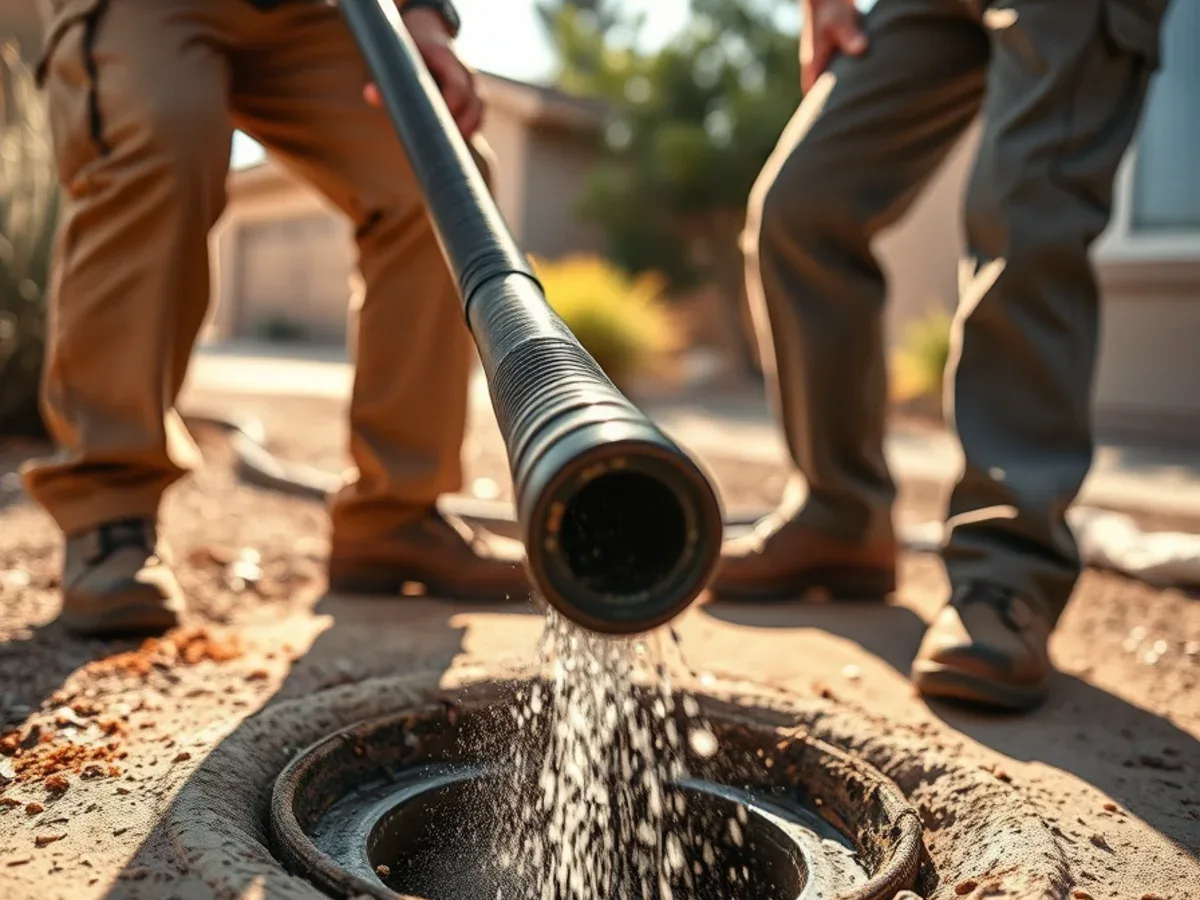
Mesquite & palo verde
Deep, far-reaching taproots that will follow a moisture trail an impressive distance to a cracked joint.
Oleander hedges
Dense shallow root mass, commonly planted right along the line a sewer lateral runs.
Palms & citrus
Heavy fibrous root balls near irrigation, which is often near the same trench as the sewer.
Bermuda & lawn irrigation
Keeps the top of the soil column damp year-round, encouraging shallow root growth right over the lateral.
How long the results last
On a residential kitchen line that was jetted properly, most households go years before they think about it again — provided the grease habits change. On a main line with roots and a joint that still lets them in, expect to be back on an interval, and we will give you an honest estimate of what that interval looks like based on what the camera showed.
For rental properties, mobile home parks and small commercial kitchens, scheduled preventive jetting is almost always cheaper than reactive emergency work. An after-hours main line backup at a rental costs you the repair, the tenant relationship, and sometimes a restoration bill. A planned jetting costs you a morning.
How a jetting job runs
- 1
Camera inspection first
We look at the line before we pressurize it, so we know it can take the work and we know what we are actually removing.
- 2
You see the footage
Scale, grease, roots, a break — whatever is there, you see it on the screen with us before you approve anything.
- 3
Nozzle and pressure selection
Matched to pipe diameter, material and the type of buildup. Root nozzle, degreasing nozzle and flushing head are not interchangeable.
- 4
Jet from the cleanout
We work the line in stages, advancing and retracting so debris flushes back rather than packing ahead of the nozzle.
- 5
Camera again
A before-and-after on the same line is the only real proof the job was done. You get to see both.
- 6
Recommendation, if there is one
If the camera revealed a structural problem, you get a written repair quote — separate from the jetting bill, with no pressure attached.
What drives the price
Jetting costs more than running a cable, and on the right line it is the less expensive choice measured over a couple of years. Pricing depends on:
- Line diameter and length
- A 2" kitchen branch and a 6" building main are different equipment and different time on site.
- What is in the pipe
- Soft sludge flushes quickly. Hardened grease, heavy mineral scale and a mature root mat all take multiple passes.
- Access
- A proper exterior cleanout keeps it efficient. No cleanout means creating access, and often installing one so future service is simple.
- Camera inspection
- Included on jobs where we need it to work safely. It is diagnosis, and it protects you from paying to jet a pipe that needed replacing.
- Residential vs commercial
- Restaurant grease lines and multi-unit mains take longer, need bigger equipment, and are usually best on a maintenance schedule.
Every quote is written, and the number does not change afterward. AZ ROC CR-37 Plumbing · BBB A+ accredited.
Why AllStar Home Services for hydro jetting
We camera before we jet, every time
It is not an upsell — it is how you avoid turning a cleaning job into an excavation. If the pipe cannot take it, we stop and tell you.
The quote is the price
You hear the number before we start and it does not move afterward. It is the single thing customers mention most in our reviews.
4.7★ from 20 verified Google reviews
We publish every review including the two critical ones. A page of nothing but five stars tells you less than an honest one.
Based at 870 W 15th Ave, not a call centre
Shane, Leo and Justin live in Apache Junction. Most of the city is a ten to fifteen minute drive rather than a cross-valley dispatch.
Where we provide hydro jetting
Jetting demand follows the older housing stock and the landscaping. We work this service across Apache Junction and Gold Canyon from our 15th Ave shop, then out through Queen Creek, San Tan Valley, Mesa, Gilbert, Chandler, Tempe and Fountain Hills. Apache Junction neighbourhoods with mature oleander along the property lines — Royal Palm, Ironwood, Apache Village — produce the most root work we do.
Further out we cover Florence, Coolidge, Casa Grande, Maricopa, Eloy, Superior and Mammoth, and we will tell you honestly when a small job does not justify the drive. For restaurants, rental portfolios and mobile home parks we run scheduled jetting programmes rather than reactive call-outs, because an emergency grease line during service costs several times what the maintenance does.
- Hydro Jetting in Apache Junction
- Hydro Jetting in Gold Canyon
- Hydro Jetting in Queen Creek
- Hydro Jetting in Mesa
- Hydro Jetting in Superstition Mountain
- Hydro Jetting in Ironwood Estates
Hydro Jetting questions, answered
Related reading
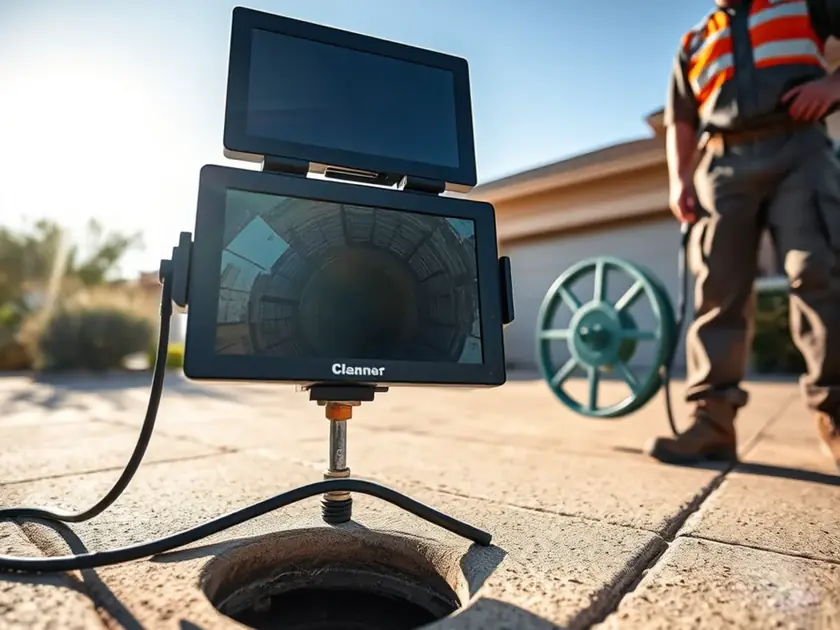 Drains & Sewers
What a Sewer Camera Inspection Actually Shows You
A recurring sewer backup can be a cheap maintenance issue or a five-figure replacement. There is exactly one way to know which, and it is not guessing.
7 min read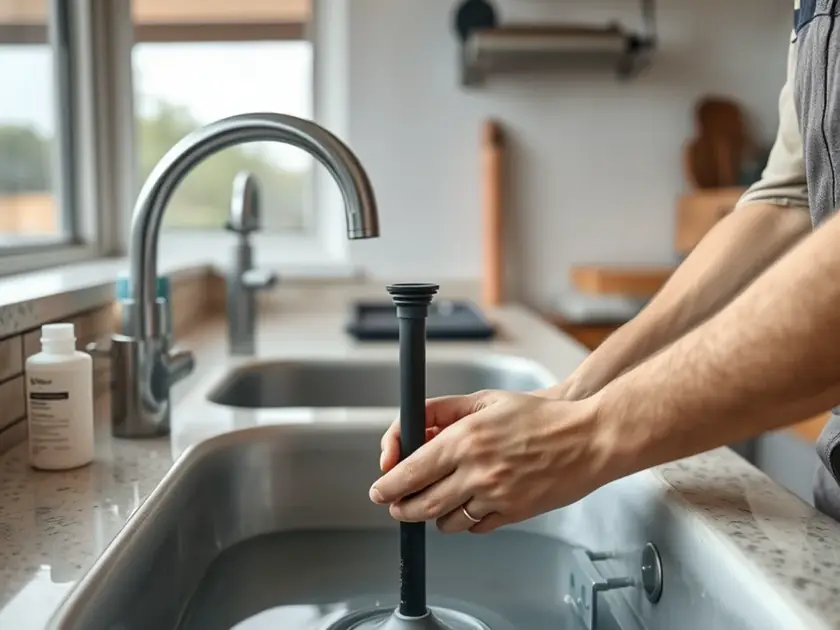 Drains & Sewers
DIY Drain Cleaning: When to Try It, When to Call
Some clogs are genuinely a fifteen-minute job you should do yourself. Others need a machine, and a few are warning signs you should not be plunging at all.
6 min read