DIY Drain Cleaning: When to Try It and When to Call a Pro
Some clogs are genuinely a fifteen-minute job you should do yourself. Others need a machine, and a few are warning signs you should not be plunging at all.
The short answer
Do it yourself when it is one slow fixture: clean the pop-up assembly, use a barbed hair tool, plunge properly, or pull and clean the P-trap. Call a professional when multiple fixtures are slow at once, when it backs up at the lowest drain, or when the same line has failed repeatedly.
We would rather tell you how to fix a slow bathroom sink yourself than charge you to do it. A service call for something that takes fifteen minutes is not a good use of your money, and we would rather you call us for the next real thing.
So this is an honest guide: what actually works, what to avoid, and the specific symptoms that mean the problem is past the point where DIY is a good idea.
One rule before anything else: stop using liquid drain cleaner. More on why below.
What you can genuinely fix yourself
A slow bathroom sink is usually hair and soap scum caught in the pop-up assembly or just past the trap. Pull the pop-up stopper — there is usually a small nut behind the drain under the sink holding the pivot rod — and clean it. That resolves a large share of slow lavatory drains and costs nothing.
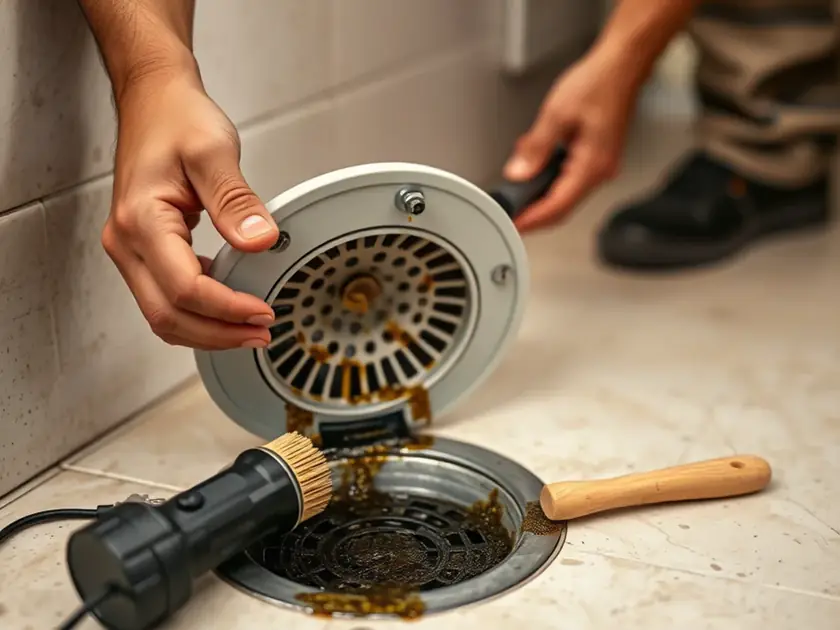
A slow tub or shower is almost always hair. A cheap plastic barbed drain tool, pushed in and pulled back, retrieves an alarming amount. Do this before anything else.
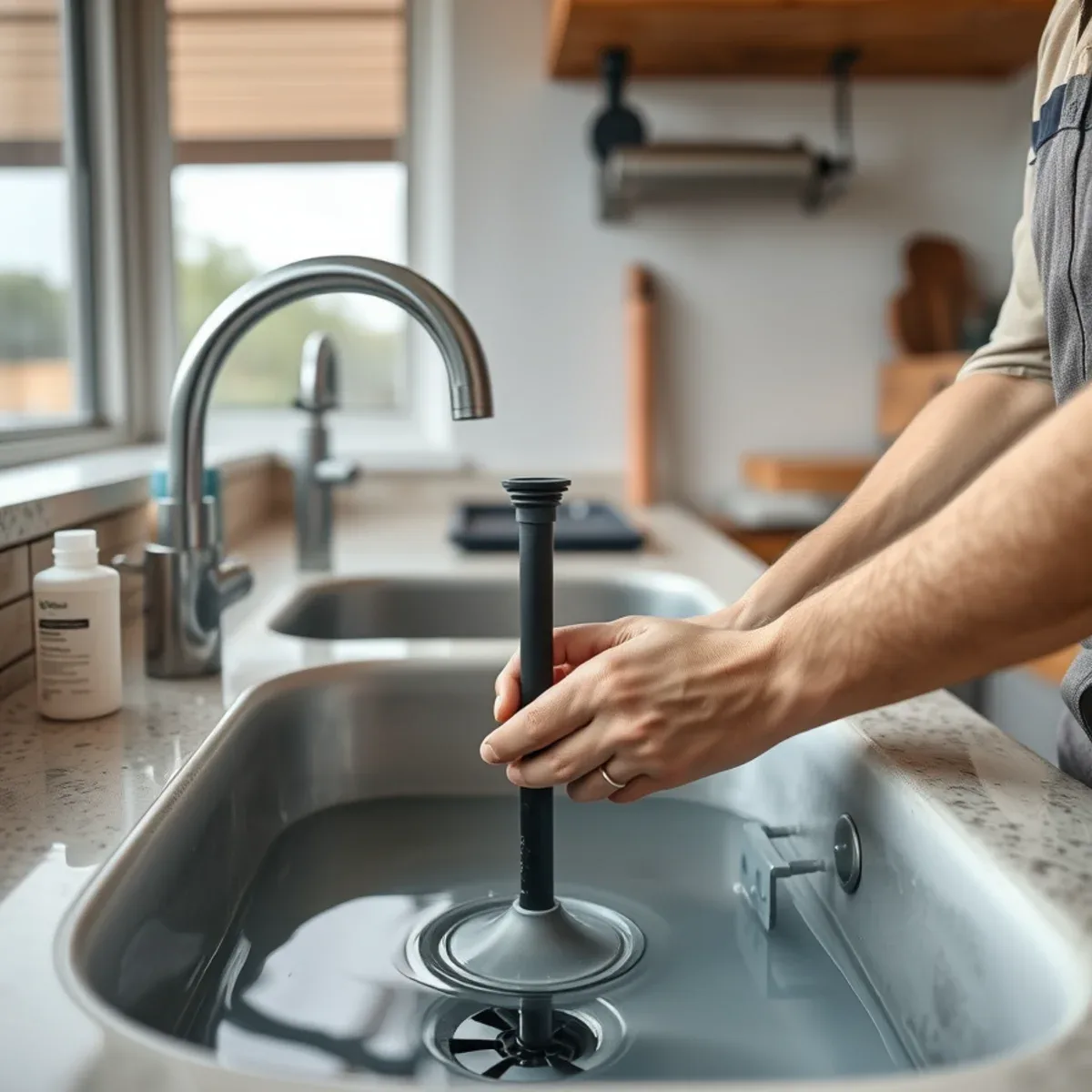
A clogged kitchen sink or toilet responds to a proper plunger used properly, which most people do not do. Use the right plunger — a flange plunger for toilets, a flat cup for sinks — make sure there is enough water to cover the cup, seal the overflow opening on a sink with a wet rag, and use steady sustained strokes rather than frantic ones. The pull is as important as the push.
And cleaning the P-trap is well within reach: put a bucket under it, loosen the two slip nuts, remove the trap, clean it out and reassemble. It is four minutes and it solves a lot of kitchen and lavatory clogs.
Pop-up assembly
First stop for a slow bathroom sink. Free, fast, and usually the culprit.
Barbed hair tool
A few dollars. The right answer for almost every slow tub or shower.
Proper plunging
Right plunger, enough water, seal the overflow, steady strokes. Technique matters.
Clean the P-trap
Bucket, two slip nuts, four minutes. Solves more clogs than people expect.
Why we ask you not to use liquid drain cleaner
Caustic drain openers work by generating heat and chemically dissolving organic matter. In a fully blocked line, that chemical does not drain away — it sits against the pipe wall for hours.
In older Apache Junction homes with cast iron or early ABS drains, repeated exposure accelerates corrosion and can soften joints. In a line already narrowed by decades of scale, you are attacking the pipe as much as the clog.
There is also a safety issue that gets overlooked. When a plumber eventually opens that trap — or when you do — there is a pot of caustic liquid waiting. Every plumber has a story about this, and none of them are good.
And practically, it frequently does not work. It bores a channel through soft material and leaves grease and scale coating the pipe wall, which is why the clog returns.
Enzyme-based maintenance products are a different category and they are fine — but understand what they are: slow-acting biological treatments for keeping an already-clear line clear. They will not open a blocked drain.
Stop and call: the symptoms that matter
Multiple fixtures slow at the same time. That is not several clogs — it is one blockage in the main line downstream of everything, and continuing to run water in the house makes it worse.
A toilet that bubbles when the washing machine drains. Classic main line signature. The washer dumps a large volume fast and the restricted main pushes air back through the nearest trap.
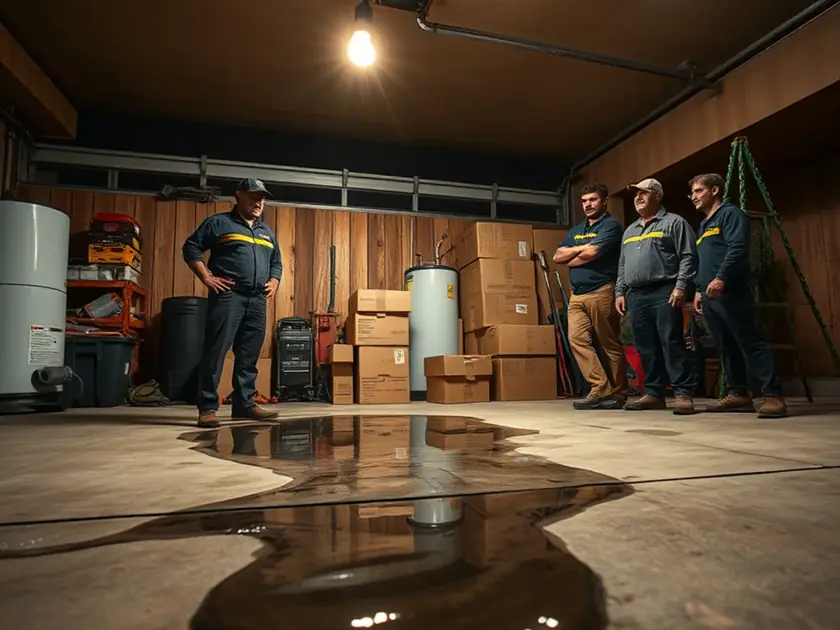
Anything backing up at the lowest drain in the house — a floor drain, a garage drain, a first-floor shower. That is the main line relieving inside your house. Stop running water entirely.
A drain that has clogged three times in a year. That is a pattern with a physical cause, and clearing it a fourth time is paying to treat a symptom. It needs a camera.
Sewage smell with no visible clog, or a persistently green stripe across a dry yard. Both suggest the problem is below grade and outside.
Why a professional machine is different
A hand auger reaches maybe twenty-five feet and handles small-diameter lines. A professional cable machine reaches a hundred feet or more with the torque to actually cut through a root mass or a solid blockage, and it uses heads matched to the pipe diameter.
That matching matters in both directions. Oversized equipment in a small line damages pipe. Undersized equipment in a main line just makes a hole in the clog.
Hydro jetting is different again — high-pressure water that strips the pipe wall rather than boring through the blockage. That is the tool for grease, mineral scale and root hair, and it is why a jetted line stays clear for years while a cabled line clogs again on a schedule.
And a camera settles arguments. If a line has failed repeatedly, looking at it costs a fraction of guessing wrong.
Keeping drains clear afterward
For kitchen lines: never pour grease down the drain. It goes down warm and solidifies on the pipe wall as it cools, and hard-water scale gives it a rough surface to grip. Pour it into a can and throw it away. Also skip coffee grounds, rice and pasta, eggshells and fibrous vegetable peels. A disposal grinds food finer; it does not make grease disappear. Run cold water, not hot, so fats stay solid and get flushed rather than melting downstream.
For bathrooms: a hair catcher in the shower is a couple of dollars and prevents most tub and shower clogs entirely.
For toilets: nothing but toilet paper, and that specifically includes anything labeled flushable. Wipes clear the toilet and then do not break down; on older cast iron or clay laterals with rough interiors, they are one of the most reliable causes of a main line backup we see.
Once or twice a year, run hot water down each drain for a couple of minutes to flush accumulated residue while it is still soft.
Frequently asked questions
Try the easy things first
Pop-up assembly, hair tool, proper plunging, clean the P-trap. Those four cover a large share of household clogs and none of them cost anything meaningful.
When multiple fixtures are involved, when it is backing up at the lowest drain, or when the same line has failed repeatedly — that is when a machine and a camera are worth the money. Call us and we will tell you honestly which situation you are in.
Services mentioned in this article
- Drain Cleaningin Apache Junction, AZ
- Hydro Jettingin Apache Junction, AZ
- Sewer Linesin Apache Junction, AZ