
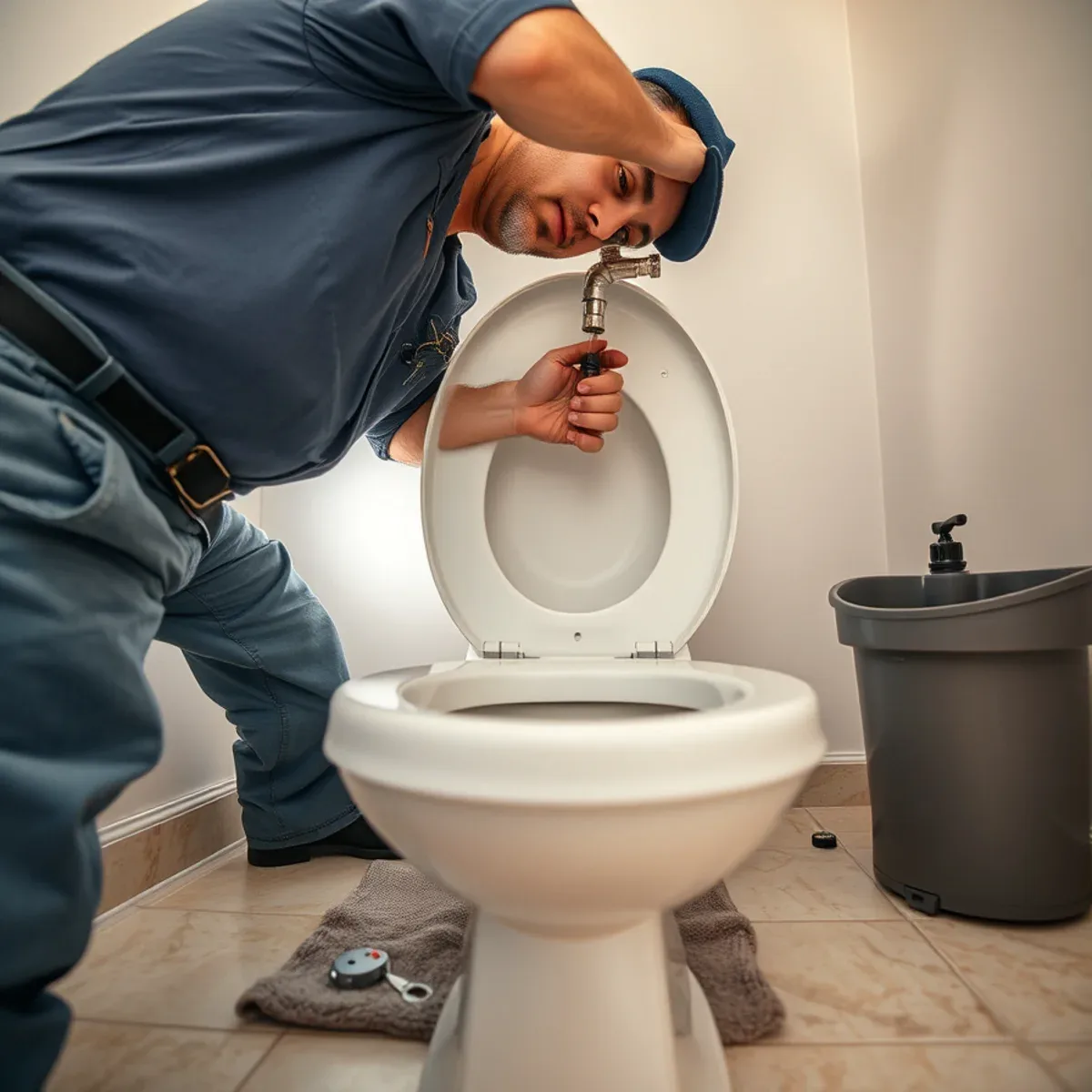
Short answer
Most toilet repairs in Apache Junction are a fill valve, a flapper or blocked rim jets rather than a new toilet — and on water this hard the failure is usually mineral on the sealing surface, not worn rubber. A running toilet can push 150 to 200 gallons a day into the sewer for the sake of an inexpensive part.
A running toilet is the most expensive small problem in an Apache Junction house. It does not look like an emergency, so it gets ignored for months — and a fill valve that never quite shuts off can push 150 to 200 gallons a day into the sewer. On a metered account that is a real number every single month, for something that is usually a twenty-dollar part.
Hard water is why toilets here need attention more often than they should. Mineral deposits build on the flapper seat until it cannot seal, coat the fill valve until the float mechanism sticks, and clog the small rim jets under the bowl edge so the flush loses force. A toilet that "just does not flush like it used to" usually has partially blocked rim jets, not a real drain problem.
We repair and replace toilets, fix wobble and wax ring leaks, clear blockages, and install new units — including comfort-height models, which come up constantly in a town with as many retirees as this one.
Toilet running, rocking or backing up?
Most repairs are one visit with parts already on the truck. Priced before we start.
Common toilet problems we fix
It runs constantly or cycles on its own
A flapper that will not seal or a fill valve that will not shut off. Cheap parts, expensive to ignore on a water bill.
Weak or incomplete flush
Usually mineral-blocked rim jets or a flapper closing too early, not a clog. Both are fixable in one visit.
Water on the floor around the base
A failed wax ring or a cracked closet flange. Left alone this rots subfloor and, in older homes, the flange itself.
The toilet rocks
Loose closet bolts or a flange sitting below finished floor level. Rocking breaks the wax seal, and then you have leak number one.
It clogs repeatedly
Could be a low-flow first-generation unit, could be a partially blocked branch line, could be something lodged in the trapway.
Sweating tank in summer
Cold fill water against humid monsoon air. There are real fixes for this beyond putting a towel on the floor.
What a toilet repair job includes
Every quote covers the items below. If something is not on this list, it is not in the price — and we will say so before we start.
The real cause diagnosed
Tank components, rim jets, flange, supply line and branch drain all checked. A weak flush and a clog are different problems with different fixes.
Sealing surfaces cleaned, not just parts swapped
On hard water the flapper seat is what stops sealing. Replacing the flapper alone is why some repairs fail again within a year.
Rim and siphon jets cleared
The small holes under the bowl rim that create the flush. Scale narrows them and people replace perfectly good toilets over it.
Repair and replacement both priced
With a straight recommendation on which we would choose in your bathroom.
Flange assessed before a new unit is set
A flange that has corroded or sits below finished floor needs repair or an extender, or the new toilet will rock and break its seal.
Tested under real conditions and hauled away
Multiple flush cycles, leak check at the base and supply, and the old toilet leaves with us.
The hard-water toilet problem
Take the lid off your tank and look at the flapper. In a house on untreated Apache Junction water, the rubber will often have a chalky white film and the seat it lands on will feel gritty. That deposit is why the flapper stops sealing — the rubber is fine, the surface it is trying to seal against is not.
The same thing happens inside the fill valve, where mineral accumulates on the diaphragm and the shut-off eventually stops being crisp. And it happens in the rim jets: the small angled holes under the bowl rim that direct water around the bowl during a flush. Scale narrows them, the swirl weakens, and solids do not clear. People replace a perfectly good toilet over this.
When we service a toilet here, we clean the flapper seat rather than just swapping the flapper, clear the rim jets and the siphon jet, and use fill valves that hold up better on mineral-heavy water. That is the difference between a repair that lasts and one you call about again next spring.
When replacement makes more sense than repair
Most toilet problems are worth repairing — the parts are inexpensive and the labor is short. There are a few situations where replacing is the better money.
One thing worth ruling out first: if every fixture in the house backs up when the toilet is flushed, the toilet is not the problem. That is a main line issue, and it needs drain cleaning or a look at the sewer line rather than a new toilet. Replacing a perfectly good toilet does not fix a blocked main, and we will tell you that before we sell you one.
First-generation low-flow toilets from the early to mid 1990s are the clearest case. When the 1.6 gallon standard arrived, manufacturers initially just shrank the tank on existing bowl designs, and the results were genuinely bad. If you have a 1990s toilet that needs two flushes routinely, no repair fixes the bowl geometry. Modern 1.28 gallon units flush better than those old 3.5 gallon units did, and they use a third of the water.
A cracked tank or bowl is not repairable — epoxy patches on porcelain under pressure fail, usually at the worst time. And a toilet where the closet flange has broken or corroded below floor level needs the toilet pulled anyway, which makes it a natural moment to upgrade.
Comfort height is worth mentioning specifically. At roughly 17 to 19 inches to the seat instead of the standard 15, it is noticeably easier on knees, hips and backs. In Apache Junction, with a large retiree population and a lot of aging-in-place remodels, it is the most requested upgrade we install.
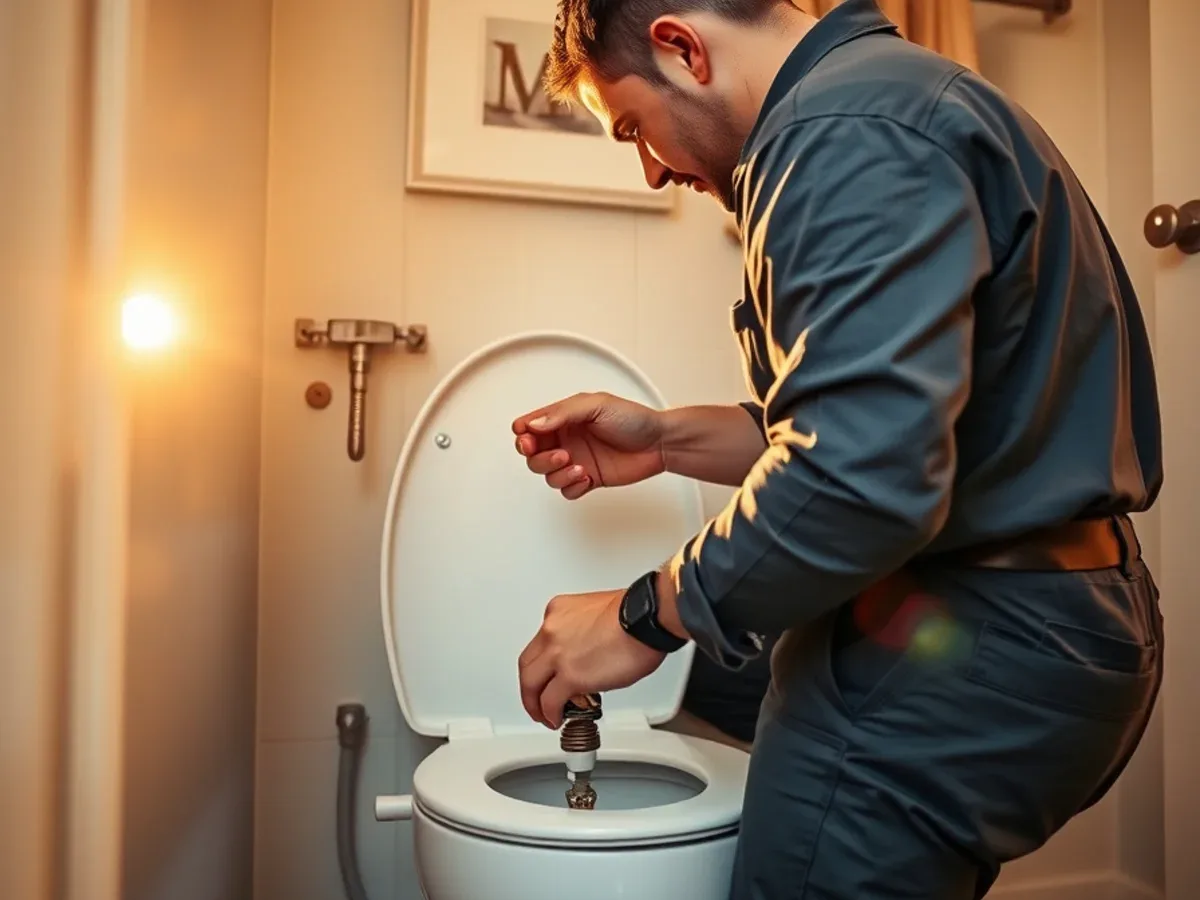
Pre-1994 toilets
3.5 gallons or more per flush. Replacing pays for itself on the water bill in a surprisingly short time.
Early low-flow models
The 1990s generation that needs two flushes. Bad bowl design, not a repairable fault.
Cracked porcelain
Not repairable. A hairline crack in a tank becomes a flooded bathroom without warning.
Comfort height upgrade
The most-requested change in a town full of homeowners planning to stay put.
How a toilet call runs
- 1
Diagnose the real cause
Tank components, rim jets, flange, supply line and branch drain. A weak flush and a clog are different problems.
- 2
Price before we start
Repair versus replacement, both quoted, with a straight recommendation on which we would do.
- 3
Repair with the right parts
Quality fill valves and flappers that hold up on hard water, plus cleaning the surfaces they seal against.
- 4
Or install the new unit
New wax ring or waxless seal, flange repaired or shimmed as needed, bolts set properly and the base sealed.
- 5
Test under real conditions
Multiple flush cycles, leak check at the base and supply, and we confirm the fill valve shuts off cleanly.
- 6
Haul away
The old toilet leaves with us. It does not sit on your driveway for a week.
What drives the price
Toilet work is one of the more predictable things we price. You get the number before we start, and it does not change.
- Repair or replace
- A fill valve and flapper rebuild is at the low end. A full replacement with a new unit is a different job.
- Condition of the flange
- A flange that has corroded, cracked or sits below finished floor needs repair or an extender before a new toilet can seat.
- The toilet you choose
- Standard, comfort height, one-piece and higher-end flushing systems span a wide price range. We install what you buy or supply it.
- Access and floor covering
- A powder room with tile right up to the base takes longer than a toilet with clearance around it.
- Whether there is a drain issue
- If it turns out the branch line is the problem rather than the toilet, that becomes a drain cleaning conversation with its own price.
Every quote is written, and the number does not change afterward. AZ ROC CR-37 Plumbing · BBB A+ accredited.
Why AllStar Home Services for toilet repair
Parts on the truck, so it is usually one visit
We stock quality fill valves and flappers that hold up on mineral-heavy water, rather than the cheapest option that fails again in eighteen months.
The quote is the price
You hear the number before we start and it does not move afterward. It is the single thing customers mention most in our reviews.
Based at 870 W 15th Ave, not a call centre
Shane, Leo and Justin live in Apache Junction. Most of the city is a ten to fifteen minute drive rather than a cross-valley dispatch.
4.7★ from 20 verified Google reviews
We publish every review including the two critical ones. A page of nothing but five stars tells you less than an honest one.
Where we provide toilet repair
Toilet work is our highest-frequency small job and we do it across the whole service area. We deliver this from our 15th Ave shop across Apache Junction and Gold Canyon, then out through Queen Creek, San Tan Valley, Mesa, Gilbert, Chandler, Tempe and Fountain Hills.
Further out we cover Florence, Coolidge, Casa Grande, Maricopa, Eloy, Superior and Mammoth, and we are honest about when a small job does not justify the drive. Comfort-height conversions come up constantly in the Apache Junction 55-plus communities — Golden Vista Resort, Sierra Del Saguaro, Roundup — and in Fountain of the Sun in Mesa, where aging-in-place upgrades are the most requested change we install.
- Toilet Repair in Apache Junction
- Toilet Repair in Gold Canyon
- Toilet Repair in Queen Creek
- Toilet Repair in Mesa
- Toilet Repair in Superstition Mountain
- Toilet Repair in Ironwood Estates
Toilet Repair questions, answered
Related reading
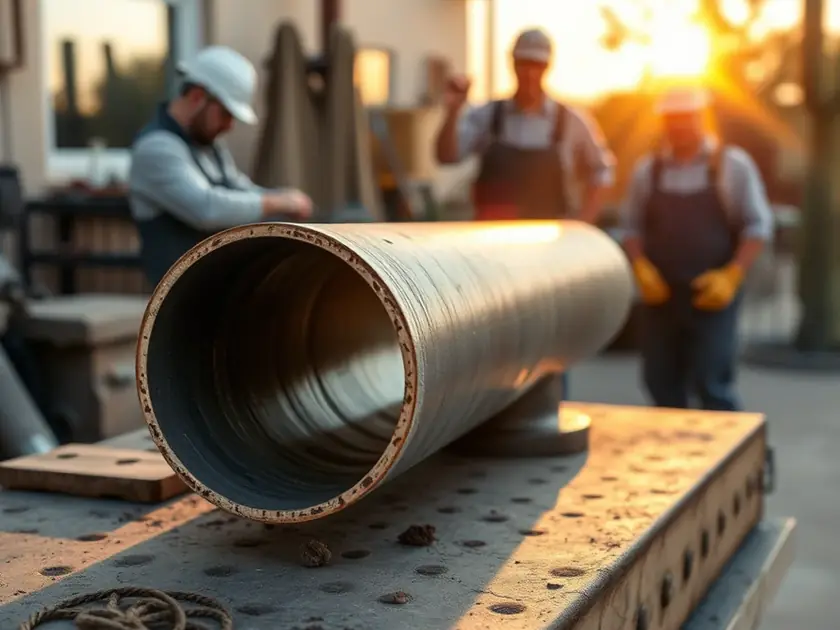 Hard Water
How Hard Water in Apache Junction Destroys Your Plumbing
At 15 to 25 grains per gallon, Apache Junction has some of the hardest water in the country. Here is what that mineral is actually doing inside your pipes, your water heater and your fixtures — and the maintenance that changes the outcome.
7 min read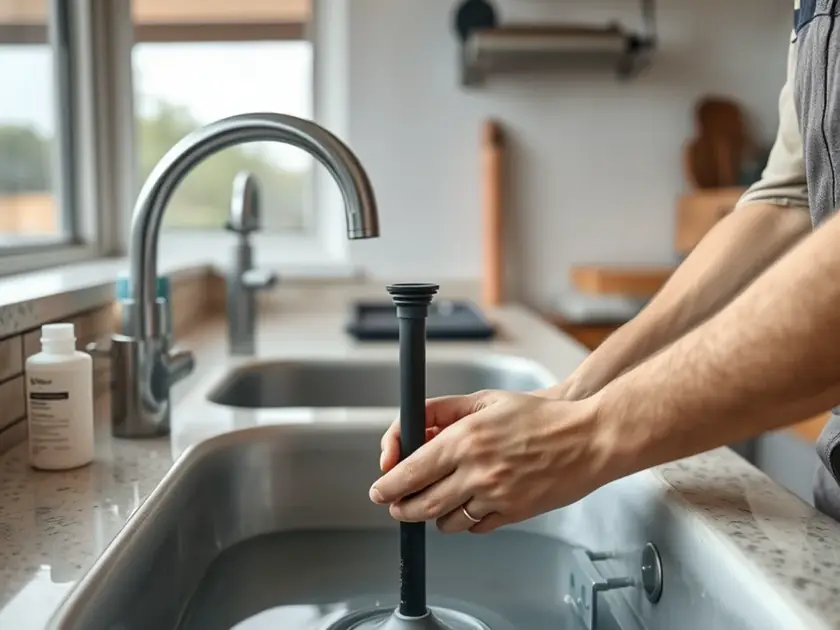 Drains & Sewers
DIY Drain Cleaning: When to Try It, When to Call
Some clogs are genuinely a fifteen-minute job you should do yourself. Others need a machine, and a few are warning signs you should not be plunging at all.
6 min read