
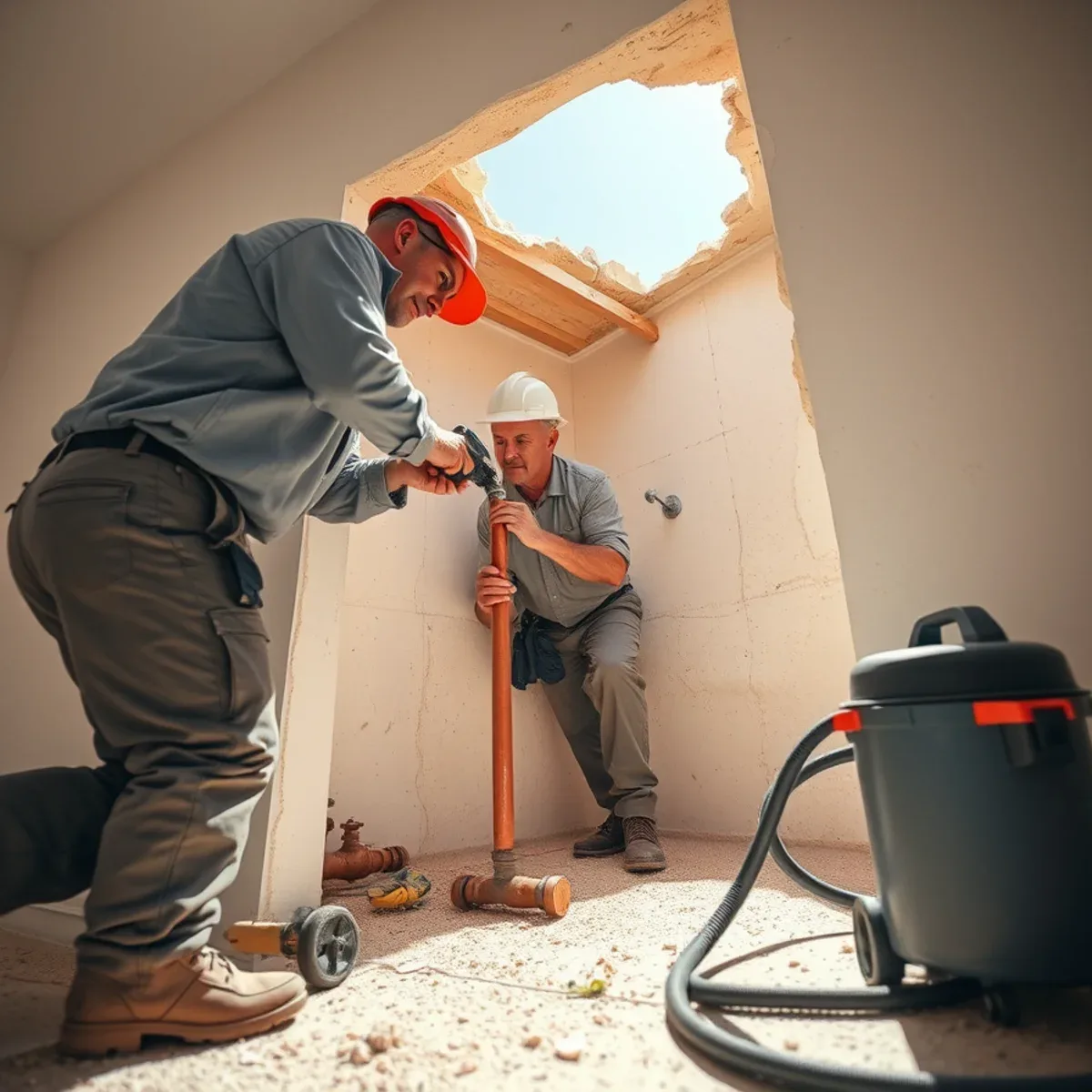
Short answer
If a pipe has burst, close the main shutoff before you call anyone — usually on the exterior wall near the front hose bib, or in a box at the meter. Then open the lowest faucet in the house to drain the pressure so it stops feeding the break. In Apache Junction the cause is rarely freezing; it is polybutylene, a failed connector or a seized angle stop.
A burst pipe does damage by the minute. The first thing that matters is not who you call — it is getting the water off. Turn the main shutoff clockwise until it stops, then open the lowest faucet in the house to drain the pressure out of the system so it stops feeding the leak. Then call.
In Apache Junction the causes are fairly predictable. Polybutylene supply lines in homes built between roughly 1978 and 1995 go from fine to a two-inch split without a warning drip. Braided washing machine and toilet connectors fail at the crimp. Old galvanized finally lets go at a corroded joint. And angle stops seized with mineral snap in someone's hand at the worst possible moment.
We repair the failure, pressure test it, and — because we do drywall and finish work as part of the business — put the wall back. That last part matters more than people expect: plenty of plumbing-only shops leave you with an open wall and a phone number for somebody else.
Pipe burst? Shut the main off, then call.
We will tell you what to do next before we even leave the shop — and we put the wall back when we are done.
What you are dealing with
Water coming through a ceiling
A supply line in the attic or an upstairs wall. Get the main off, then get anything valuable out from underneath.
A wet patch spreading on drywall
The pipe is behind that wall and has been leaking for a while before it showed. Do not wait for it to get bigger.
A hissing or spraying sound in a wall
A pressurised split. This one escalates fast — treat it as an emergency even if you cannot see water yet.
A connector let go behind an appliance
Braided washing machine and toilet supply lines are one of the most common burst sources in any house.
A shut-off valve snapped
Hard water seizes angle stops. When someone finally forces one, the stem can shear — and now nothing closes.
Gray plastic pipe and a sudden flood
Classic polybutylene failure. Repairing the split does nothing about the rest of the system, and we will say so.
What a burst pipe repair job includes
Every quote covers the items below. If something is not on this list, it is not in the price — and we will say so before we start.
Damage stopped on the phone
We walk you through the main shutoff, draining the system and killing power to the water heater before anyone is in a truck.
The failure located precisely
Smallest opening that gives proper access, with leak detection equipment where the break is not obvious — not exploratory demolition.
Written price before we start
Scope and number agreed by you. Nothing appears on the invoice that was not approved first.
Correct fittings for the material
Repairing into polybutylene or galvanized needs transition fittings, and often a full run replacement because the old material will not take a modern repair reliably.
Pressure tested before closing up
Every repair, without exception.
Drywall patched, textured and blended
By our own crew, in the same quote — not left open with a phone number for somebody else.
First five minutes, in order
Find the main shutoff and close it. On most Apache Junction homes it is on the exterior wall on the street side, usually within a few feet of the front hose bib, or in a valve box near the meter at the property line. Manufactured and mobile homes typically have it at the water riser under the skirting. A quarter turn does it if it is a ball valve; a gate valve takes several turns clockwise.
Then open the lowest faucet in the house — often a tub spout or an outside hose bib — to drain residual pressure so the break stops being fed.
Kill power to the water heater at the breaker if water is anywhere near it, and switch off electricity to any circuit where water is reaching outlets or fixtures. Get belongings up off the floor and move furniture off wet carpet before it wicks.
Then call. We will ask what you are seeing, tell you whether it genuinely cannot wait, and give you a real arrival window rather than a vague promise.
What the repair involves
Once the water is off, the job is to expose the failure with the smallest opening that gives proper access, cut out the damaged section, and splice in new pipe with fittings appropriate to the material.
That last part matters on older systems. Repairing into polybutylene or galvanized is not a like-for-like patch — it needs transition fittings, and in polybutylene's case the surrounding pipe is often brittle enough that a repair introduces stress at the new joint. That is why we frequently recommend replacing the whole run rather than the failed foot.
Every repair gets pressure tested before anything closes up. Then drywall goes back: patched, textured and blended by our own crew, so you get one contract, one invoice and one company responsible for the result.
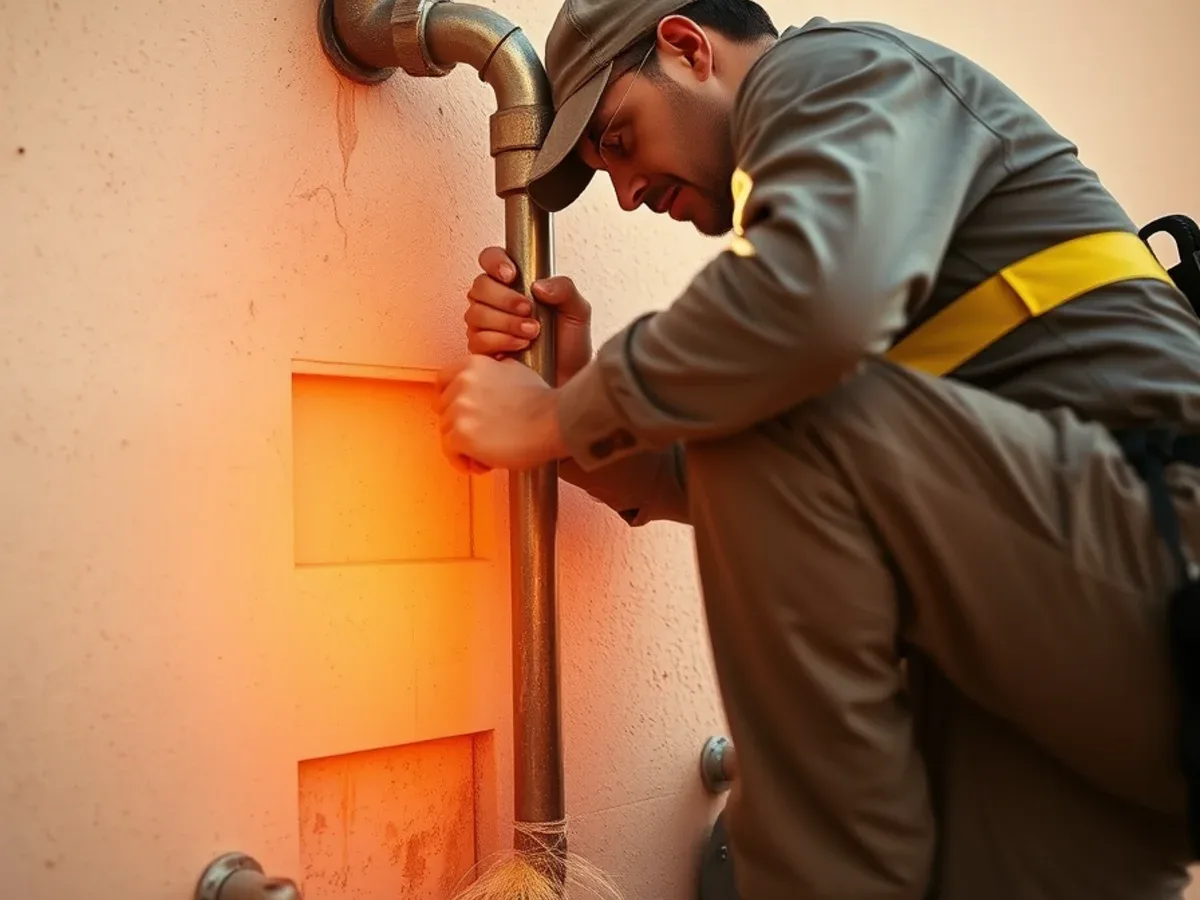
Spot repair
Cut out the failure, splice new pipe. Right where the surrounding system is sound.
Run replacement
Replace the whole length between fittings. Usually the right call on brittle polybutylene.
Reroute
Abandon a problem run and take a new line overhead through the attic. Removes the failure mode entirely.
Full repipe
When it is the second or third burst, you are no longer fixing a leak — you are ending a pattern.
Stopping the next one
Most burst pipes give a warning that nobody was watching for. Braided supply connectors have a service life and are worth replacing on a schedule rather than after they fail — they are inexpensive and they sit behind appliances where a failure runs unnoticed.
Multi-turn compression angle stops seize with mineral. Replacing them with quarter-turn ball valves costs very little while somebody is already under the sink, and it means the valve will actually close when you need it to.
High static pressure is a genuine contributor. Anything above about 80 psi stresses every joint in the house, and a failed pressure reducing valve is a common and inexpensive fix.
And if the house has polybutylene, no amount of maintenance changes the underlying risk. That is a repipe conversation, and it is much cheaper to have it on your schedule than at two in the morning.
How a burst pipe call runs
- 1
Stop the damage on the phone
Before anyone gets in a truck, we walk you through the main shutoff, draining the system, and killing power where it matters.
- 2
Real arrival window
Not "sometime today." A window we intend to hit, and a call if anything changes.
- 3
Find the failure precisely
Smallest opening that gives proper access. Leak detection equipment where the break is not obvious.
- 4
Written price before we start
You see the number and the scope. Nothing happens until you agree to it.
- 5
Repair and pressure test
Correct fittings for the material, then tested under pressure before anything is closed up.
- 6
Drywall put back
Patched, textured and blended by our own crew — not left open with a referral to somebody else.
What drives the price
You hear the price before we start and it does not change afterward. What moves it:
- Where the break is
- An accessible wall cavity is a fraction of the cost of the same split under a slab or behind finished tile.
- What the pipe is made of
- Repairing into polybutylene or galvanized needs transition fittings and often a full run replacement, because the old material will not reliably take a modern repair.
- Time of day
- After-hours, weekend and holiday work costs more than a Tuesday morning. We tell you that on the phone, not on the invoice.
- How much has to come apart
- Drywall, tile, stucco and concrete cutting each add labour and a restoration step. We do our own drywall, which keeps that from becoming a second contractor.
- Whether water damage needs remediation
- We handle the plumbing and the drywall. If saturated flooring or insulation needs professional drying, we will tell you plainly rather than papering over it.
Every quote is written, and the number does not change afterward. AZ ROC CR-37 Plumbing · BBB A+ accredited.
Why AllStar Home Services for burst pipe repair
We tell you if it is a pattern
A burst in polybutylene or heavily corroded galvanized is the system telling you what it plans to do next. Repairing one foot does not change that, and we will say so.
We put the wall back ourselves
Drywall Repair is one of the categories BBB accredits us under. Patching, texturing and blending is in the quote, not a referral.
The quote is the price
You hear the number before we start and it does not move afterward. It is the single thing customers mention most in our reviews.
Based at 870 W 15th Ave, not a call centre
Shane, Leo and Justin live in Apache Junction. Most of the city is a ten to fifteen minute drive rather than a cross-valley dispatch.
Where we provide burst pipe repair
Burst repairs cluster in the 1978–1995 polybutylene belt and the pre-1978 galvanized stock. We deliver this from our 15th Ave shop across Apache Junction and Gold Canyon, then out through Queen Creek, San Tan Valley, Mesa, Gilbert, Chandler, Tempe and Fountain Hills. That means Ironwood Estates, Acoma Estates and Apache East Estates in Apache Junction, plus east Mesa, Superstition Springs and older Chandler and Tempe.
Further out we cover Florence, Coolidge, Casa Grande, Maricopa, Eloy, Superior and Mammoth, and we are honest about when a small job does not justify the drive. If you are on a well or away part of the year, a smart leak detection device with automatic shutoff is genuinely the highest-value plumbing purchase available — it turns a catastrophe in an empty house into a phone call.
- Burst Pipe Repair in Apache Junction
- Burst Pipe Repair in Gold Canyon
- Burst Pipe Repair in Queen Creek
- Burst Pipe Repair in Mesa
- Burst Pipe Repair in Superstition Mountain
- Burst Pipe Repair in Ironwood Estates
Burst Pipe Repair questions, answered
Related reading
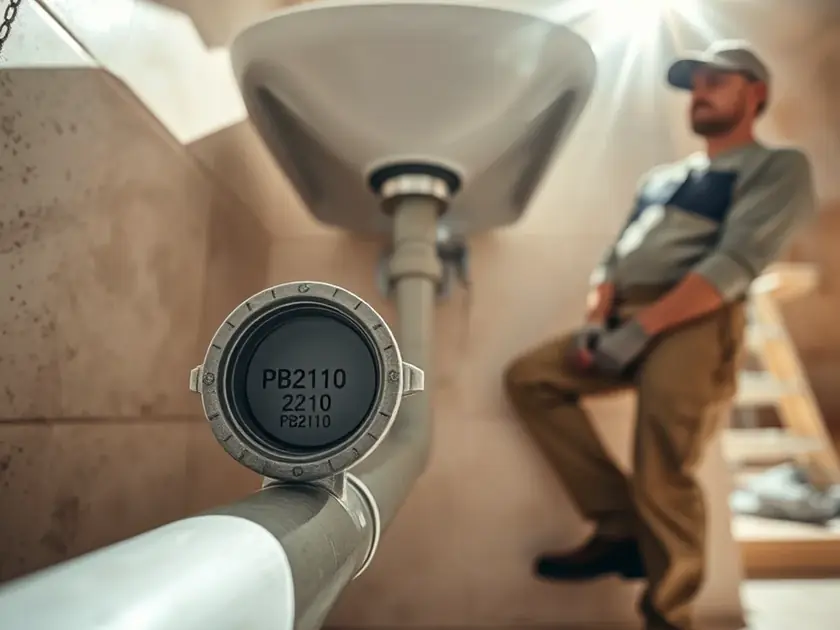 Pipes & Repiping
Polybutylene Pipes: Are They Still in Your Home?
It takes thirty seconds to check, and the answer changes what you should do about your plumbing. Here is how to identify polybutylene, why it fails without warning, and how to decide what to do about it.
7 min read Emergencies
What to Do When Your Water Heater Bursts at 2 AM
A tank does not fail politely. Here are the five things to do in the first ten minutes, in the right order, and what to expect afterward.
7 min read