Polybutylene Pipes: Are They Still in Your Apache Junction Home?
It takes thirty seconds to check, and the answer changes what you should do about your plumbing. Here is how to identify polybutylene, why it fails without warning, and how to decide what to do about it.
The short answer
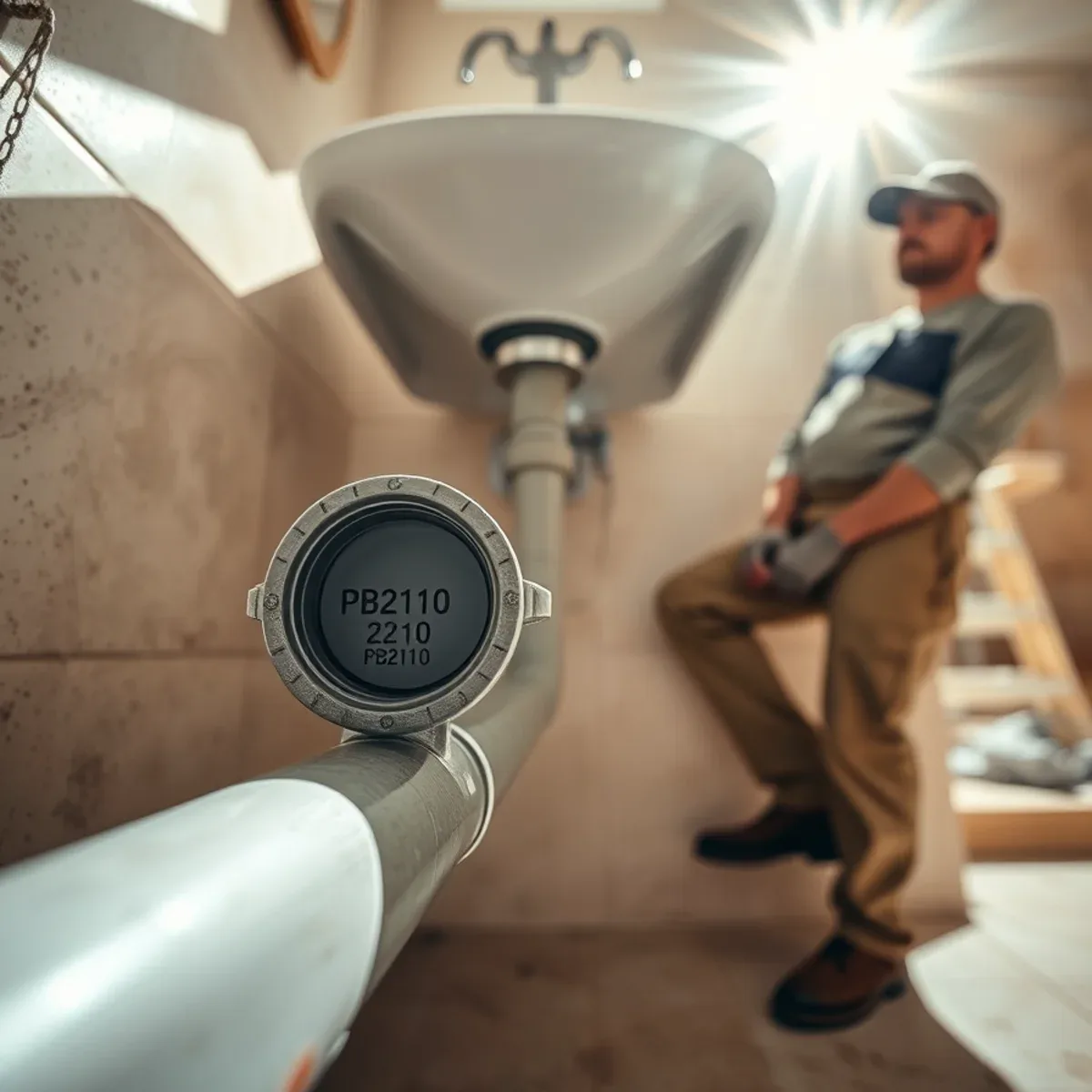
Look under a bathroom sink for dull gray or blue-gray flexible pipe stamped PB2110, joined with crimped fittings. If your home was built between roughly 1978 and 1995, that is polybutylene. It degrades from the inside as chlorine attacks it and splits at full pressure without any warning drip.
Between the late 1970s and the mid 1990s, millions of American homes were plumbed with polybutylene supply lines. It was cheap, flexible and fast to install, and for a while it looked like the future. Then it started failing — not with a drip you notice and deal with, but with sudden splits, frequently behind drywall, frequently while nobody was home.
Apache Junction has a lot of housing from exactly that window, and so do east Mesa, older Chandler and plenty of other East Valley neighborhoods. If your home was built between roughly 1978 and 1995, this is worth thirty seconds of your time.
This is not a scare piece. It is a description of a known material defect and an honest framework for deciding what to do.
How to identify it in thirty seconds
Open the cabinet under a bathroom or kitchen sink and look at the pipe coming out of the wall. Then check at the water heater, where supply lines are usually visible.
Polybutylene is dull gray, sometimes blue-gray or black. It is flexible rather than rigid — you can bend it with your hands. It is typically half-inch or three-quarter-inch, and it is usually stamped PB2110 along its length. It is joined with crimped fittings, either copper crimp rings or gray plastic insert fittings.
What it is not: rigid copper (shiny or dull brown metal, soldered joints), white or cream CPVC (rigid plastic, glued joints), or modern PEX (flexible, but red, blue or white and stamped PEX).
If you are unsure, take a photo and send it to us. We identify it at no charge, and it is a two-minute answer that saves a lot of guessing.
Color
Dull gray, blue-gray or black. Not shiny, not white, not red or blue.
Flexibility
Bends by hand. Rigid pipe is copper, CPVC or galvanized.
Markings
Usually stamped PB2110. Look along the length of the pipe.
Fittings
Crimped copper rings or gray plastic insert fittings, not soldered or glued joints.
Why it fails, and why the failure is dangerous
Polybutylene degrades from the inside out. Chlorine and chloramine — the disinfectants in essentially all treated municipal water — react with the pipe material over time, causing micro-fractures that propagate through the wall. The pipe becomes brittle while looking completely normal from the outside.
The acetal plastic fittings used in many early installations have their own problem: they become brittle and crack, often at the crimp.
What makes this genuinely different from other aging plumbing is the failure mode. Copper develops pinhole leaks that weep and give you warning. Galvanized closes down gradually and announces itself through declining pressure. Polybutylene tends to split, and it does it suddenly, at full line pressure, wherever it happens to be — which is usually inside a wall, under a floor, or in a ceiling.
That is why a polybutylene failure so often turns into a large water damage claim rather than a plumbing repair.
Does it matter that it has not leaked yet?
Not as much as people hope. Degradation is a function of time and chlorine exposure, and it is progressing whether or not there has been a visible failure. A house that has never had a polybutylene leak is not a house with good polybutylene — it is a house whose turn has not arrived.
There is also a documented pattern: once a home starts having polybutylene failures, it tends to have more. The same conditions exist along every run.
The class action settlements that once helped homeowners pay for replacement closed many years ago, so there is no longer a fund to apply to. And insurance is worth checking on: some carriers charge more, some limit coverage, and a few decline to write policies on homes with known polybutylene supply.
The honest cost comparison
A planned repipe happens on your schedule. You get a fixed written price in advance, we move and cover furniture, the work runs one to three days for most single-story Apache Junction homes, and the drywall openings get patched and textured as part of the job.
An emergency repipe happens after a line splits at two in the morning. You are paying for the plumbing, plus water damage remediation, plus flooring, plus drywall, plus whatever was stored in the closet where it happened, plus potentially a temporary place to stay. The plumbing is the small part of that bill.
And there is the resale angle. Polybutylene is a known defect that inspectors flag and buyers’ agents look for. A house with a documented full repipe in PEX is worth measurably more than the same house with a polybutylene note in the inspection report — and it removes a negotiating lever from the buyer.
What replacement actually involves
We repipe in PEX. It does not corrode on mineral-heavy water, it needs far fewer fittings on long runs, it handles the temperature swings an Arizona attic produces, and it costs meaningfully less to install than copper.
The work is mostly overhead — new supply lines run through the attic and drop into interior walls at each fixture. That means small, deliberate openings high on walls behind and above fixtures rather than random holes through your living space. The old polybutylene is abandoned in place rather than demolished out, which saves an enormous amount of destruction for no downside.
New lines get pressure tested and permit-inspected before anything closes up. Then drywall goes back — patched, textured and blended by our own crew, because AllStar does drywall and remodeling work as well as plumbing.
Frequently asked questions
Go look under your sink
It takes thirty seconds, and it is the difference between knowing where you stand and finding out the hard way. Dull gray flexible pipe stamped PB2110 means you have polybutylene, and it means you should be planning rather than hoping.
Send us a photo and we will tell you what you are looking at for free. If it is polybutylene, we will give you a fixed written quote for a repipe with no pressure attached — including our drywall repair, so you are not chasing a second contractor afterward.
Services mentioned in this article
- Repipingin Apache Junction, AZ
- Slab Leak Repairin Apache Junction, AZ
- Emergency Plumbingin Apache Junction, AZ