
Short answer
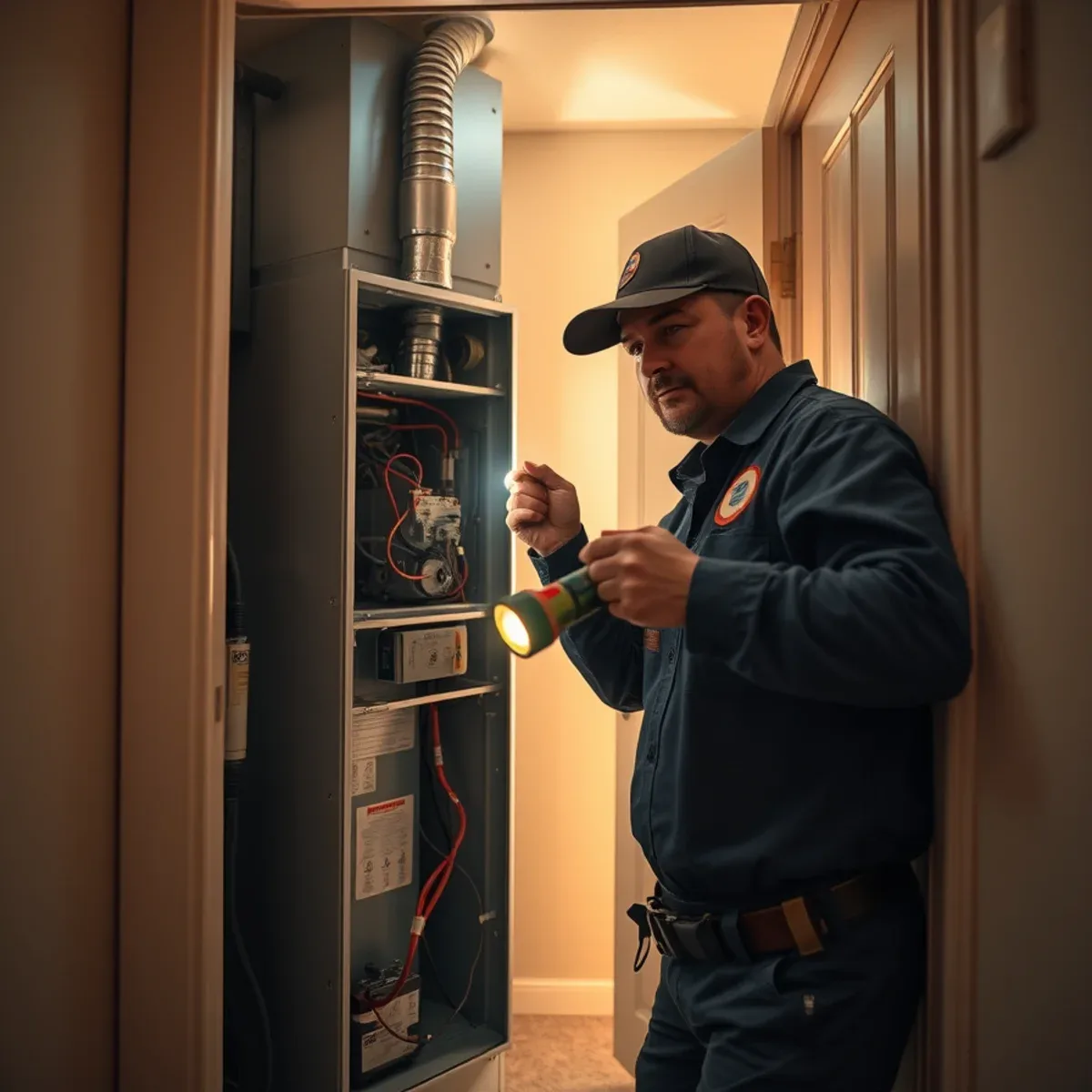
Heating repair in Apache Junction spikes the same week every November, and the reason is simple: a furnace or heat pump sits unused for eight or nine months and is then asked to work on the first cold evening. Most no-heat calls turn out to be an inexpensive part — an ignitor, a residue-coated flame sensor, or a reversing valve stuck in cooling.
Winter in Apache Junction is short, and that is exactly why heating fails here. A furnace or heat pump sits unused for eight or nine months, collects dust on its heat exchanger and burners, and then gets asked to work on the first genuinely cold evening in November.
That is why the same week every year produces a wave of no-heat calls. It is not coincidence — it is equipment being started for the first time since spring.
Overnight lows in the 30s are common here, and homes at higher elevation toward Superstition Mountain and out through Gold Canyon run colder than the valley floor. For older residents in particular, no heat on a 35-degree night is not a minor inconvenience.
No heat on a cold night?
Call and we will tell you what to check first. Most no-heat calls turn out to be an inexpensive part.
What is going wrong
It will not turn on at all
Thermostat, a tripped breaker, a failed ignitor, a blocked flame sensor or a safety switch doing its job.
It blows but the air is not warm
On a furnace: ignition or gas supply. On a heat pump: refrigerant charge, or a reversing valve stuck in cooling.
It runs briefly then shuts off
Short cycling. Frequently a dirty flame sensor, a restricted filter, or an overheating limit switch tripping.
A burning smell on first use
Usually dust burning off after months idle, and normal for a few minutes. If it persists or smells electrical, shut it off and call.
A heat pump blowing cool air in heating mode
Sometimes normal during a defrost cycle. If it is constant, the reversing valve or the charge needs looking at.
The carbon monoxide alarm sounded
Leave the house and call the gas utility from outside first. Then call us. Do not restart the system.
What a heating & furnace job includes
Every quote covers the items below. If something is not on this list, it is not in the price — and we will say so before we start.
The simple things checked first
Thermostat settings and batteries, breakers, gas valve and filter — before anyone charges you to diagnose something simpler.
Diagnosis by measurement
Ignition sequence observed, flame sensor microamps read, temperature rise and static pressure measured, refrigerant checked on a heat pump.
Heat exchanger and vent inspected
Non-negotiable on any gas appliance call. A cracked exchanger or a blocked flue can put carbon monoxide into a house.
CO alarms confirmed present and in date
They have a seven to ten year service life printed on the unit. An expired alarm is not protection.
Price before the repair
And on ageing equipment, an honest repair-versus-replace comparison rather than a push toward the bigger ticket.
Performance re-verified after the fix
Measured again to confirm the system is genuinely performing rather than merely running.
Furnace or heat pump — they fail differently
Which one you have determines almost everything about the diagnosis, and plenty of homeowners genuinely do not know.
A gas furnace burns fuel. Its common faults are ignition-related: a cracked hot surface ignitor, a flame sensor coated in residue so it cannot prove flame, a failed inducer motor, or a pressure switch that will not close because the vent is partly blocked. Almost all of these are repairs rather than replacements, and several are inexpensive.
A heat pump is an air conditioner running backwards, extracting heat from outside air and moving it in. Its faults are refrigerant charge, a reversing valve that will not shift, a failed defrost board or sensor, or a contactor and capacitor problem exactly like a cooling call. Heat pumps are common in this region because our winters are mild enough for them to work efficiently.
Many homes here also have auxiliary electric heat strips as backup on a heat pump. If your heat works but your electricity bill spikes, the heat pump may have failed and the strips may be doing all the work — an expensive fault that does not feel like a fault.
Hot surface ignitor
A common, inexpensive furnace failure. Fragile and consumable by design.
Flame sensor
Coats with residue and stops proving flame. Cleaning it often resolves a no-heat call entirely.
Reversing valve
Heat pump stuck in cooling. Sticks most often after months of not switching.
Heat strips carrying the load
Heat works, bill spikes. The heat pump has failed and backup resistance heat is covering for it.
The October test that prevents the December call
This is the single most useful thing we can tell you, and it costs nothing.
Some evening in October, before you actually need it, turn the heat on and run it for fifteen minutes. That is enough to reveal almost every fault that would otherwise surface on the first cold night — a failed ignitor, a dirty flame sensor, a heat pump stuck in cooling, a thermostat that lost its programming.
If it works, you have a working heater and a quiet winter. If it does not, you have a scheduling problem in mild weather rather than an emergency on a 34-degree night, and you will get an appointment far more easily.
Expect a burning smell for the first few minutes — that is dust burning off the heat exchanger after months idle and it is normal. If it persists beyond ten minutes, smells electrical, or the system shuts itself off, stop and call.
Safety, briefly and seriously
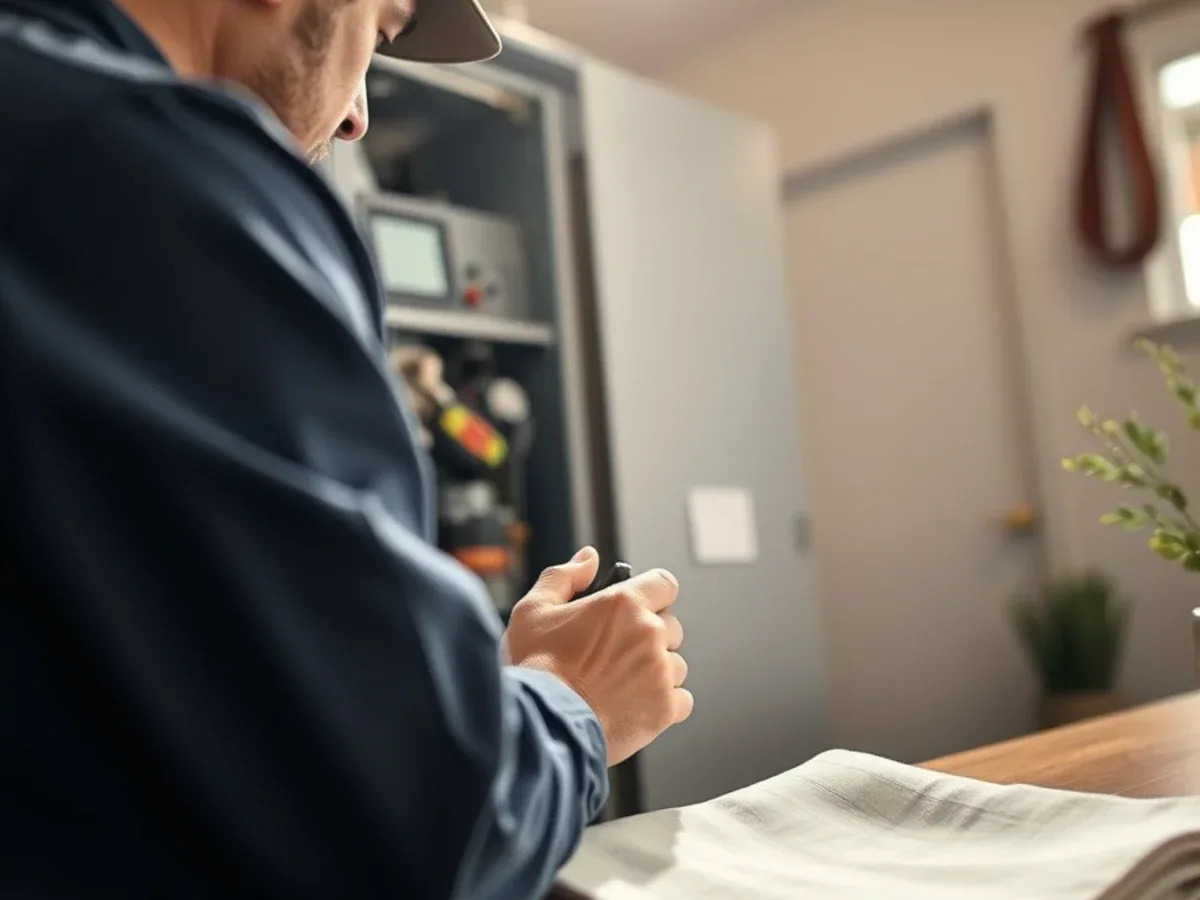
Gas heating equipment produces combustion gases, and those gases have to leave the building through an intact vent. A cracked heat exchanger, a blocked or disconnected flue, or a bird nest in a vent termination can put carbon monoxide into a house.
Every home with any gas appliance should have working carbon monoxide alarms, and they have a service life of their own — typically seven to ten years, printed on the unit. An expired CO alarm is not protection.
If a CO alarm sounds: get everyone outside, call the gas utility from outside, and do not restart the system. Then call us to find and correct the cause once the space is safe.
On any heating service call we inspect the heat exchanger, verify the vent is intact and correctly terminated, check combustion, and confirm your CO alarms are present and in date. It is not an upsell — it is the part of the job that matters most.
How a heating call runs
- 1
Confirm the basics first
Thermostat settings and batteries, breakers, the gas valve and the filter — before anyone charges you for a diagnosis of something simpler.
- 2
Diagnose by measurement
Ignition sequence observed, flame sensor microamps, temperature rise, static pressure, refrigerant readings on a heat pump.
- 3
Safety inspection
Heat exchanger, venting, combustion and CO alarms. Non-negotiable on any gas appliance call.
- 4
Price before repair
You hear the number before we do anything, and on ageing equipment an honest repair-versus-replace comparison.
- 5
Repair
Ignitors, flame sensors, inducers, pressure switches, contactors, capacitors, boards, reversing valves and charge correction.
- 6
Verify performance
Re-measured after the repair to confirm the system is genuinely performing rather than merely running.
What drives the price
A diagnostic visit carries a service call fee that applies toward the repair. Repairs are priced before we start.
- What failed
- A flame sensor cleaning is minor. An ignitor or capacitor is modest. A heat exchanger or compressor opens the replacement conversation.
- Furnace or heat pump
- Different parts, different diagnostics. Heat pump refrigerant work costs more than a furnace ignition repair.
- Access
- A garage or closet unit is straightforward. An attic air handler in a low-clearance space takes considerably longer.
- System age
- On equipment past about fifteen years we will tell you plainly when a repair is money going into something near the end.
- After-hours
- A no-heat call on a genuinely cold night carries an after-hours rate. You hear that on the phone before we dispatch.
Every quote is written, and the number does not change afterward. AZ ROC CR-37 Plumbing · BBB A+ accredited.
Why AllStar Home Services for heating & furnace
We will tell you to test it in October
Running the heat for fifteen minutes before you need it surfaces almost every fault while it is still a scheduling matter rather than an emergency on a 34-degree night.
Plumbing, HVAC and remodeling in one company
BBB accredits us under Plumber, Bathroom Remodel, Remodel Contractors and Drywall Repair. One contract, one crew, nobody pointing at somebody else.
The quote is the price
You hear the number before we start and it does not move afterward. It is the single thing customers mention most in our reviews.
Licensed, insured and permitted
Arizona ROC classification CR-37, issued November 2024, BBB accredited A+. We pull permits and pass the fee through at cost.
Where we provide heating & furnace
Heating season is short here but the nights are genuinely cold. We deliver this from our 15th Ave shop across Apache Junction and Gold Canyon, then out through Queen Creek, San Tan Valley, Mesa, Gilbert, Chandler, Tempe and Fountain Hills.
Further out we cover Florence, Coolidge, Casa Grande, Maricopa, Eloy, Superior and Mammoth, and we are honest about when a small job does not justify the drive. Homes at higher elevation — Superstition Mountain, Gold Canyon, Fountain Hills and Superior — run several degrees colder than the valley floor and see more heating calls than the rest of the service area.
- Heating & Furnace in Apache Junction
- Heating & Furnace in Gold Canyon
- Heating & Furnace in Queen Creek
- Heating & Furnace in Mesa
- Heating & Furnace in Superstition Mountain
- Heating & Furnace in Ironwood Estates
Heating & Furnace questions, answered
Related reading
 Seasonal
Winter Plumbing Tips for Desert Homes
Everyone assumes freezing is not an Arizona problem. Then a cold snap arrives, and the hose bibs and exposed lines that nobody protected split.
6 min read Seasonal
How to Prepare Your Plumbing for Arizona Summer Heat
Cold water that runs hot, hose bibs that split, attic lines at 150 degrees and a water heater in a 120-degree garage. Summer here is genuinely hard on plumbing.
6 min read