
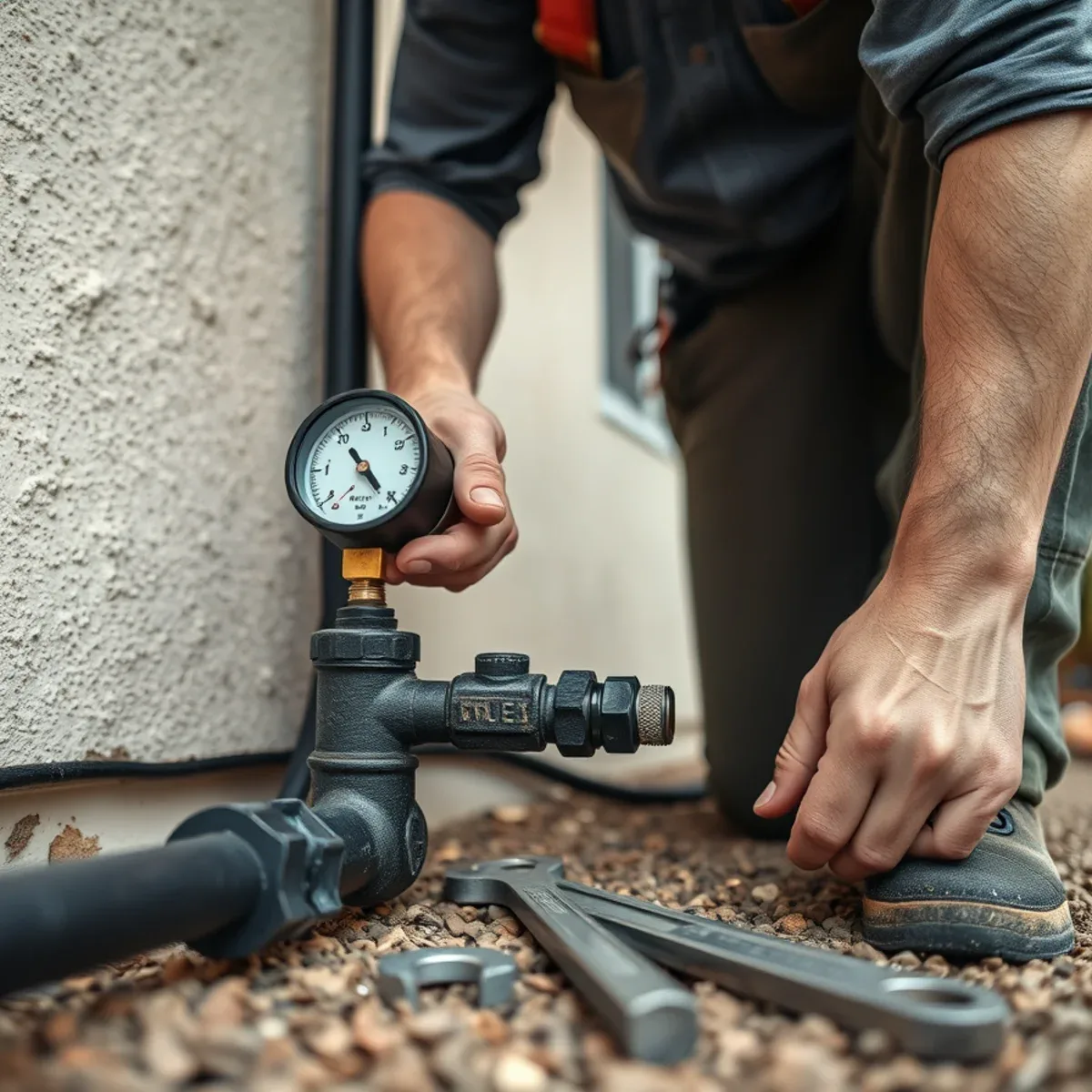
Short answer
Gas line work in Apache Junction is licensed, permitted and pressure-tested work — never a handyman job. The most common defect we correct is an undersized line: adding a pool heater, a larger range or a tankless water heater to an existing run without recalculating the load starves everything on that branch.
Gas work is the part of plumbing where "close enough" has no place. A line that is undersized, improperly supported, or joined with the wrong compound will function fine right up until it does not. This is licensed, permitted, pressure-tested work, and it should never be handled by a handyman or a friend with a pipe wrench.
We install and repair natural gas and propane lines throughout Apache Junction and Pinal County: new runs for gas ranges, dryers, outdoor kitchens and BBQ stub-outs, fire pits, pool and spa heaters, generators, and the upsized runs that tankless water heater conversions almost always require.
If you smell gas right now, stop reading. Leave the house, do not touch light switches or the garage door opener, and call your gas utility from outside. Then call us.
Need gas run, repaired or tested?
Licensed, permitted and pressure-tested. Free written quotes on new installations.
When to call about a gas line
A rotten-egg or sulfur smell
Mercaptan is added to gas specifically so you can smell it. Get out, call the utility from outside, then call us.
Hissing near a line or appliance
Audible gas escaping is a significant leak. Do not attempt to find it yourself.
A gas bill that climbed with no change in use
Small leaks do not always smell strongly at the leak point, especially outdoors or in a crawl space.
Appliances that will not stay lit
Pilots going out or burners running yellow can indicate a supply pressure or line sizing problem.
You are adding a gas appliance
Ranges, dryers, pool heaters, generators and tankless heaters all need a properly sized run and often a load calculation.
Dead or corroded pipe outside
Buried and exterior gas lines corrode, especially where irrigation keeps soil damp against them.
What a gas lines job includes
Every quote covers the items below. If something is not on this list, it is not in the price — and we will say so before we start.
Full load calculation
Total BTU demand of every appliance, developed length including fittings, and confirmation the meter itself can carry it.
Permit pulled as part of the job
Gas piping is always permitted work. The fee is passed through at cost, and inspection days are built into the schedule you get.
Correct material and support
Black iron or CSST as the application calls for, supported to spec, protected where it passes through framing, and bonded to the electrical ground where CSST is used.
Shutoff and sediment trap at every appliance
Both are code requirements and both are consistently missing on unpermitted work. They protect the gas valve from debris.
Held pressure test
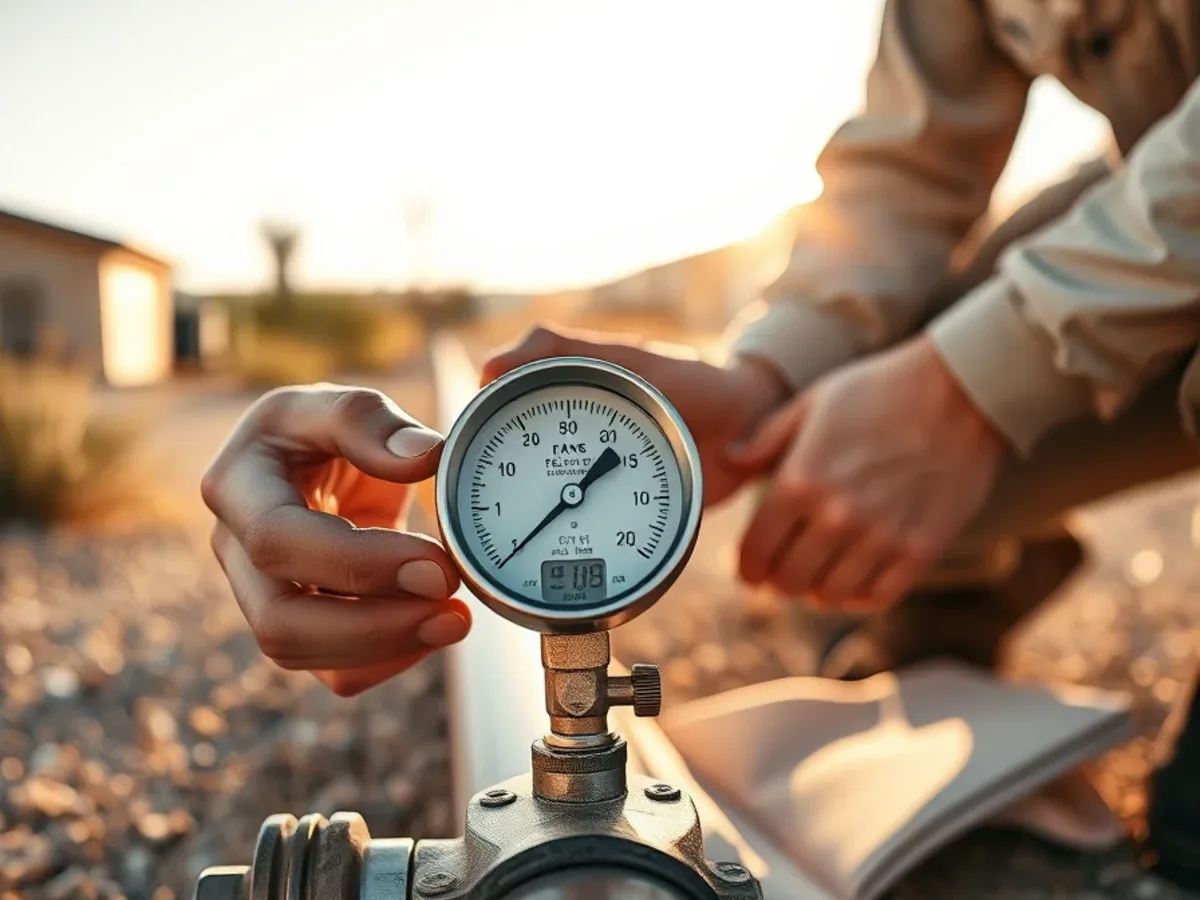
The system is isolated, pressurised and held on a gauge for the required period. Any drop at all and we keep working.
Purge, connect and light
After inspection we purge the line, connect the appliances and verify each runs correctly under load before we leave.
Sizing is the part people get wrong
The single most common gas problem we correct is an undersized line. Gas pipe has to deliver a required volume at a required pressure over a specific distance, and every appliance on the run draws from the same supply. When someone adds a big appliance to an existing line without doing the math, everything on that branch suffers — pilots blow out, burners run yellow and sooty, and the new appliance never reaches its rated output.
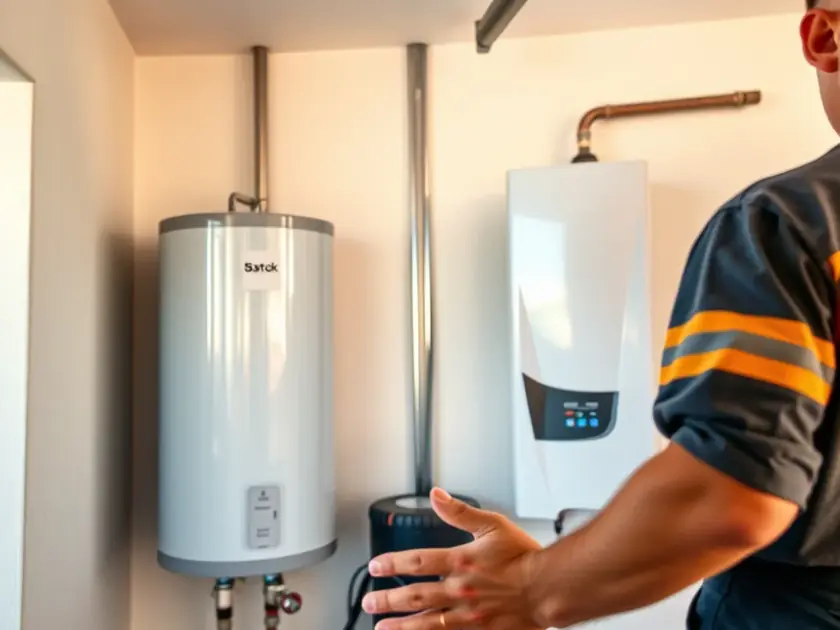
Tankless water heaters are the biggest offender. A tank water heater fires around 40,000 BTU. A whole-home gas tankless unit fires at 150,000 to 199,000. Many Apache Junction homes have a half-inch line to the water heater, which cannot come close to that. The conversion is not just the heater — it is often a new, larger run from the meter, and sometimes a meter upgrade from the utility.
We calculate the full load on the system, measure the developed length including fittings, and size to code rather than to what fits. If the answer means a bigger job than you hoped for, you will hear that at the estimate rather than after the work starts.
Black iron pipe
The traditional standard for interior runs. Durable, rigid, and what most inspectors expect to see.
CSST (flexible)
Faster to route through finished spaces. Requires proper bonding to the electrical ground — a step that is skipped alarmingly often.
Coated line for burial
Exterior and buried runs need proper coating and depth. Bare pipe in damp Arizona soil corrodes faster than people expect.
Sediment traps & shutoffs
Required at appliances, and consistently missing on unpermitted work. They protect gas valves from debris.
What permitted gas work actually includes
A properly done gas installation is pressure-tested and inspected before it is put into service. We isolate the new work, pressurize it with air, and hold that pressure on a gauge for the required period — if it drops at all, there is a leak and the work is not finished.
Inspection also covers things that are easy to skip: sediment traps at each appliance, an accessible shutoff valve within reach of every appliance, proper support spacing so pipe is not hanging on its own fittings, correct bonding on CSST, and appropriate protection where a line passes through framing.
Unpermitted gas work is a genuine liability. It can void a homeowners policy at exactly the moment you need it, it comes up in resale inspections, and it will not have been tested by anyone but the person who did it. The permit fee is small compared to the exposure.
Outdoor kitchens, fire pits and pool heaters
A large share of our gas work is outdoor, because that is how people actually live here — nine months a year the backyard is the best room in the house. BBQ stub-outs, built-in grills, fire pits, patio heaters and pool or spa heaters are all common Apache Junction projects.
Outdoor runs have their own requirements. Line has to be routed and protected against physical damage, buried at proper depth with the right coating where it goes underground, terminated with an accessible shutoff, and sized for the appliance at the far end of what is often a long run. Pool heaters in particular are high-BTU appliances at the maximum distance from the meter, which is exactly the combination that exposes an undersized line.
If you are planning a patio or landscape project, the cheapest time to run gas is before the concrete goes down. Call us during planning, not after.
How a gas line job runs
- 1
Load calculation
Total BTU demand of every appliance, developed length of the run, and whether the existing meter can carry it.
- 2
Written scope and permit
Material, route, sizing and permit clearly laid out before anything starts. Gas work is always permitted work.
- 3
Route and install
Black iron or CSST as appropriate, supported to spec, protected through framing, bonded where required.
- 4
Shutoffs and sediment traps
An accessible shutoff at every appliance and a sediment trap where code requires one. Not optional.
- 5
Pressure test
The system is isolated, pressurized and held on a gauge. Any drop at all means we keep working.
- 6
Inspection and commissioning
Inspector signs off, we purge the line, connect and light the appliances, and verify they run correctly under load.
What drives the price
Gas quotes are free and written. The cost is driven mostly by distance and by what the pipe has to pass through.
- Length of the run
- From the meter to the appliance, including every fitting. A patio BBQ on the far corner of the lot is a long run.
- Required pipe size
- Sizing is set by BTU load and distance. High-demand appliances at long distances need larger, more expensive pipe.
- What the route crosses
- An open attic or garage wall is straightforward. Under a slab, through finished stucco, or under a driveway is not.
- Buried vs interior
- Exterior burial requires trenching, coated pipe and proper depth, plus restoration of whatever was on top.
- Permit and meter capacity
- Permit fees are passed through at cost. If total demand exceeds meter capacity, the utility has to upgrade it — we coordinate that.
Every quote is written, and the number does not change afterward. AZ ROC CR-37 Plumbing · BBB A+ accredited.
Why AllStar Home Services for gas lines
We size before you buy the appliance
Finding out mid-install that the run cannot feed a 199,000 BTU tankless unit is how people end up with a surprise bill. We measure at the estimate.
Licensed, insured and permitted
Arizona ROC classification CR-37, issued November 2024, BBB accredited A+. We pull permits and pass the fee through at cost.
The quote is the price
You hear the number before we start and it does not move afterward. It is the single thing customers mention most in our reviews.
16+ years in the trade, 60+ across the team
Shane is a master plumber who still writes the estimates and runs calls — which means more repairs and fewer replacements.
Where we provide gas lines
Gas work runs across the whole service area. We deliver this from our 15th Ave shop across Apache Junction and Gold Canyon, then out through Queen Creek, San Tan Valley, Mesa, Gilbert, Chandler, Tempe and Fountain Hills. The heaviest demand is outdoor: BBQ stub-outs, fire features and pool heaters on the larger lots through Gold Canyon, Superstition Mountain, Fountain Hills and Chandler's Ocotillo area.
Further out we cover Florence, Coolidge, Casa Grande, Maricopa, Eloy, Superior and Mammoth, and we are honest about when a small job does not justify the drive. If you are planning hardscape anywhere in that list, run the gas before the concrete goes down — it saves a substantial amount over cutting it in later.
- Gas Lines in Apache Junction
- Gas Lines in Gold Canyon
- Gas Lines in Queen Creek
- Gas Lines in Mesa
- Gas Lines in Superstition Mountain
- Gas Lines in Ironwood Estates
Gas Lines questions, answered
Related reading
 Water Heaters
Tankless vs Tank Water Heaters in Arizona
Tankless is genuinely better in several ways and a worse decision in a few specific situations. Here is the honest comparison, including the gas line question that catches most people out.
8 min read Homeowner Guides
Plumbing Permits in Apache Junction & Pinal County
A cheaper quote that skips the permit is not cheaper — it is a cost you pay later, at resale or at claim time. Here is what needs a permit and how to verify who you are hiring.
6 min read