Tankless vs. Tank Water Heaters: What's Best for Arizona Homes?
Tankless is genuinely better in several ways and a worse decision in a few specific situations. Here is the honest comparison, including the gas line question that catches most people out.
The short answer
Tankless wins on endless hot water, twenty-year lifespan and reclaimed floor space. A tank wins on up-front cost, and on any home where the gas line cannot feed a 150,000–199,000 BTU burner. In Apache Junction, either choice needs the hard water solved first.
We install both, and we have no financial reason to push you toward either one. What follows is the comparison we actually give customers standing in their garage looking at a water heater that has reached the end.
The short version: tankless is a genuinely better piece of equipment in several measurable ways, it costs meaningfully more to install in most Arizona homes, and in Apache Junction it comes with a hard-water requirement that is not optional. Whether it is right for you depends on specifics.
Here are the specifics.
How they actually differ
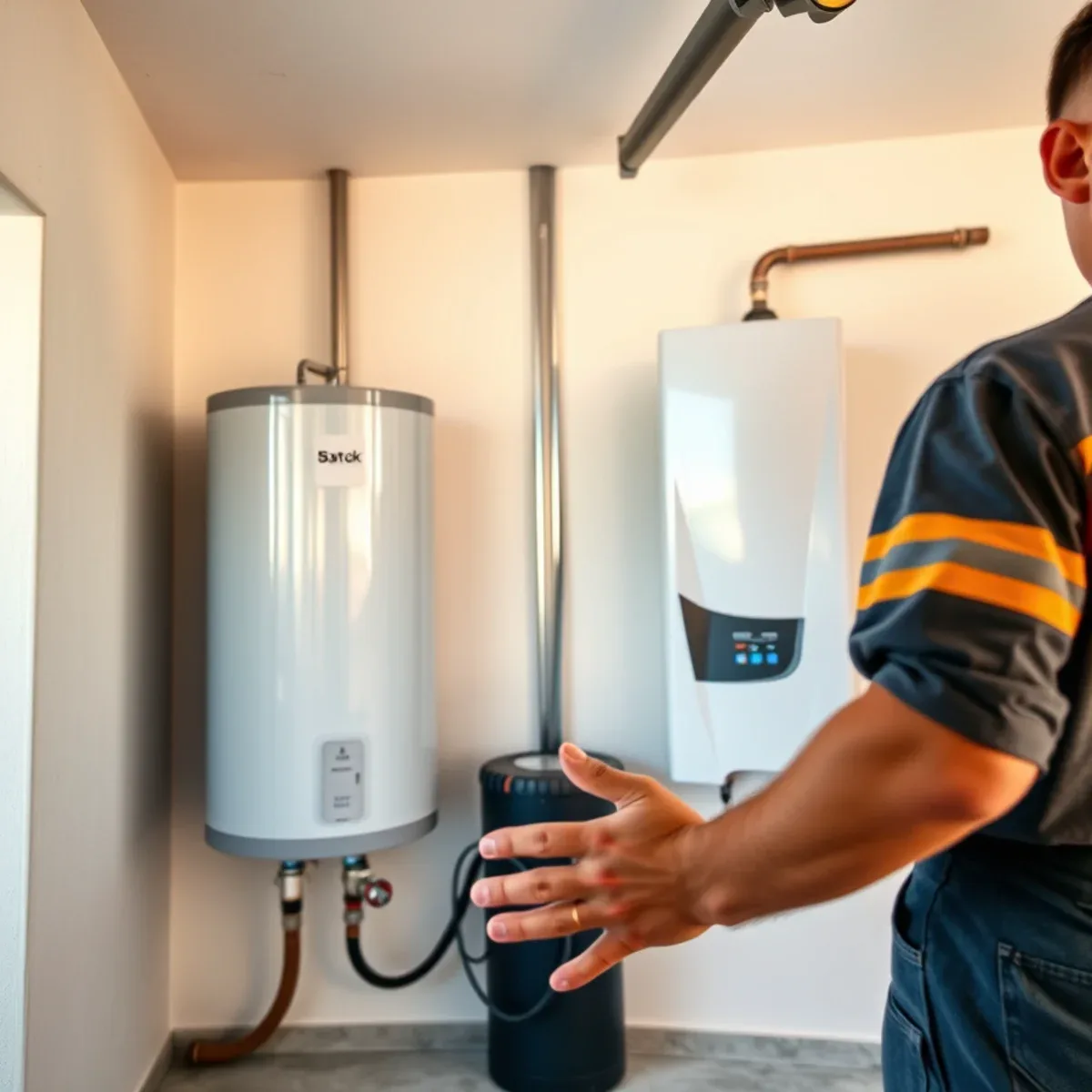
A tank water heater keeps 40 to 75 gallons hot around the clock, whether anyone is home or not. When you draw hot water, cold water enters the bottom and the burner or elements fire to bring it back up. It is simple, cheap, and it has a hard limit — when the tank runs out, you wait.
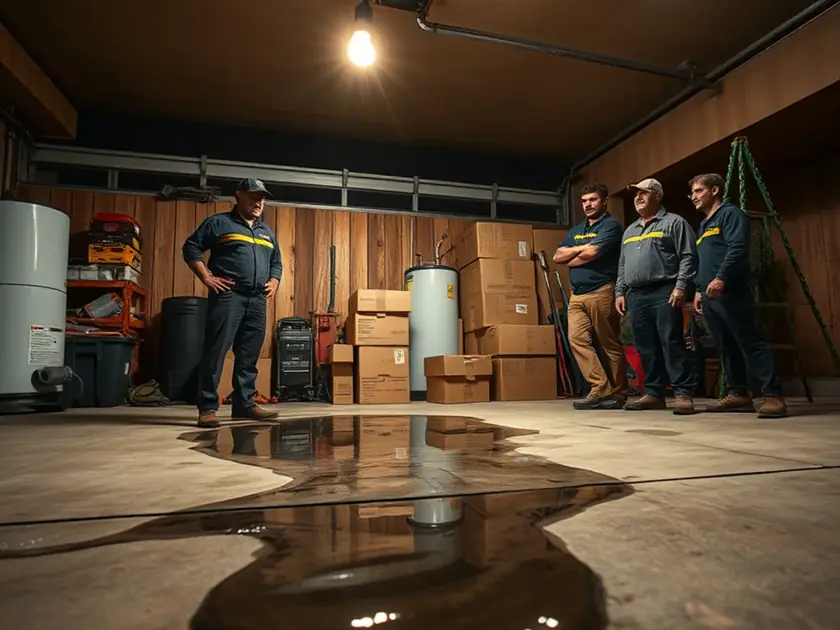
A tankless unit heats nothing until you open a tap. Water flows through a compact heat exchanger and a very large burner fires on demand. There is no reservoir, so there is nothing to run out and nothing to lose heat all day. There is also no tank to eventually rust through and put fifty gallons on your garage floor.
That last point is worth more than people give it credit for. Tank failures are one of the most common sources of interior water damage in Arizona homes.
Where tankless clearly wins
Endless hot water. Back-to-back showers, a soaking tub, laundry running at the same time — a correctly sized unit does not run out. For larger households this is the single reason most people make the switch.
Lifespan. Tankless units commonly run twenty years with maintenance, against roughly six to nine for a tank on unsoftened Apache Junction water. That is two to three tanks per tankless unit.
Space. A tankless heater is roughly the size of a carry-on suitcase, mounted on the wall. In a garage that is already tight, that is real floor space back.
Standby losses. A tank spends energy keeping water hot that nobody is using. For a snowbird household away five months a year, that is money burned for no benefit at all. Tankless consumes nothing when nobody is home.
Arizona also gives tankless a quiet advantage: our incoming groundwater is much warmer than in cold climates, so a tankless unit here delivers more gallons per minute than the same model would in Minnesota. The published flow ratings understate what you actually get.
No running out
The main reason most households switch. Sizing matters, but the limit disappears.
~20 year life
Versus six to nine for a tank on unsoftened local water.
No tank to flood the garage
Removes one of the most common interior water damage events in Arizona homes.
Nothing burned while you are away
A significant real saving for part-year residents.
Where a tank is the better call
Up-front cost. A like-for-like tank replacement is the least expensive path by a wide margin, and if the budget is the constraint, that is a legitimate answer rather than a compromise.
Gas line capacity. This is the one that catches people out. A tank heater fires around 40,000 BTU; a whole-home gas tankless fires at 150,000 to 199,000. Many Apache Junction and East Valley homes have a half-inch line to the water heater that cannot come close to delivering that. Upsizing the run from the meter — and occasionally a meter upgrade from the utility — is frequently the largest single line item in a conversion.
Electric-only homes. Whole-home electric tankless units typically need multiple dedicated 40-amp circuits and panel capacity to spare. In most existing Arizona homes that is a substantial electrical project, and a heat pump water heater is usually the smarter electric option — it pulls heat from the ambient air, which an Arizona garage has in surplus.
And if you are selling within a couple of years, the payback does not materialize in that window.
The hard water requirement, which is not optional
Every tankless manufacturer publishes a maximum water hardness in their installation manual. Apache Junction water, at 15 to 25 grains per gallon, exceeds it — often by double.
The reason is physical. A tankless heat exchanger pushes water through narrow passages at high temperature, which is the ideal condition for calcium to plate out of solution. An unprotected exchanger on raw local water can foul badly in a handful of years, and because the manual was not followed, warranty coverage becomes an argument you may lose.
There are two legitimate solutions. A whole-home softener is the stronger one, because it protects the tankless unit plus every fixture and appliance in the house. A dedicated scale-prevention filter on the cold inlet is cheaper and protects the heater alone.
Either way, the unit needs annual descaling — an hour of circulating solution through the exchanger. We install isolation valves with service ports on every tankless job specifically so this stays a simple maintenance visit rather than a disassembly.
The honest payback math
If you are evaluating this purely as an energy investment, tankless is a slow return. You save the standby losses of keeping a tank hot, which is real but modest, and the conversion premium in a typical Arizona home — gas upsizing, venting, pretreatment — is significant.
The math gets better in specific situations: a household away several months a year, a home where the gas line is already adequate, a remodel where walls are open and gas is being touched anyway, or a household that already has a softener so the pretreatment cost disappears.
The math also improves when you count equipment life honestly. Twenty years versus two to three tank replacements is a different comparison than first-cost alone.
What we will not do is pitch you a tankless unit because it carries a bigger ticket. If a straight tank replacement is right for your house and your budget, we will say so.
Frequently asked questions
How to decide
If you run out of hot water regularly, plan to stay in the house, are away part of the year, or already have a softener, tankless is likely the better decision. If the budget is tight, the gas line is undersized and the house is electric-only, or you are moving soon, a quality tank is not a compromise — it is the right answer.
We will check your gas line, test your water hardness and give you both quotes side by side, free and in writing, with our honest opinion on which one we would install in our own house.
Services mentioned in this article
- Tankless Water Heatersin Apache Junction, AZ
- Water Heater Repairin Apache Junction, AZ
- Gas Linesin Apache Junction, AZ