How Hard Water in Apache Junction Affects Your Pipes (And What to Do About It)
At 15 to 25 grains per gallon, Apache Junction has some of the hardest water in the country. Here is what that mineral is actually doing inside your pipes, your water heater and your fixtures — and the maintenance that changes the outcome.
The short answer
Apache Junction water tests 15–25 grains per gallon — roughly two and a half times the 'very hard' threshold. That dissolved calcium and magnesium precipitates out wherever water is heated or evaporates, forming an insulating crust in your water heater, scoring faucet cartridges, and clogging showerheads and rim jets.
If you live in Apache Junction, there is a slow, invisible process happening inside your plumbing every single day. Our water carries between 15 and 25 grains of dissolved calcium and magnesium per gallon. The Water Quality Association classifies anything above 10.5 grains as very hard — so we are running at roughly two to two and a half times that threshold.
That is not a trivia fact. It is the underlying reason water heaters in this town die years early, faucets start dripping at four years old, showerheads clog, dishwashers leave film, and toilets stop flushing properly. Almost every plumbing service call we run in Apache Junction traces back to it in some way.
The good news is that hard water damage is entirely predictable, which means it is entirely manageable. Here is exactly what is happening and what actually works.
What "hard water" actually means
Hardness is a measure of dissolved mineral — primarily calcium and magnesium — that groundwater picks up as it moves through rock. Arizona sits on a lot of limestone and calcium-rich geology, and our groundwater has had a long time to dissolve it.
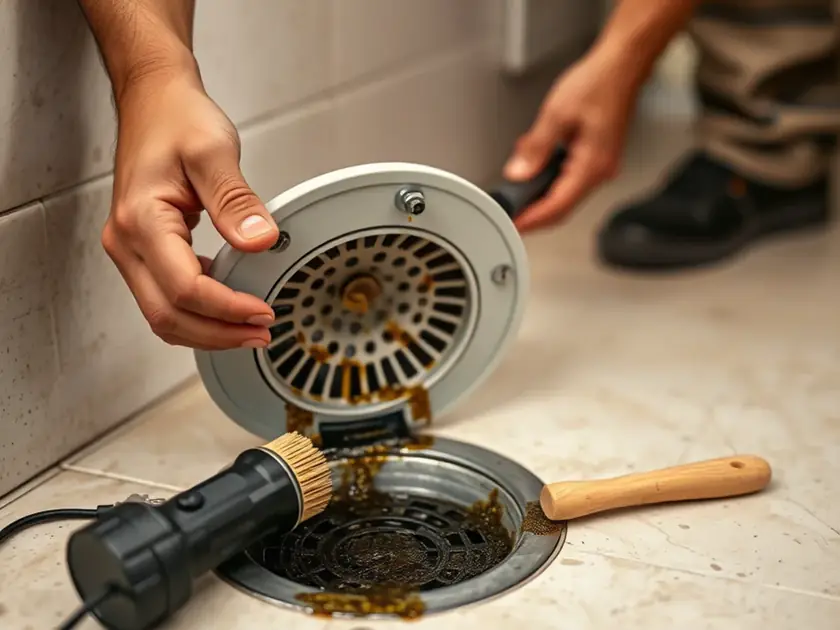
The critical property of those minerals is that they come out of solution when water is heated or when it evaporates. That is why the visible evidence always appears at the points where one of those two things happens: white crust on a showerhead where water evaporates, spots on glassware as droplets dry, and a hard sediment layer on the bottom of a water heater where the water gets hot.
What you can see on a faucet is a fair proxy for what is happening where you cannot see it.
What it does to your water heater
This is where hard water costs the most money, and it does its damage in three ways at once.
First, sediment settles on the tank floor and forms an insulating layer between the burner and the water. Your heater has to burn more gas to reach the same temperature, so your utility bill climbs quietly year after year. Second, that layer creates hot spots on the steel, which stresses the glass lining until it cracks and the tank starts corroding. Third, it buries the drain valve, which is exactly why a heater nobody has touched in eight years often will not drain when someone finally tries.
The anode rod is the other half of the story. That rod is a length of magnesium or aluminum whose entire purpose is to corrode instead of your tank. Hard water consumes it faster. The standard advice to inspect it at five years is written for average water — in Apache Junction, two to three years is realistic, and once it is gone the tank itself becomes the sacrificial metal.
Rumbling and popping
Water flashing to steam under a sediment crust. The audible sign that scale has already built up.
Hot water running out sooner
Sediment occupies volume. A scaled 50-gallon tank behaves like a 38-gallon tank and recovers slower.
Rusty hot water only
Cold runs clear, hot runs orange. The anode is spent and the tank lining is corroding.
Early tank failure
A tank rated for twelve years routinely gives up at six to nine here without maintenance.
What it does to pipes and fixtures
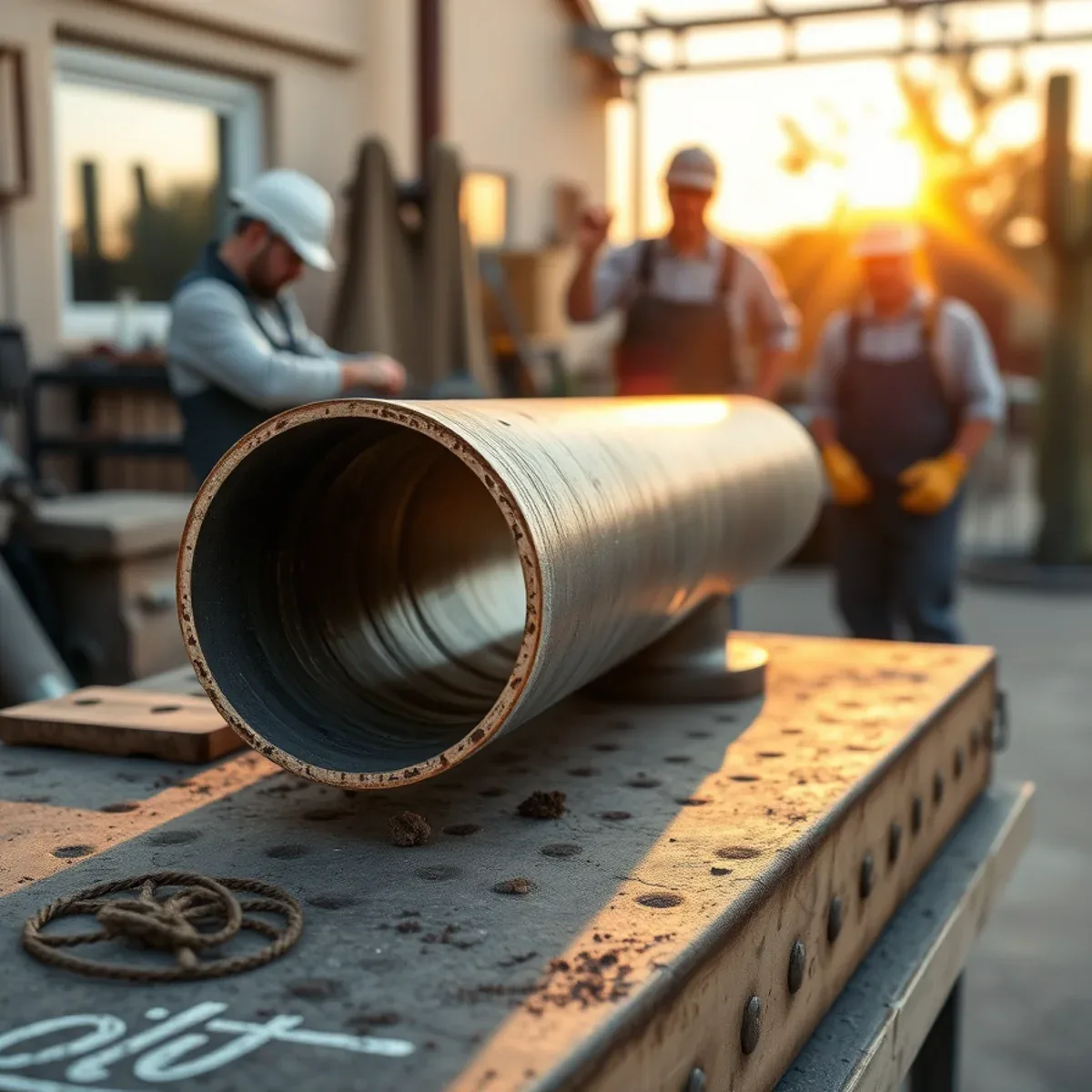
Inside supply lines, scale builds gradually on the pipe wall. In copper and galvanized this narrows the effective diameter over decades, which contributes to the slow pressure decline that homeowners in older Apache Junction neighborhoods describe. PEX resists it much better, which is one of several reasons we repipe in PEX here.
Fixtures take the visible beating. Faucet cartridges contain small moving parts and sealing surfaces, and mineral scoring is why a faucet that should last fifteen years starts dripping at four. Aerators — the small screens at the tip of a spout — pack solid with white grit, which is the most common cause of one faucet having noticeably weak flow.
Shower valves are the most annoying. A pressure-balancing cartridge contains a spool that shifts to keep hot and cold in ratio when pressure changes elsewhere in the house. Coat that spool in calcium and it stops moving freely, which is precisely why your shower goes cold when someone starts the washing machine.
Toilets get it in two places: deposits build on the flapper seat so the flapper cannot seal, and the small rim jets under the bowl edge narrow until the flush loses force. People replace perfectly good toilets over blocked rim jets.
What it costs you every year
The individual numbers are small. Collectively they are not.
A scaled water heater burns measurably more gas for the same output. Appliances that use water — dishwashers, washing machines, ice makers, coffee equipment — scale internally and fail earlier than their rated life, and some manufacturers explicitly limit warranty coverage on water above a certain hardness. You use more soap, shampoo and detergent, because calcium binds with soap instead of letting it lather. Fabric wears faster from mineral deposits in the fibers.
And then there is the replacement cycle: faucet cartridges, angle stops, toilet fill valves, showerheads, and eventually a water heater several years ahead of schedule.
What actually works
There are two honest answers, and they work best together.
The first is treatment. A correctly sized salt-based softener removes hardness through ion exchange and is the only technology that genuinely softens water. A salt-free conditioner converts minerals into a form less likely to stick, which reduces scale without removing hardness — a legitimate choice if salt or a drain is a real constraint, but you will not get soap lather or softer laundry from it. Sizing matters more than brand, and it should be calculated from measured hardness, household size and actual usage.
The second is maintenance, which still matters even with a softener. Flush the water heater annually. Check the anode rod every two to three years. Clean aerators when flow drops. Soak showerheads in white vinegar. Replace multi-turn angle stops with quarter-turn ball valves before they seize.
Test your actual water
Hardness varies by source and neighborhood. Guessing at the number leads to wrongly sized equipment.
Flush the water heater yearly
The single highest-value maintenance item in this town. It only works while sediment is still loose.
Anode rod every 2–3 years
A short job that routinely adds years to a tank. Almost nobody does it.
Vinegar on showerheads and aerators
Dissolves calcium without damaging finishes. Never scrape it off.
Frequently asked questions
The short version
Apache Junction water is going to keep depositing mineral in your plumbing for as long as you live here. You cannot change the water coming out of the ground, but you can decide whether it goes into your house untreated.
If you want to know what your water actually tests at, we will measure it at your house free with any service call and give you a straight recommendation — including telling you when you do not need what you thought you needed.
Services mentioned in this article
- Water Softenersin Apache Junction, AZ
- Water Heater Repairin Apache Junction, AZ
- Faucets & Fixturesin Apache Junction, AZ