What a Sewer Camera Inspection Actually Shows You (And Why It Matters)
A recurring sewer backup can be a cheap maintenance issue or a five-figure replacement. There is exactly one way to know which, and it is not guessing.
The short answer
A sewer camera distinguishes four outcomes with wildly different price tags: root intrusion through an intact joint, a cracked section, a belly holding standing water, or a collapsed run. Nobody can tell them apart from above ground, so never accept an excavation quote without seeing footage.
Sewer line work is the area of plumbing where homeowners are most vulnerable to being taken advantage of, for a simple structural reason: almost nobody can verify what is under their yard. Someone says the line is collapsed and quotes accordingly, and you have no way to evaluate the claim.
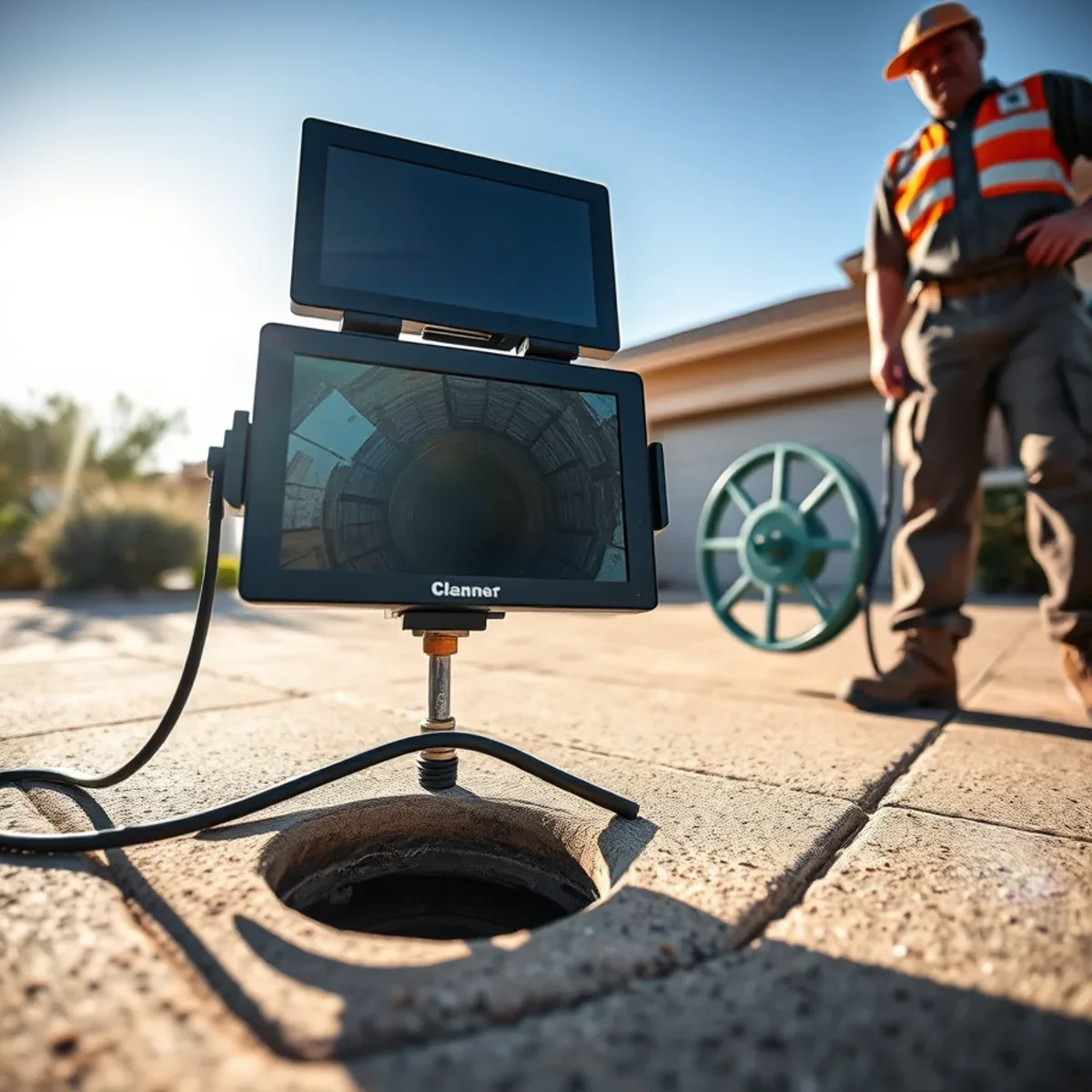
A sewer camera changes that completely. It is a self-leveling camera head on a push rod with a transmitter inside, and it shows you the actual interior of your line while a locator above ground tracks exactly where the head is and how deep.
That means when we find a problem, we mark it on your yard with paint rather than describing it. And you watch the screen with us.
The four things a camera typically finds
Understanding these is what lets you evaluate any sewer quote you receive, because they span an enormous cost range.
Root intrusion: root hair entering through a joint or crack, growing into a mat that catches paper and debris. Often addressable with hydro jetting plus a maintenance interval, or a targeted repair of the joint they come through. The least expensive category.
A cracked or offset section: one length of pipe has failed or shifted out of alignment. A spot repair — one excavation, cut out the failed section, install new pipe with proper couplings and bedding. Moderate cost, and contained.
A belly: a section has settled so the line no longer carries proper fall, and water stands in it permanently. Debris accumulates in the standing water. Fixing it means re-excavating that run, re-grading the trench and re-bedding the pipe. More expensive than a spot repair.
A collapse or a deteriorated run: the pipe has lost structural integrity over a meaningful length. Full or partial replacement, and this is where the five-figure numbers come from.
Roots
Jetting plus an interval, or repair the entry joint. Least expensive.
Cracked section
Spot repair. One excavation, contained scope.
Belly
Re-excavate and re-grade that run. More involved.
Collapse
Replacement, open trench or trenchless depending on route and depth.
Why clay and cast iron fail the way they do
Knowing your material tells you what to expect on camera.
Vitrified clay is essentially fired ceramic. It does not corrode, and a clay pipe can be structurally sound after seventy years. Its weakness is the joints, which were packed with mortar or bituminous compound. Our soil is not stable — caliche layers and expansive clays move seasonally with moisture — so joints shift, open and admit roots. On camera you see intact pipe with problems at regular intervals wherever a joint is.
Cast iron fails from the inside. Effluent sits along the bottom, so corrosion starts there. Run a camera down an old cast iron lateral and you frequently see a pipe that looks fine at the crown and has no invert left — the bottom of the pipe is simply gone, and what is carrying flow is a channel in the soil. That section is not lineable in most cases; it comes out.
PVC and ABS, used from roughly the 1980s onward, generally look clean unless there is a belly or physical damage from something above.
When to get one
Before buying any home built before about 1980. Standard home inspections do not include it, and it is the single highest-value additional inspection available. Sewer repairs span a range wide enough to change whether you should buy the house at all.
After a second main line backup. Once is bad luck. Twice in a year is a physical cause, and cabling it a third time is paying to treat a symptom.
Before hydro jetting a questionable line. Jetting is safe on sound pipe and can open up damage on pipe that has already failed. We camera first for exactly this reason.
When there is evidence of a leak in the yard — a persistently green stripe in a dry desert yard, a soft spot, a dip in the driveway, or a sewer smell outdoors after rain.
And before any excavation quote. Nobody should dig based on an assumption.
What to expect during the inspection
We work from a cleanout wherever one exists. If your house does not have an accessible exterior cleanout — which is common in older Apache Junction homes — we may need to pull a toilet or work from a roof vent, and we will tell you that before starting.
The camera travels the length of the lateral to the connection with the public main. You watch the monitor with us as it goes. We note distances, mark defect locations on the surface with paint, and record the footage so you have it.
A note on cleanouts: if you do not have one, installing a proper two-way cleanout is a modest job that pays for itself over a few service visits, gives us a controlled place to jet from, and provides a relief point outside the house if the main ever blocks again. We will point it out and quote it, and you are free to decline.
Getting a second opinion
If someone has quoted you a large sewer replacement, ask for the footage. Any legitimate contractor records it and will share it.
Then look for specific things: can you see the defect clearly, is the location and depth documented, and does the recommended scope match the extent of the damage on screen? A quote to replace an entire lateral because of one cracked joint at eighteen feet is a scope question worth asking about.
We are happy to review footage from another company and give you an honest read. Sometimes that read is that the other quote is correct — that happens, and we will say so.
Frequently asked questions
Do not dig on an assumption
The difference between a jetting and a replacement is five figures, and there is exactly one way to know which one your line needs. Get eyes in the pipe before anyone gets a shovel out.
We camera sewer lines across Apache Junction, Gold Canyon and the East Valley, record the footage, mark defects on the surface, and quote repairs based on what is actually there.
Services mentioned in this article
- Sewer Linesin Apache Junction, AZ
- Hydro Jettingin Apache Junction, AZ
- Drain Cleaningin Apache Junction, AZ