Low Water Pressure in Just One Faucet? Here Are the 7 Real Causes
The first question is whether it is one fixture or the whole house — because those are completely different problems with completely different price tags. Here is how to work it out.
The short answer
Start by establishing whether it is one fixture or the whole house. One fixture means an aerator, cartridge or angle stop — cheap and fast. Whole-house means the pressure regulator, main valve, a clogged filter, corroded galvanized pipe, a hidden leak, or genuine supply-side variation.
Low water pressure is one of the most common calls we get, and it is also the one where homeowners most often spend money on the wrong fix. Somebody installs a booster pump on a house whose actual problem is a failed pressure regulator, or repipes a house when the real issue was a clogged aerator.
The diagnosis is not complicated, and you can do most of it yourself in about ten minutes. The first and most important question is whether the problem is one fixture or the whole house.
Here are the seven real causes, in roughly the order you should check them.
First: one fixture, or everything?
Go around the house and run the hot and cold separately at every fixture. Note which ones are weak, whether it is hot only, cold only, or both, and whether it is one room or all of them.
If it is one fixture, the problem is at that fixture — an aerator, a cartridge, or an angle stop. This is almost always cheap to fix.
If it is the whole house, the problem is upstream: the pressure regulator, the main shutoff, a whole-house filter, the supply piping, or the utility. This is where the price range widens dramatically.
If it is hot only across the house, suspect the water heater — a scaled tank, a failed dip tube, or a partially closed valve on the heater.
Narrow it down in ten minutes
Before calling anyone, work through this in order. Each step costs nothing and each one eliminates a whole category of cause, which is what stops you paying for the wrong fix.
1 — One fixture or all of them?
Run hot and cold separately at every fixture. One weak fixture is a local problem; the whole house is upstream of everything.
2 — Gauge the static pressure
A gauge on a hose bib with the house at rest. Normal is 50–70 psi; below 40 and above 80 both warrant attention.
3 — Gauge it again under load
Run two or three fixtures at once. A large drop between the two readings points at restriction rather than supply.
4 — Check the obvious valves
Main shutoff and meter valve fully open, and any whole-house filter cartridge actually changed this year.
1. A clogged aerator (single fixture)
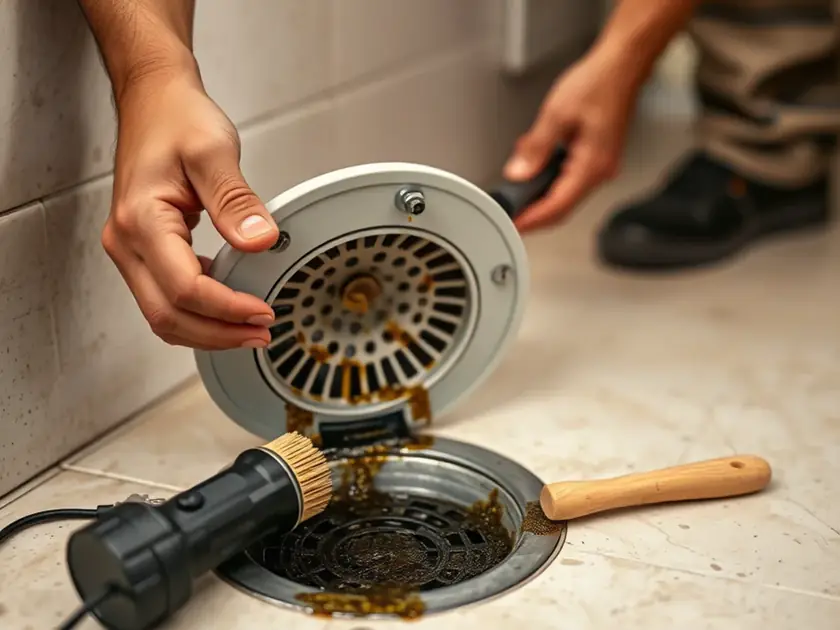
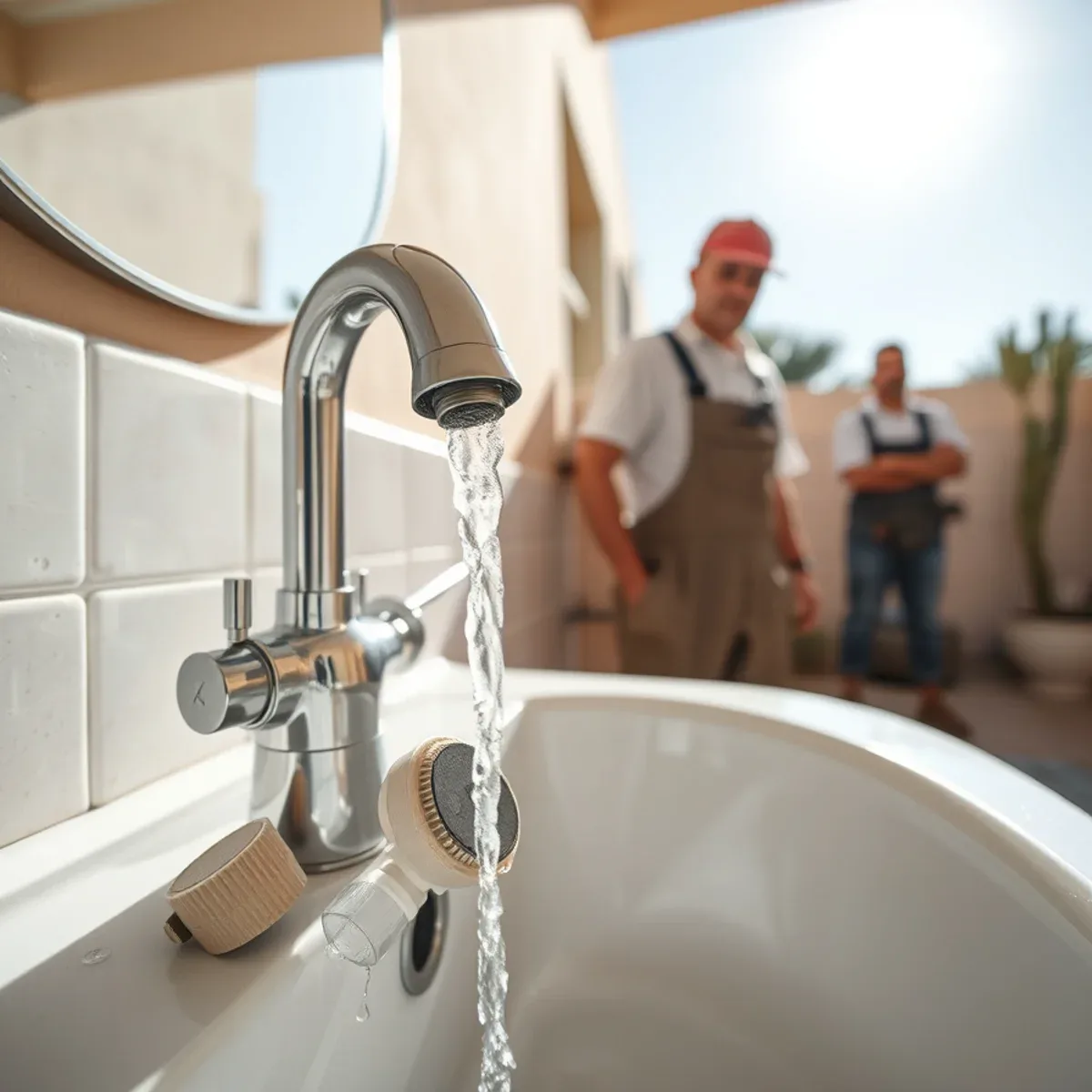
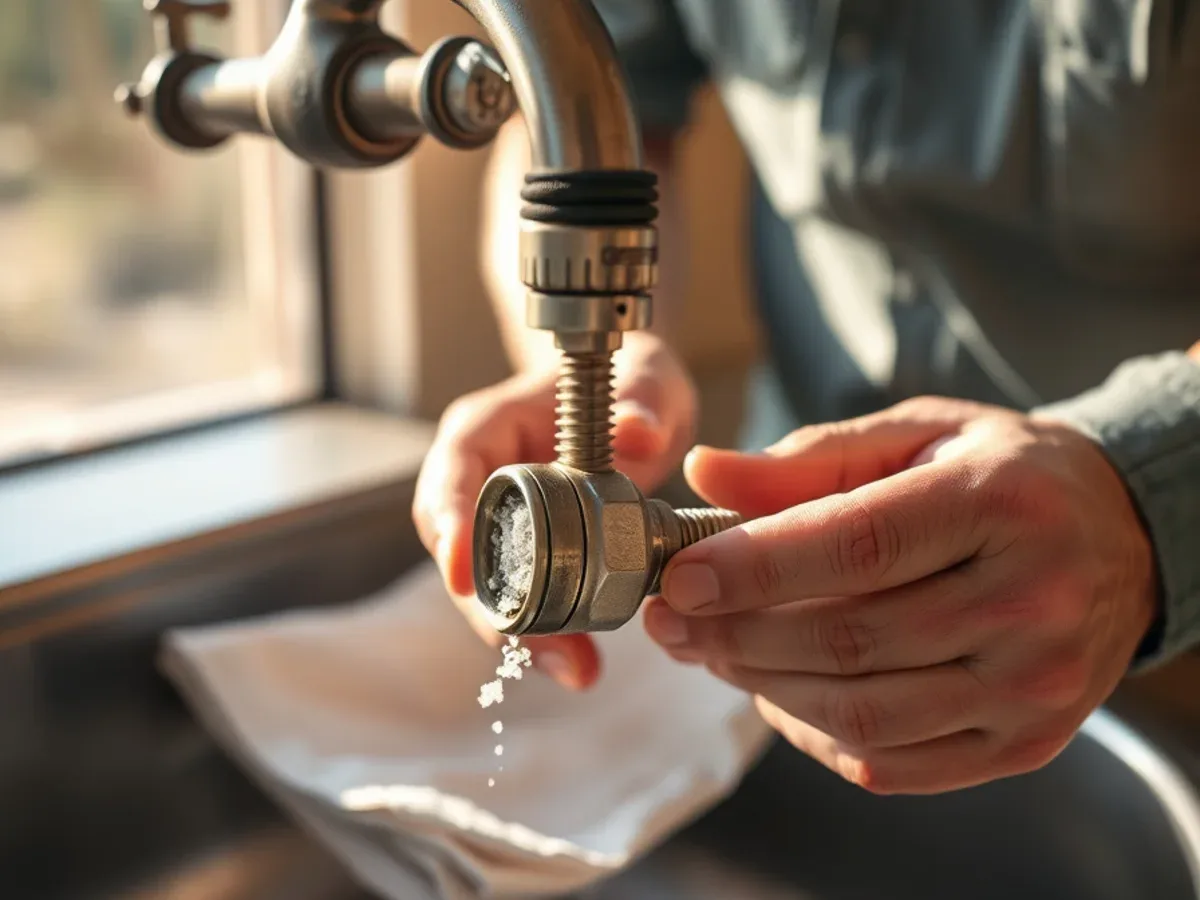
The most common cause of weak flow at one faucet, and the easiest to fix. The aerator is the small screen at the tip of the spout, and on Apache Junction water it packs solid with white mineral grit plus whatever debris the pipes have shed.
Unscrew it — usually by hand, sometimes with pliers and a cloth to protect the finish — and look. If the screen is white and crusted, soak it in white vinegar for a few hours or replace it. On many faucets, flow returns completely.
2. A failing cartridge or angle stop (single fixture)
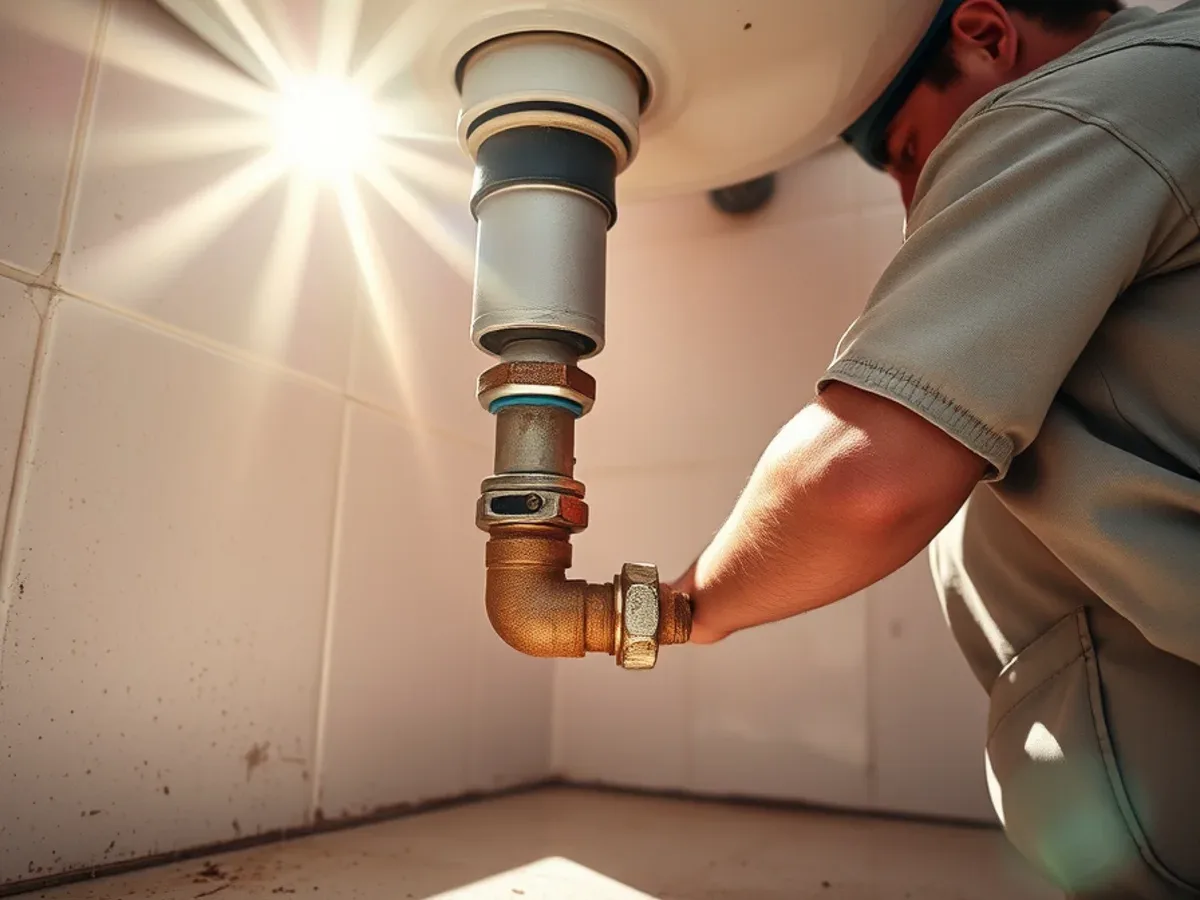
If the aerator is clear and one fixture is still weak, the next suspects are the cartridge inside the faucet and the shut-off valve under the sink.
Cartridges scale internally on hard water, which restricts flow and eventually causes drips and stiff handles. Angle stops — particularly the older multi-turn compression type — seize with mineral and sometimes are not fully open, especially if someone shut one partway during a previous repair and never returned it.
Both are inexpensive to replace, and replacing a seized multi-turn stop with a quarter-turn ball valve is worth doing while someone is under there anyway.
3. A failed pressure reducing valve (whole house)
This is the biggest whole-house cause and the one most often missed. A PRV sits near where the main line enters the house and reduces incoming municipal pressure to something residential fixtures can handle.
PRVs have a service life and they fail in both directions. Stuck closed or drifting down, they starve the house. Stuck open, they let full main pressure through — which is the opposite complaint but far more damaging, because high pressure stresses every joint, valve and appliance and is a real contributor to premature water heater failure.
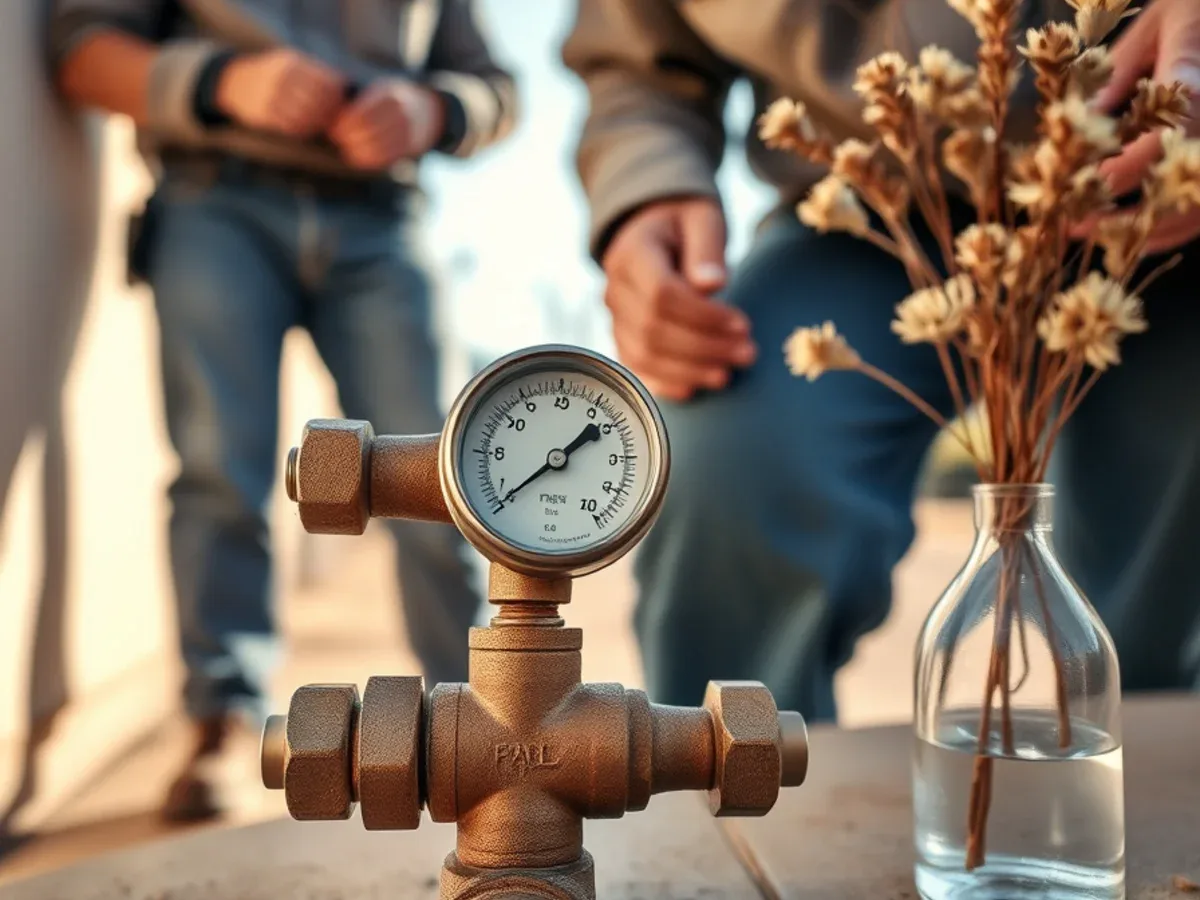
Testing takes two minutes with a pressure gauge on a hose bib. Normal residential static pressure is roughly 50 to 70 psi. Below 40 or above 80 both warrant attention.
4. A partially closed main or meter valve (whole house)
Embarrassingly simple and genuinely common. After any plumbing work, a main shutoff or meter valve sometimes gets left partway open. Gate valves in particular can also fail internally, with the gate dropping partly into the flow path even when the handle reads fully open.
Check that the main valve at the house and the valve at the meter are fully open before anyone spends real money.

5. Corroded galvanized supply pipe (whole house)
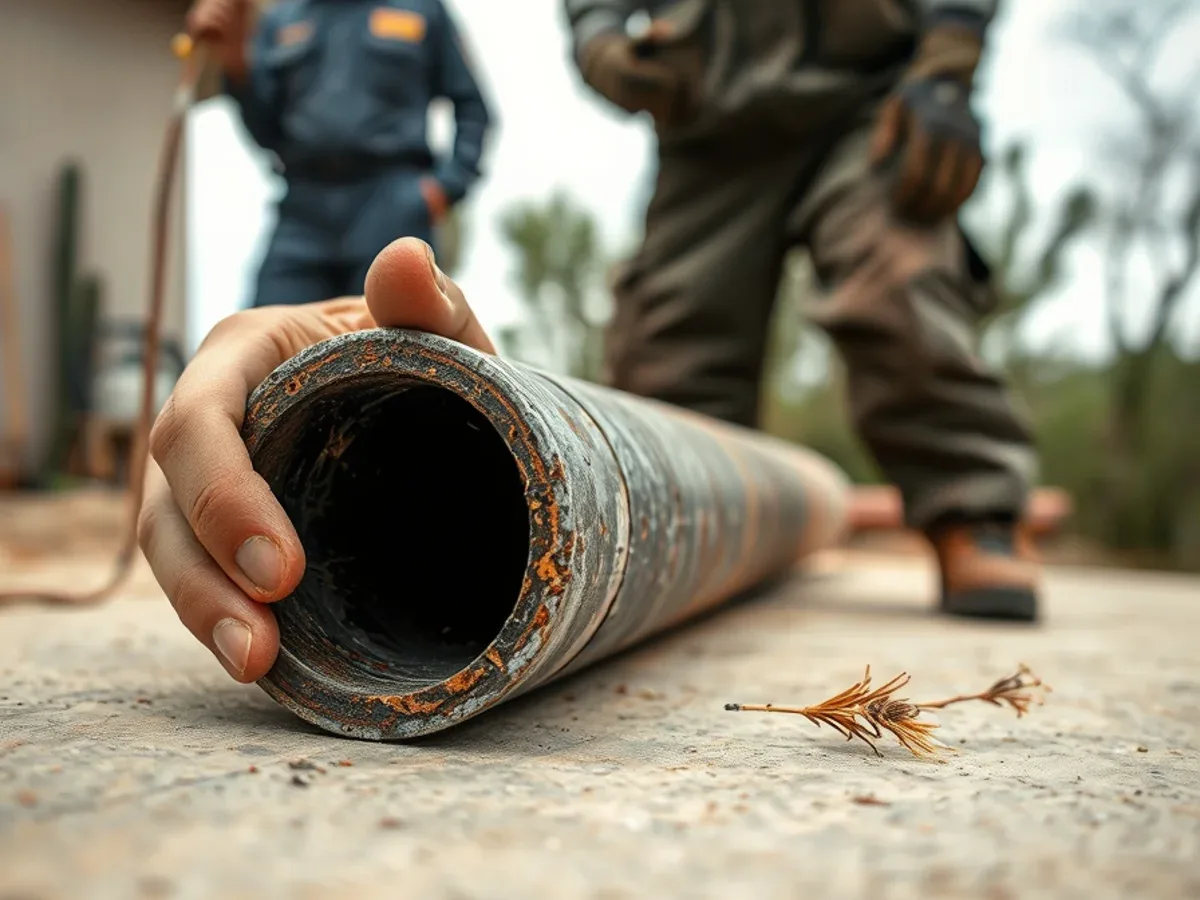
In older Apache Junction, Mesa, Tempe and Superior housing, this is the big one. Galvanized steel rusts internally, and rust builds inward from the pipe wall until a three-quarter-inch line is functionally a quarter.
The signature is unmistakable: pressure that has been getting worse over years rather than suddenly, noticeably weaker hot than cold, a big drop when a second fixture opens, and rusty or brown water on the first draw of the morning that clears after a minute.
There is no repair. The pipe is failing along its whole length, so replacing a section just moves the restriction. A repipe in PEX is the honest answer, and the improvement is immediate.
6. A hidden leak, including a slab leak (whole house)
A significant leak bleeds off system pressure. If pressure dropped noticeably and nothing else changed, check your water meter with every fixture in the house off. If the leak indicator is moving, water is escaping somewhere.
Combine that with a water bill that jumped, a warm patch on the floor, or the sound of running water in a silent house, and you likely have a slab leak. That is worth acting on quickly for reasons well beyond pressure.

7. Utility-side pressure and a clogged whole-house filter
Some areas — parts of San Tan Valley and outlying Pinal County distribution networks among them — genuinely see supply pressure that varies by time of day. If your pressure is fine at 10pm and poor at 7am, that pattern points upstream and no work at your house will change it.
The other easy miss is a whole-house filter cartridge nobody has changed. A sediment cartridge past its life is a deliberate restriction in your main line. Check the date on it.

Frequently asked questions
Diagnose before you spend
Ten minutes of checking — one fixture versus the whole house, a gauge on a hose bib, a look at the aerators and the main valve — narrows the cause to something manageable and stops you from paying for the wrong fix.
If you have worked through the list and want a real diagnosis, we measure static and dynamic pressure, verify pipe material in more than one location, and check the meter for a hidden leak before recommending anything.
Services mentioned in this article
- Repipingin Apache Junction, AZ
- Slab Leak Repairin Apache Junction, AZ
- Faucets & Fixturesin Apache Junction, AZ