Best Water Filtration Systems for Gold Canyon Well Water
Well water in Gold Canyon is not just harder city water. Iron, sulfur and sediment need to be dealt with in a specific order — and getting that order wrong destroys equipment.
The short answer
Gold Canyon well water usually needs four stages in this order: sediment filtration, then iron and sulfur removal, then softening, then point-of-use polishing. Getting that order wrong is expensive — iron permanently fouls softener resin, and we have replaced beds destroyed inside two years by a softener installed first.
If your Gold Canyon or rural Pinal County property is on a private well, you are the water utility. Nobody is sampling your water, publishing a quality report, or noticing when something changes. That responsibility is the whole reason well water treatment is a different exercise from putting a softener in a house in town.
Well water around the Superstition foothills, out toward Goldfield, and through the rural edges of the county commonly carries dissolved iron, sometimes manganese, frequently hydrogen sulfide, and a sediment load that shifts through the year and spikes after monsoon recharge — all on top of significant hardness.
Each of those needs a different treatment stage, and the order they go in matters more than which brand you buy. Getting the sequence wrong is the most expensive mistake in this category.
Test before you buy anything
A hardness strip tells you one number out of the six or seven that matter. For designing a well treatment system you need a proper lab panel: total hardness, iron, manganese, hydrogen sulfide or sulfate, pH, total dissolved solids, nitrate, and total coliform bacteria.
pH matters more than people expect, because iron removal methods have pH windows where they work and windows where they do not. Nitrate matters because it is a genuine health concern, particularly in agricultural areas. Bacteria matters because it determines whether you need UV disinfection at the end of the train.
Arizona guidance for private wells is annual testing at minimum for coliform and nitrate. Add a full panel any time the water changes in taste, color or smell, after any work on the well or casing, and after a heavy monsoon season — aquifer recharge genuinely shifts chemistry here, and a compromised wellhead seal can admit surface influence.
Iron: the one that ruins equipment
Iron is the most common complaint we hear out here and the one with the biggest consequences for the rest of the system.
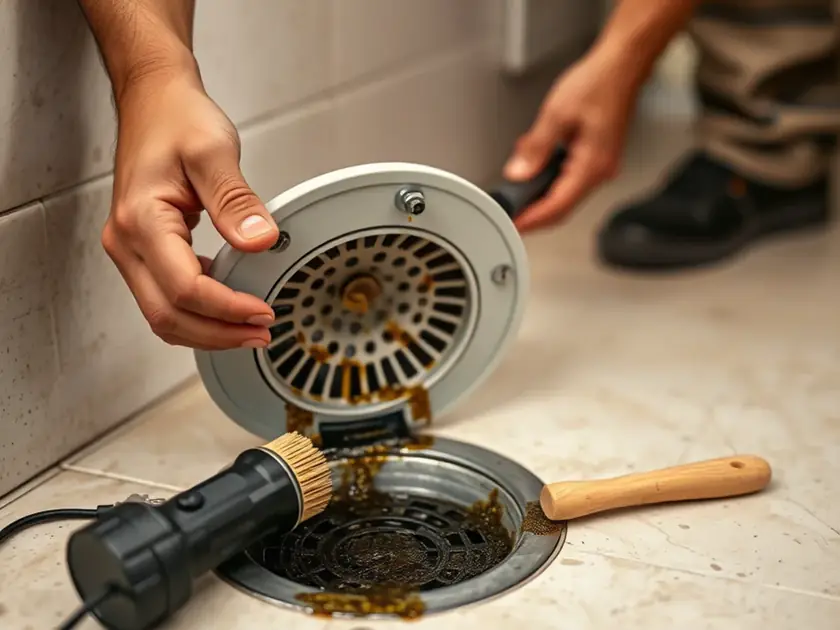
Dissolved ferrous iron comes out of the tap clear. On contact with air it oxidizes to ferric iron — visible rust — and deposits as orange-brown staining in toilet tanks, sinks, showers and laundry. Those stains are difficult to remove and eventually permanent on some surfaces.
Here is the part that costs money: iron fouls water softener resin. If you run untreated iron-bearing water through a softener, the resin bed progressively loses capacity and eventually cannot be restored. We have replaced resin that was destroyed inside two years by exactly this. Iron removal goes ahead of softening. Always.
There is also iron bacteria, which is a different problem — a slimy biological growth that feeds on iron, fouls pipes and fixtures and produces a swampy odor. It requires shock chlorination of the well rather than just filtration.
Orange-brown staining
Dissolved ferrous iron oxidizing on contact with air. The classic Gold Canyon well signature.
Black staining
Usually manganese, often alongside iron. Different media, same general approach.
Rotten-egg smell
Hydrogen sulfide. Also corrosive to plumbing components over time.
Slimy buildup and swampy odor
Iron bacteria. Needs shock chlorination of the well, not just a filter.
The correct treatment sequence
Every stage protects the ones downstream. Build it out of order and you spend money replacing equipment that was killed by a problem an earlier stage should have removed.
Stage one is sediment. A spin-down separator or cartridge filter sized to your sediment load removes the abrasive particles that wear pump components, clog valves and blind the media in later stages. On wells with seasonal sediment spikes this stage matters enormously.
Stage two is oxidation and iron and sulfur removal. Depending on chemistry this might be an air-injection oxidizing filter, a catalytic media bed, or in higher-iron situations a chemical feed system. This is where the pH panel earns its keep, because the right choice depends on it.
Stage three is softening for hardness, now that the iron will not destroy the resin.
Stage four is polishing: carbon for taste and odor, UV disinfection where bacteria are present, and an under-sink reverse osmosis unit for drinking and cooking water.
What this means for your equipment
A well property with untreated water is hard on everything downstream of it. Sediment wears pump impellers and valve seats. Iron stains and fouls. Hardness scales the water heater exactly as it does in town, only usually worse.
If you are replacing a water heater on an untreated well, the treatment conversation should happen first — otherwise you are installing a new tank into the same conditions that killed the last one. That is doubly true for a tankless unit, where the heat exchanger is far less forgiving.
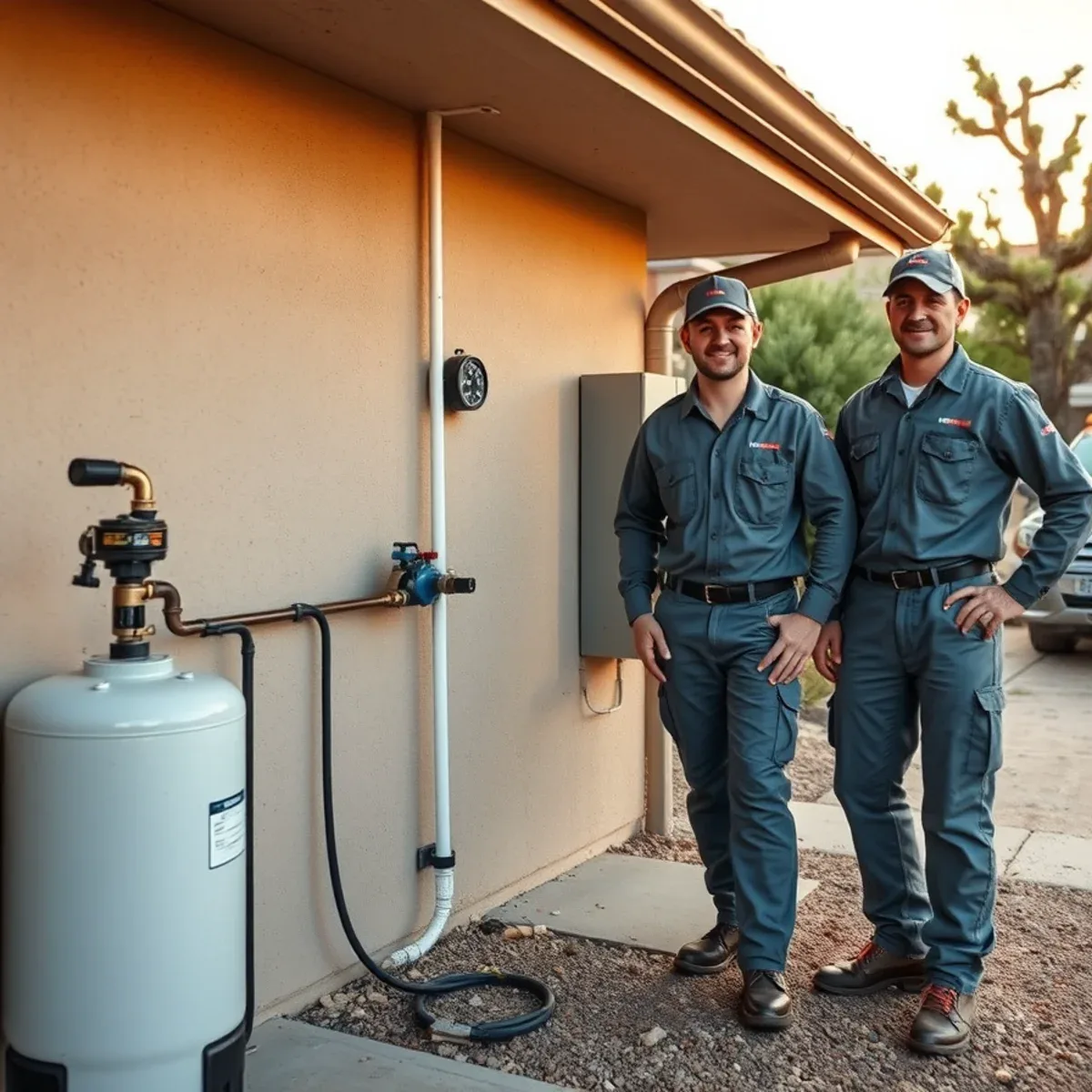
The pressure tank is worth checking at the same time. A waterlogged tank forces the pump to short-cycle, which is the fastest way to destroy a pump motor, and it is a much cheaper problem to catch early.
Frequently asked questions
Start with a test, not a catalog
Well water treatment is engineering, not shopping. The right system for your property comes out of what your water actually contains, in what concentrations, at what pH — and the stages have to go in the correct order to protect each other.
We service wells and design treatment around lab results for properties in Gold Canyon, the Goldfield area and rural Pinal County. Call us and we will start with the pressure tank and a water panel rather than a product recommendation.
Services mentioned in this article
- Well Pumps & Well Waterin Apache Junction, AZ
- Water Softenersin Apache Junction, AZ
- Water Heater Repairin Apache Junction, AZ