How to Spot a Slab Leak Early and Avoid Thousands in Damage
Almost every slab leak gives warning for weeks or months before anyone notices. Here are the signals, in the order they usually appear, plus a two-minute meter test that settles it.

The short answer
The earliest sign is usually a water bill that jumped with no change in habits, followed by a warm patch on the floor, running water heard in a silent house, or flooring that lifts. Confirm it in two minutes: turn everything off and watch the leak indicator on your water meter.
Nearly every home in Apache Junction and across the East Valley is slab-on-grade — the water lines run through or under a poured concrete floor. It is efficient construction and it is unforgiving when a line fails, because a leak under concrete can run for months while the only visible symptom is a slightly odd water bill.
The cost difference between catching a slab leak early and catching it late is enormous. Early, it is a plumbing repair. Late, it is a plumbing repair plus flooring plus drywall plus mold remediation, and in the worst cases foundation movement from saturated soil.
The signals are there. Here they are, roughly in the order they show up.
1. Your water bill jumped and nothing changed
This is usually the first signal, and it is the one people most often explain away. A pinhole in a line under a slab can waste thousands of gallons a month without producing anything visible.
Compare your current bill against the same month last year rather than against last month, since seasonal irrigation swings the number. A meaningful year-over-year increase with no change in household size or habits deserves investigation.

2. A warm spot on the floor
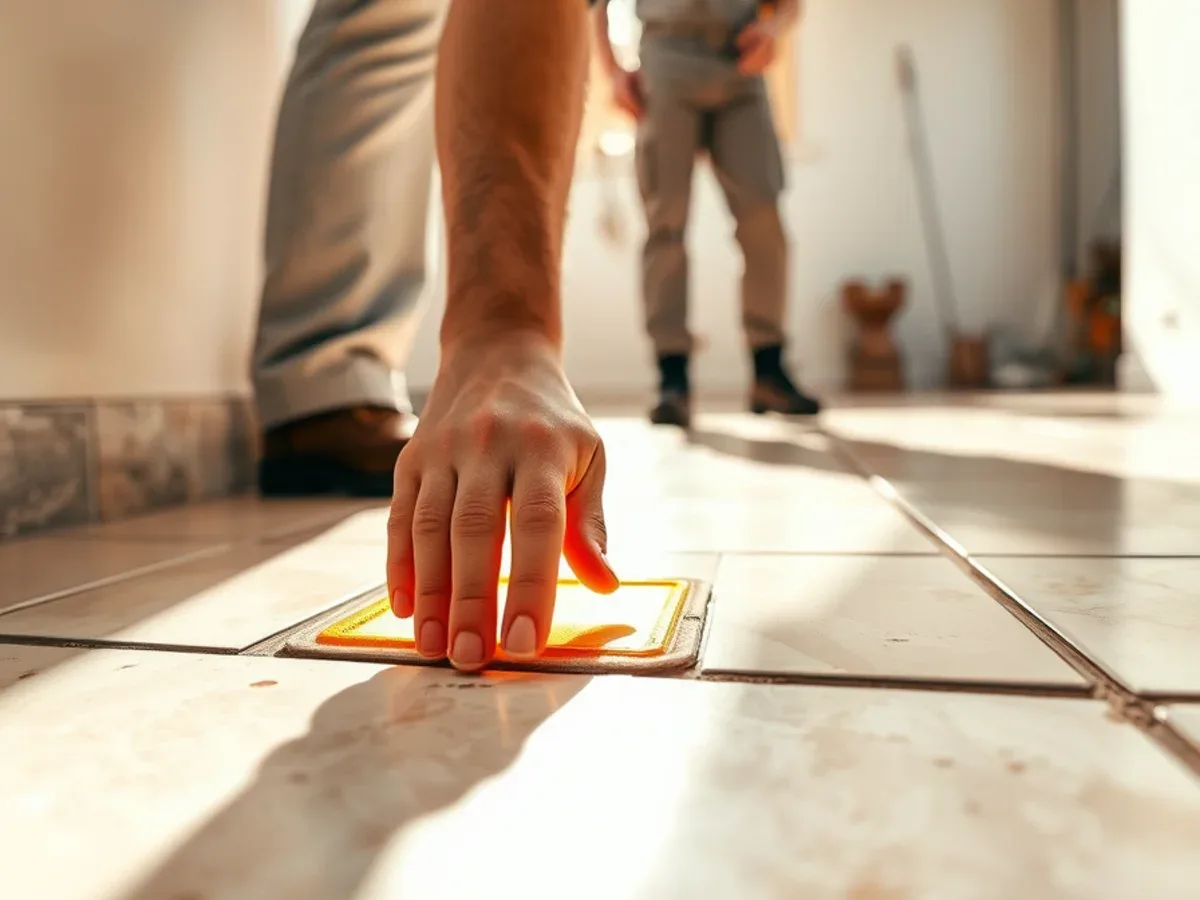
The classic sign, and it means the leak is on the hot-water side. Hot lines fail first in slabs because heat drives more expansion and contraction, and the pipe abrades against the concrete every cycle.
Walk the house barefoot, particularly in the morning before the sun has heated the floor. An area that is noticeably warmer than the surrounding tile, with nothing running above it and no sun on it, is a strong indicator.
3. The sound of running water in a silent house
Shut everything off — every faucet, the ice maker, the irrigation, the washing machine. Then stand still and listen, and put an ear near the floor in a few rooms.
A faint but steady hiss or trickle with the whole house off is water moving where it should not be. This one is surprisingly reliable and it costs nothing to check.

4. Flooring that is doing something odd
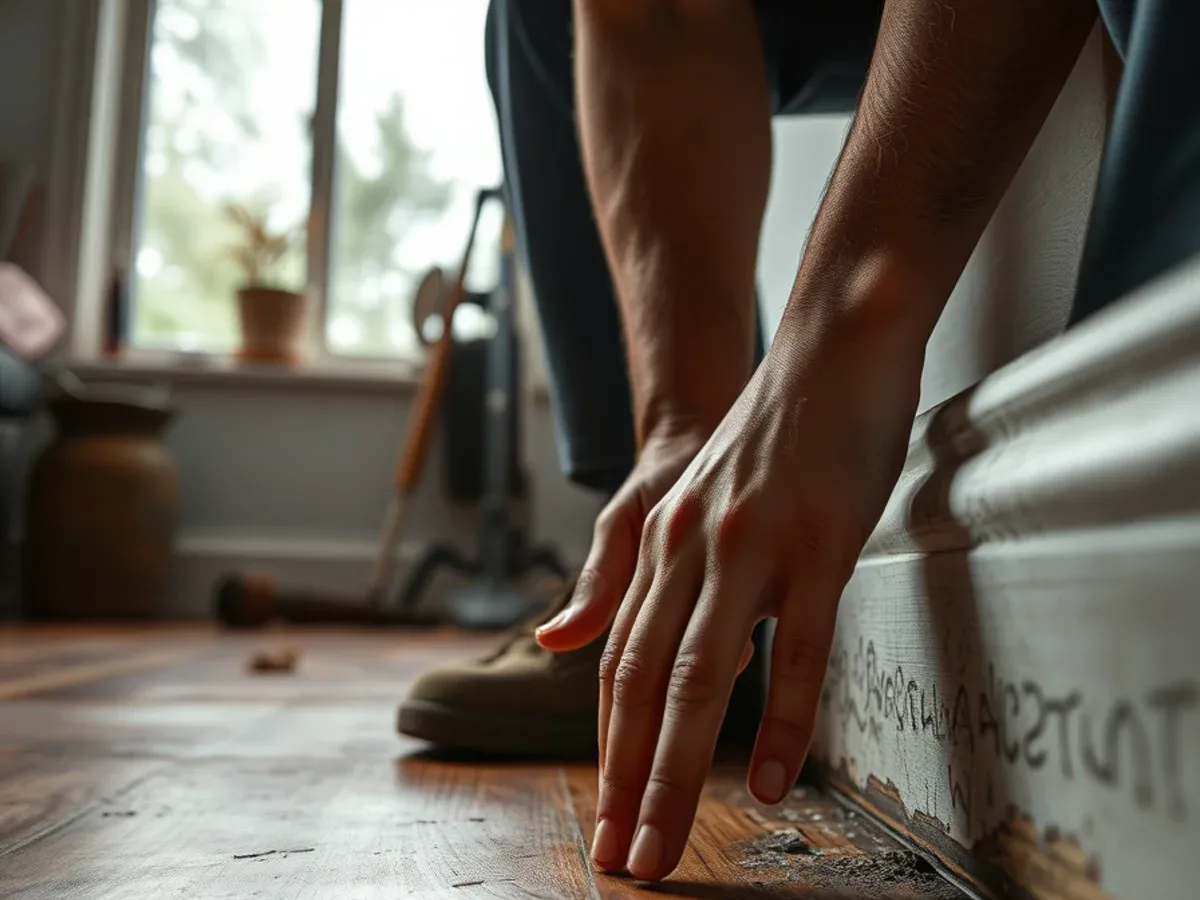
Moisture coming up through concrete shows itself in the floor covering before it shows itself as visible water. Tile that pops loose or develops hairline cracks in a line. Wood that cups or lifts at the seams. Carpet with a persistently damp area or a section that feels warmer underfoot. Vinyl plank with a bubble.
Any of these in a localized area, with no spill to explain it, warrants a look.

5. A musty smell that will not clear
Moisture wicking up through concrete into baseboard, drywall and the underside of flooring grows mold long before anything looks wet. If a room or closet has developed a persistent musty odor and you cannot find a source, moisture is coming from somewhere.
This one often shows up in a closet or along an interior wall, since those are frequently where supply lines run.
6. Pressure that dropped across the whole house
A significant leak bleeds off system pressure. If every fixture got weaker at roughly the same time and nothing changed at the street, a leak is one of the leading candidates alongside a failed pressure regulator.
The two-minute test that settles it
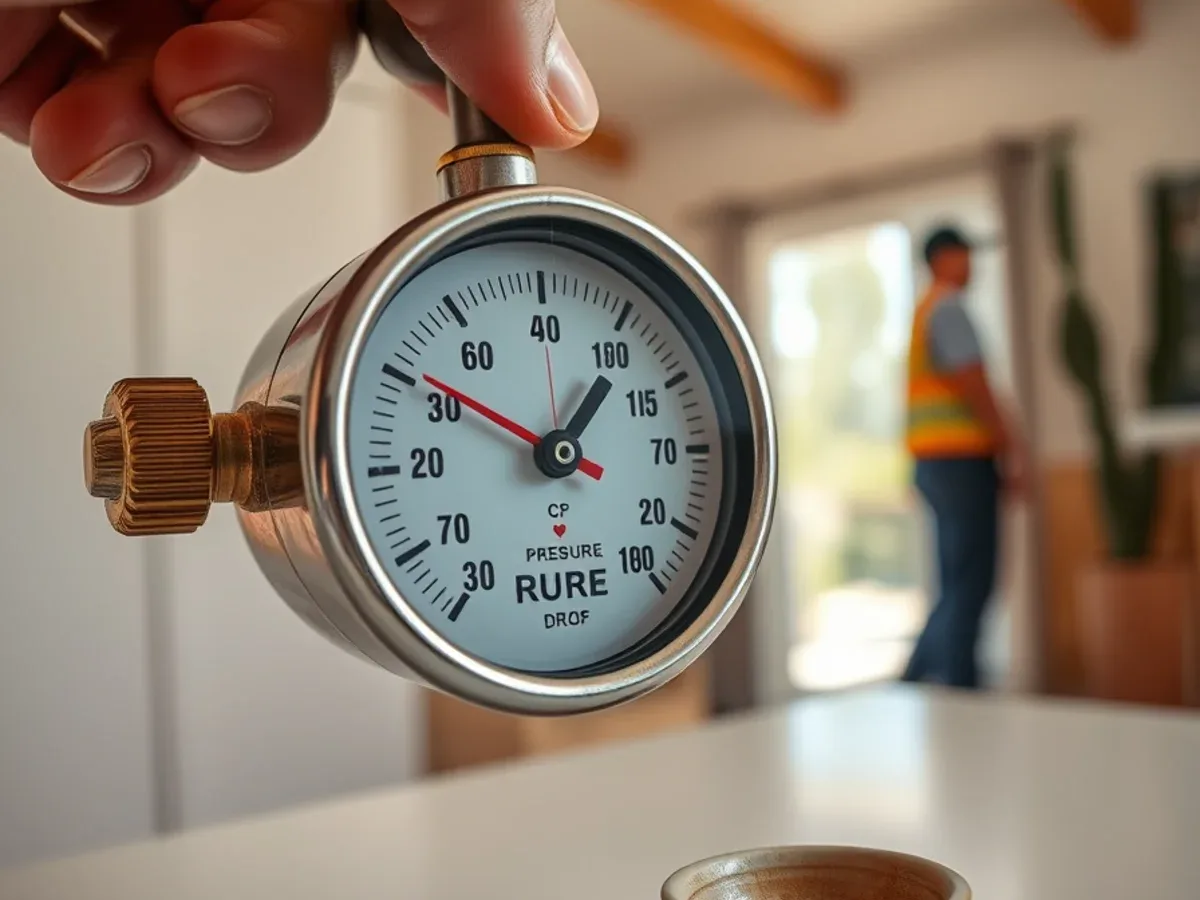
Turn off every fixture and water-using appliance in the house — including the ice maker and any irrigation controller. Then go to your water meter and find the leak indicator: a small triangle, dial or star that spins with any flow at all.
If it is moving with everything off, water is escaping somewhere. That is not proof of a slab leak specifically, but it is proof of a leak.
To narrow it further, close the main shutoff valve at the house and watch again. If the indicator stops, the leak is inside the house. If it keeps moving, the leak is between the meter and the house — the underground service line.
Take a photo of the meter reading, wait an hour with everything off, and photograph it again. That gives you a documented loss rate, which is useful for both us and your insurance company.
Everything off
Fixtures, appliances, ice maker, irrigation. Anything that draws water invalidates the test.
Watch the leak indicator
Movement with everything off means water is escaping. Full stop.
Close the main
Indicator stops = leak inside. Indicator continues = leak in the service line.
Photograph and time it
Two readings an hour apart documents the loss rate for us and for your adjuster.
What happens next
Confirming there is a leak is not the same as knowing where it is, and precision is what keeps the repair contained. We use pressure isolation to determine hot side versus cold side, line tracing to map where the pipe actually runs under the floor, acoustic listening equipment to localize the escape point by sound, and thermal imaging to confirm hot-side leaks.
The goal is to mark an X on your floor, cut once, and be right. Any plumber can find a leak by opening enough concrete.
Then there is a real decision: spot repair, reroute the line overhead, or repipe. Which one is right depends less on this leak than on the age and condition of the rest of your plumbing, and we will tell you honestly which category you are in.
Frequently asked questions
Check your meter tonight
The meter test takes two minutes and it is free. If the leak indicator is moving with everything in the house off, you have a leak — and knowing that today rather than in six months is the difference between a plumbing bill and a restoration project.
We do electronic leak detection with acoustic equipment, line tracing and thermal imaging so the repair is a contained opening rather than a demolition. Call us before anyone cuts concrete.
Services mentioned in this article
- Slab Leak Repairin Apache Junction, AZ
- Repipingin Apache Junction, AZ
- Emergency Plumbingin Apache Junction, AZ